Blueberries in Sinaloa: from rapid expansion to a new opportunity
By: Ricardo Márquez, Commercial Manager of Fall Creek Mexico and Gamaliel Flores, Producer Support Representative in the Pacific Zone
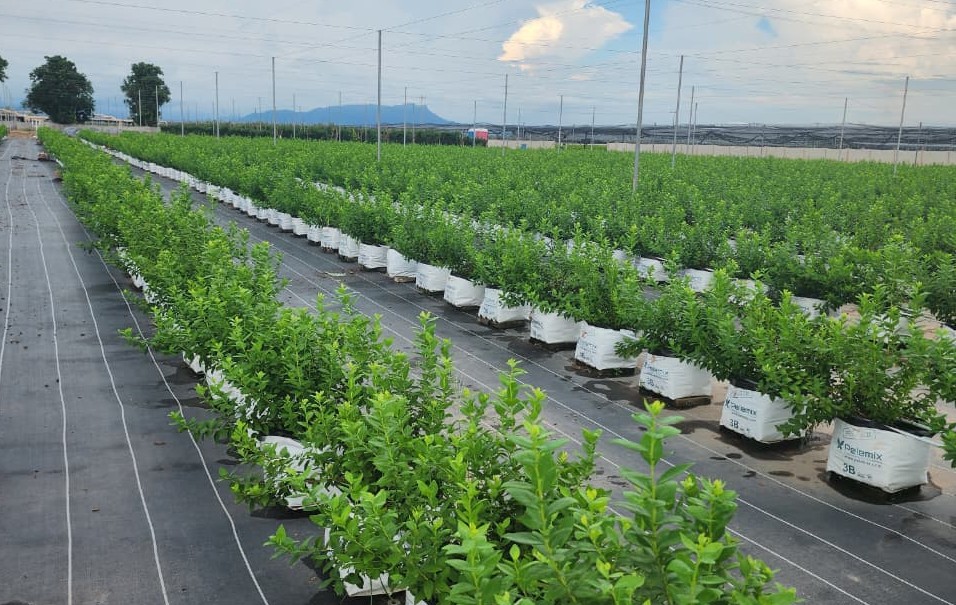
3,600 hectares—that was roughly the size the blueberry industry in Sinaloa reached at its peak. Today, only about 670 hectares remain. On paper, it seems like a story of failure. But a visit to some of the remaining farms reveals a different story.
Some producers, after eliminating varieties, have replanted. Projects that for years produced in soil are now migrating to substrates and more precise systems. Genetic materials that were evaluated during the most difficult years are beginning to show consistent results. And those who remained in the business now manage the crop very differently than they did in the early years. The industry shrank. But it also learned. And that difference may be the key to understanding what is currently happening in Sinaloa.
When growing up seemed enough
In 2022, talking about blueberries in Sinaloa meant talking about expansion. New projects were arriving in the state, producers were expanding their acreage, marketing companies were competing to secure fruit, and new varieties were rapidly being incorporated into planting programs. Between 2022 and 2023, the state's blueberry acreage reached approximately 3,600 hectares.
The enthusiasm was well-founded. Sinaloa offered something difficult to find in other berry-producing regions: large tracts of farmland at competitive costs. Finding 200 or 300 contiguous hectares to develop a project was possible. Agricultural infrastructure existed, along with experience in intensive export crops and, for much of the year, a supply of good-quality surface water. Furthermore, unlike other producing regions, it was initially possible to establish blueberry cultivation without macro-tunnel structures, significantly reducing the investment per hectare.
The crop also offered a diversification alternative for an agricultural sector historically concentrated on grains and vegetables. And the market was supportive; by 2022, virtually all the elements seemed to be aligned. Sekoya Pop was beginning to establish itself more firmly, investment by marketing companies in their own production was increasing, and new networks of associated producers were emerging, including small projects. Some developments reached hundreds of hectares. In less than a decade, blueberries had gone from being a crop under evaluation to becoming a relevant industry for the state. But there was a problem. The acreage was growing faster than the knowledge needed to cultivate it.
The cost of learning
The early years had made it clear that the management practices developed in other berry-producing regions of Mexico could not be directly transferred to Sinaloa. Much of the technical expertise came from Jalisco and Michoacán, regions with considerable experience in berry cultivation, but with very different environmental conditions.
Pruning was one of the first examples. In 2018, people were still learning how to manage a blueberry plant after harvest and during the Sinaloa summer. The electrical conductivity of the substrate, the drainage percentage, and the phytosanitary preparation of the plant before and after pruning didn't always receive the attention they would later prove to require. Dieback, wood diseases, and high mortality rates began to appear in different farms. But the most profound problem was yet to emerge.
The genetic.
Rapid growth led to the large-scale establishment of varieties that had not yet accumulated sufficient validation cycles under Sinaloa's conditions. Biloxi, Ventura, Victoria, Atlas, and various private varieties occupied significant areas. Some had shown good results in other regions. But it's one thing for a variety to perform well elsewhere and quite another for it to have demonstrated its ability to withstand several production cycles in Sinaloa.
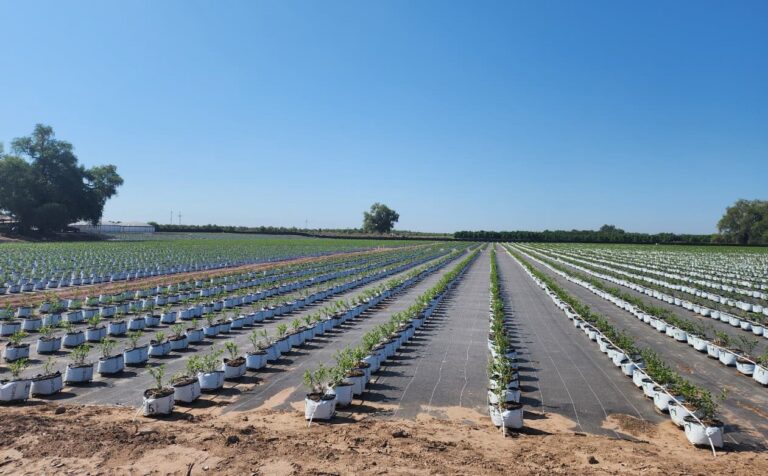
The warm winters of 2022 and 2023 made that difference even more apparent. The Atlas variety is perhaps one of the clearest examples. After having driven a significant proportion of the industry's growth, it began to exhibit significant flowering delays in various growers during warm winters. Plants that should have been progressing toward their reproductive stage ended up flowering even in January.
© Fall Creek Mexico

The problem wasn't just the delayed flowering. This shift moved critical stages of the crop towards March and April, when temperature, radiation, low relative humidity, and thrips pressure could be considerably more harsh. The result was reflected in productivity. Many projects expected to achieve around 2.5 kilograms per plant in the second year. However, until 2023, the best results in some farms hovered around 1.5 kilograms per plant, and in many cases, yields ended up at around 7 or 8 tons per hectare, or even less.
The fruit could have value. The issue was the productivity needed to cover costs. During that period, returns could be estimated at around $5.50 to $6.00 per kilogram. But producing close to 12 tons per hectare was a significant factor in sustaining the operation; around 14 tons could be considered a good result, and 16 tons represented a successful performance. When production fell to seven or eight tons, and at the same time, costs increased due to thrips, wood diseases, and other problems, the economic equation stopped working.
Between 2023 and 2024, sector reductions began, followed by complete farm closures. Small producers were especially vulnerable. Two consecutive seasons of losses could be enough to cause them to lose the financial capacity to continue. But large projects were not immune either. Some left the region. Others drastically reduced their acreage. The contraction continued during subsequent cycles, and project closures were still being recorded in 2026.
However, within that crisis, something began to happen that had been difficult during the boom: the industry had to stop and learn. Producers with financial resources, regional experience, and a willingness to modify their model were able to analyze what had gone wrong and start again with different tools.
The lesson was tough, but simple: Sinaloa's problem had not necessarily been producing blueberries; it had been scaling up faster than the region learned to produce them.
Sinaloa begins to develop its own agronomy
The industry that remains in 2026 is much smaller. But it is also different.
One of the fundamental changes has been to stop assuming that the management practices developed for central Mexico can be applied without modification. After several cycles, Sinaloa began to develop an agricultural approach tailored to its own specific conditions.
Pruning evolved towards generally higher cuts and much more careful plant preparation. Today, the most technologically advanced farms aim to achieve this task with adequate electrical conductivity in the root zone and with established phytosanitary strategies before, during, and after the process. Root management has also become more precise. Frequent measurement of EC and pH in the nutrient solution, substrate, and drainage allows for adjusting nutrition programs with a level of information that was hardly available during the early stages of cultivation.
The same thing happened with the environment. Vapor pressure deficit, or VPD, ceased to be merely a technical concept and became an everyday decision-making variable. Measurements and mapping are now being carried out to identify the times of greatest stress. Tools such as stomatal conductance measurement are also beginning to be used to understand how the plant responds directly to different combinations of temperature, radiation, and relative humidity. In addition, physiological and osmoprotective strategies are being implemented, including formulations based on glycine betaine and glutamic acid. Even fertigation has changed. During critical VPD periods, particularly around times of peak atmospheric demand, some programs temporarily suspend nutrient application and maintain pulses of acidified water. The intention is to prevent unnecessary salt accumulation when the plant's absorption capacity decreases.
The logic has also changed. It's no longer just about reacting to what the crop is showing. It's about anticipating the next phenological stage and preparing the plant for it.

From soil to substrate
The production system is also part of this transformation. Some projects originally established in soil have migrated to substrates that allow for greater control of the root environment and better drainage. Coconut fiber, including blends close to 70/30, is part of the systems currently used in the region. Some of the pioneering projects in Sinaloa clearly illustrate this transformation. Farmers who, during the expansion, managed hundreds of hectares primarily in soil have reduced their acreage and subsequently migrated to substrate systems, also incorporating protective tools such as shade netting and newer genetics.
Viewed from this perspective, the reduction in surface area tells a different story. It doesn't simply represent a retreat. It also reflects a shift in scale model towards productivity; from surface area towards precision; from volume towards control.
Water scarcity has necessitated the development of similar strategies. One of Sinaloa's historical advantages has been the quality of surface water from the canal system for much of the year. However, between May and August, and especially after the drought problems observed since 2023, irrigation districts can supplement their supply with lower-quality well water. The consequence is an increase in salinity, precisely during the summer. Today, this risk can be managed through a combination of tools such as reverse osmosis, selective fertilizer application, and irrigation programs designed to reduce salt accumulation.
In other words, the region stopped wondering how to adapt blueberries to Sinaloa.
He began to wonder how to adapt the production system to Sinaloa.
Genetics also had to pass the test
There is another lesson that may be even more important. A variety cannot be evaluated solely based on its performance in another region. It must withstand the winters, summers, periods of high atmospheric demand, pest and disease pressure, and specific management practices of the location where it will ultimately be planted.
Some projects chose to follow precisely that path. While one part of the industry grew rapidly, other programs established experimental areas, evaluated genetics over several cycles, and deliberately delayed expansion until they identified materials with consistent performance. Some waited several years before beginning to scale up.
The logic was simple. Validate first, grow later.
Today, there are producers who have eliminated areas planted with Atlas and other proprietary varieties, replaced them, and subsequently increased their acreage again with materials that had been previously evaluated under regional conditions. The contrast with the boom is evident. During the first expansion, the area under cultivation drove validation. Now the opposite is happening. Validation is driving the area under cultivation.
What the new varieties are beginning to show
This change can currently be observed in materials such as AzraBlue and Sekoya Pop. Since 2022, different regional evaluation sites have allowed for observation of their performance under Sinaloa conditions. The timing is particularly interesting because these materials went through some of the same cycles that tested the already widely established varieties. Some growers began planting entire hectares in 2022. Four years later, results are beginning to emerge that are once again influencing planting decisions.
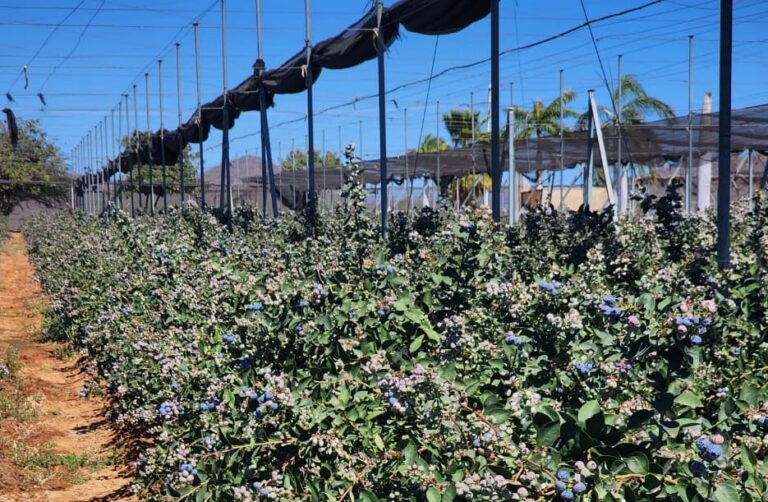
In the case of Sekoya Pop, there are third-year plantations with yields close to three kilograms per plant under the conditions of northern Sinaloa. AzraBlue, for its part, has shown particularly noteworthy results in some projects. In large-scale production areas, actual yields of up to 4.5 kilograms per plant have been observed. In first-year establishments, yields of around 3 kilograms per plant have been obtained at densities of approximately 6,000 plants per hectare and in substrate-based production.
At that level, the yield is equivalent to approximately 18 tons per hectare from the first cycle. This figure takes on special significance when compared to the 7 or 8 tons per hectare that jeopardized the economic viability of numerous projects during the crisis. But yield is not the only variable. In evaluations carried out under Sinaloa conditions, AzraBlue has shown the ability to maintain stomatal activity during periods of high VPD, while other materials considerably reduce their gas exchange. In an environment characterized by periods of high radiation, temperature, and low relative humidity, maintaining physiological activity for longer periods can be relevant. Consistent performance has also been observed during warm winters, along with less thrips damage compared to some materials previously used in the region.
The most interesting aspect, however, isn't just the data on the plants themselves. It's what growers are doing with it. Some farmers who previously removed dozens of hectares of older genetics started again with relatively small areas of AzraBlue. After several cycles of favorable results, some have expanded once more. In some cases, the programs for the coming years envision multiplying the initial replacement area several times over. This represents a significant shift in decision-making.
Planting is no longer based on the expectation that a variety will work. It's based on the fact that the variety has already begun to prove itself.
© Fall Creek Mexico

A second chance?
Talking about opportunity again after a contraction of over 80% might seem contradictory. But perhaps the mistake would be to measure the industry's future solely by the hectares that have disappeared. Sinaloa still retains several of the conditions that originally sparked interest. Land is available, and there is the potential to develop continuous areas on a scale difficult to achieve in other producing regions. Agricultural infrastructure exists, along with accumulated experience in export crops. Surface water maintains good quality for a significant part of the cycle, and technologies now exist to address the months when that condition changes. And, most importantly, there is knowledge.
More than a decade of learning has led to a better understanding of how the crop responds to a warm winter, what happens when flowering is shifted, how to manage the risk of thrips, what characteristics a substrate should have, how to prepare a plant before pruning, and what happens during critical DPV hours. There is also greater clarity on something that wasn't always understood during the boom: a variety must go through several regional cycles before becoming a large-scale bet.
The market also remains part of the equation. Last season's returns were particularly favorable and brought back to the forefront one of the original reasons for interest in Sinaloa: the possibility of producing during an attractive market window. But a market window alone doesn't build an industry. It needs to be accompanied by productivity, quality, suitable genetics, and cost control.
Therefore, a new blueberry project in Sinaloa should no longer begin simply with available land and an expected yield. It should begin with much more specific questions:
Which genetics have demonstrated their adaptation?
How does water behave throughout the entire cycle?
Which production system allows for better control of the root zone?
How should I establish my phytosanitary control?
How will atmospheric stress be managed?
What pruning strategy does the plant require?
What level of productivity is needed for the project to be economically viable?
And, above all: what evidence exists before deciding to climb?
Growing up differently
An updated field census from September 2026 identifies approximately 670 hectares of established plantations in Sinaloa: roughly 83 hectares from Angostura towards Culiacán, and the rest concentrated mainly between Guasave, Ahome, and El Fuerte. This is a small amount compared to the approximately 3,600 hectares the state once had. But perhaps comparing only these two figures is insufficient.
The hectares that remain today are based on a level of knowledge, technology, and genetic selection that could hardly have existed during the early years. Some producers reduced their acreage to increase control and productivity. Others eliminated certain genetics, replaced them, and grew again. And some of the projects that proceeded more cautiously during the boom are precisely those that are now finding the conditions to expand once more.
Therefore, the future of Sinaloa's blueberry industry shouldn't be framed as a race to recover lost hectares. The question isn't whether Sinaloa will ever have 3,600 hectares again. The more important question is what kind of industry can be built with the hectares it decides to replant. An industry that grows only when the results justify it. One that validates before scaling up. One that uses technology to control variables that previously represented risks. One that selects genetics based on their regional performance, not just their behavior in other locations. And one that understands that productivity and profitability are inseparable.
The story of blueberries in Sinaloa is still being written. The first stage demonstrated how quickly an industry can grow when capital, market, and expectations align. The subsequent contraction showed that neither of those factors can replace genetic adaptation or agronomic knowledge. Now a different stage begins. A stage in which acreage no longer has to be the starting point. It can be the outcome.
Sinaloa went from learning to produce blueberries while growing up, to having the possibility of growing again after having learned to produce them.
Previous article
Regulators in blueberries: firmness and quality according to the time of applicationnext article
ARTÍCULOS RELACIONADOS