Berry by-products: from ingredient to prototype
By: Martin Carrillo
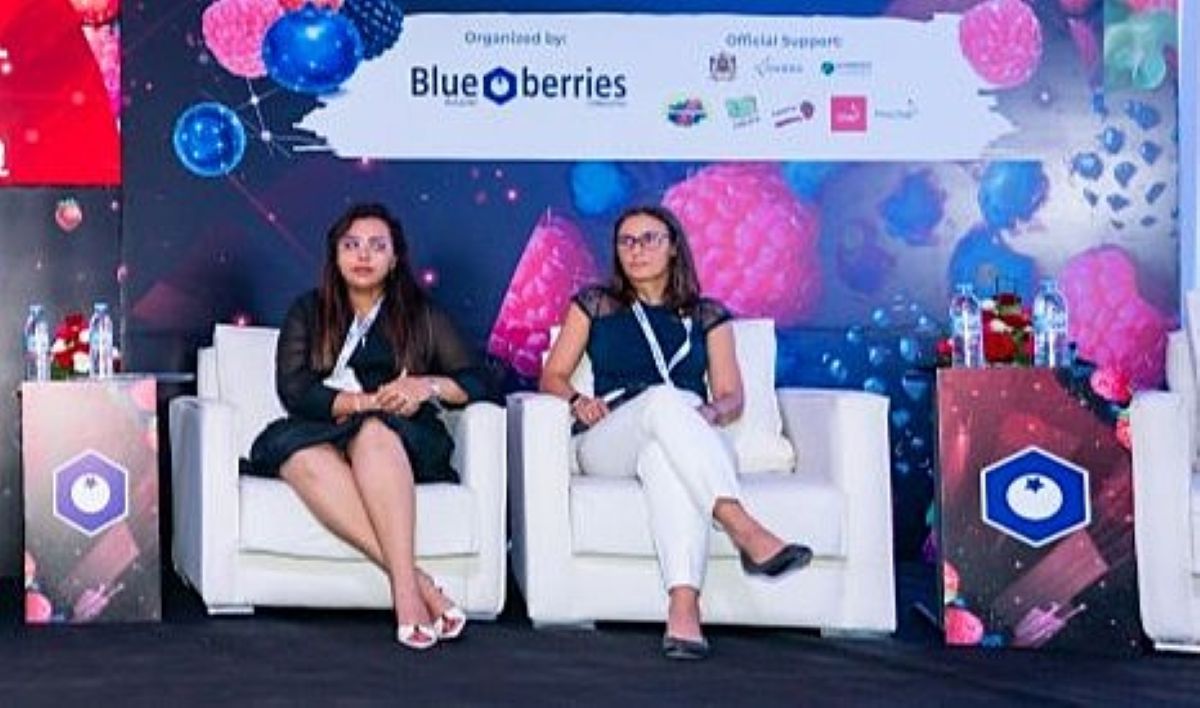
The recovery of fiber, polyphenols, oils, or other usable fractions is only the beginning of the process. For these raw materials to find a concrete application, they must enter another phase, where formulation, the technological process, and the ability to obtain a reproducible product become crucial.
This tour was part of the session on valorization of by-products presented during the XLIII International Seminar on Red Fruits Morocco 2026. After reviewing different utilization alternatives and the requirements that the source material must meet, Kawtar Mahrach led the discussion towards the development of new products and prototyping work.

From ingredient to prototype
Mahrach described the work carried out in the area of food technology as following a sequence that begins with the selection of the product and raw materials. This is followed by formulation, the combination of ingredients, processing operations, and finally, the creation of a representative prototype.
This approach allows us to move from the potential of a byproduct to its behavior within a specific formulation. At this stage, simply having a usable fraction is no longer enough: it is necessary to define how it is integrated, what processing it requires, and what characteristics the resulting product will have.
The presentation complemented the analysis previously given by Margita Szilágyi-Utczás, who had addressed material quality and safety conditions, as well as alternatives such as stabilized powders, standardized extracts, and seed oil. She also incorporated variables such as compound yield, costs, and customer specifications when evaluating a potential valorization route.
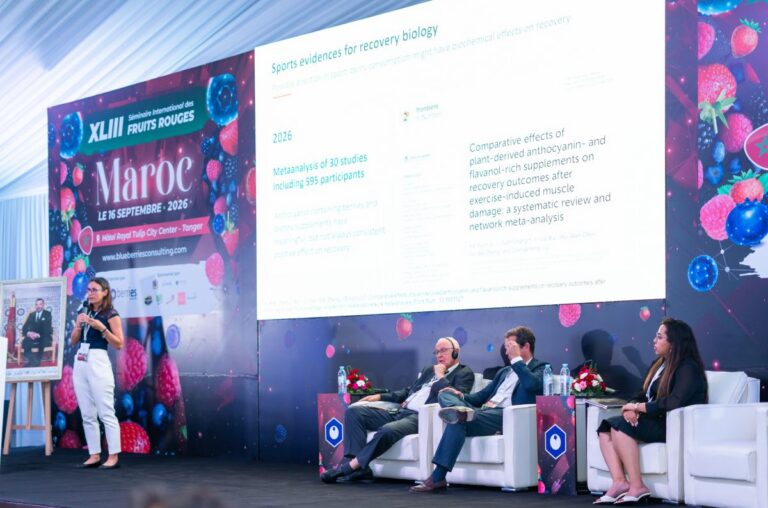
Margita Szilágyi-Utczás at the XLIII International Seminar on Red Fruits Morocco 2026 © Blueberries Consulting

Test before you climb
The development process doesn't end with the formulation. Mahrach also incorporated nutritional and functional assessments, cost analysis, stability studies, and regulatory considerations among the variables involved in developing a prototype.
This set of tests allows the formulation to be observed from several dimensions before moving on to later stages. Stability, for example, is part of the ability to maintain the product's characteristics, while costs and regulations introduce conditions that can define the continuity of a development.
The logic is different from the initial valuation of the byproduct. A raw material may contain components of interest, but its incorporation into food or other applications requires verifying how it responds within a process and under what conditions a reproducible formulation can be maintained.
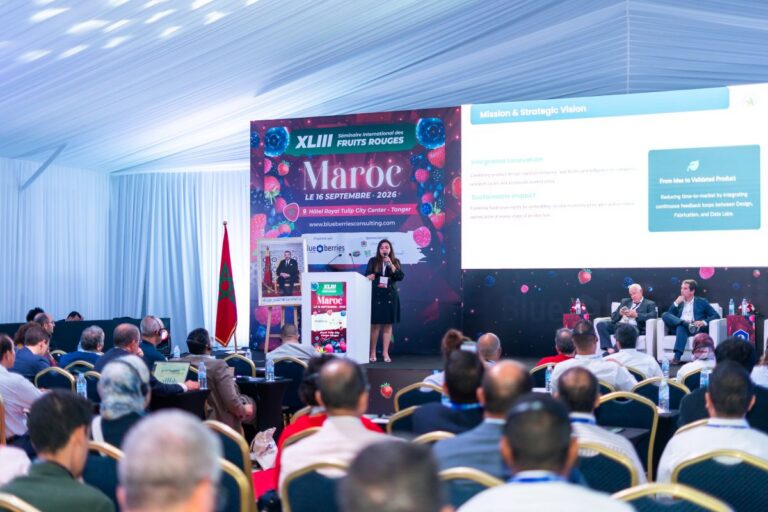
Kawtar Mahrach at the XLIII International Seminar on Red Fruits Morocco 2026 © Blueberries Consulting
Beverages, flours and new formulations
Mahrach showcased various examples developed using this approach. These included formulations made with freeze-dried strawberries and beverages prepared from different fruits, including a cranberry drink.
She also presented cases where waste materials were reincorporated as ingredients. One of these used a waste product transformed into flour to make snack bar-type products, showing how a secondary fraction can re-enter a formulation process.
The examples expand upon the discussion begun with the recovery of compounds and raw materials. After identifying what can be reused, development continues with formulation, processing, and product evaluation, culminating in a prototype that can be analyzed from a technical, economic, and regulatory perspective.
Read also:
Previous article
Hortifrut launches Berry Good in Europe and reinforces its consumer-oriented brand strategynext article
ARTÍCULOS RELACIONADOS