Danper, one of the main blueberry producers in Peru
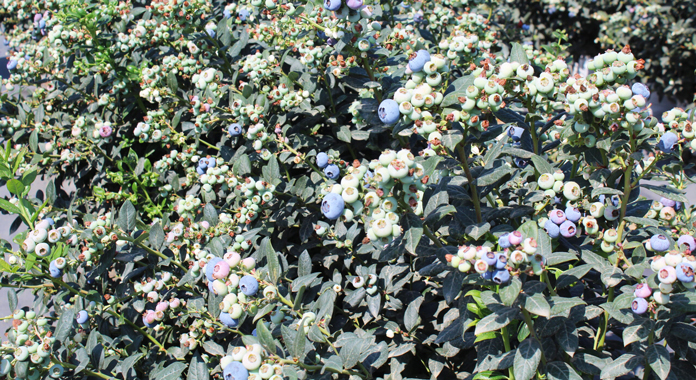
The Peruvian company Danper is one of the main blueberry producers in Peru. They currently focus their production in the northern part of the country, specifically in La Libertad, where they expect to produce between 15 and 17 million kilos of blueberries this season.
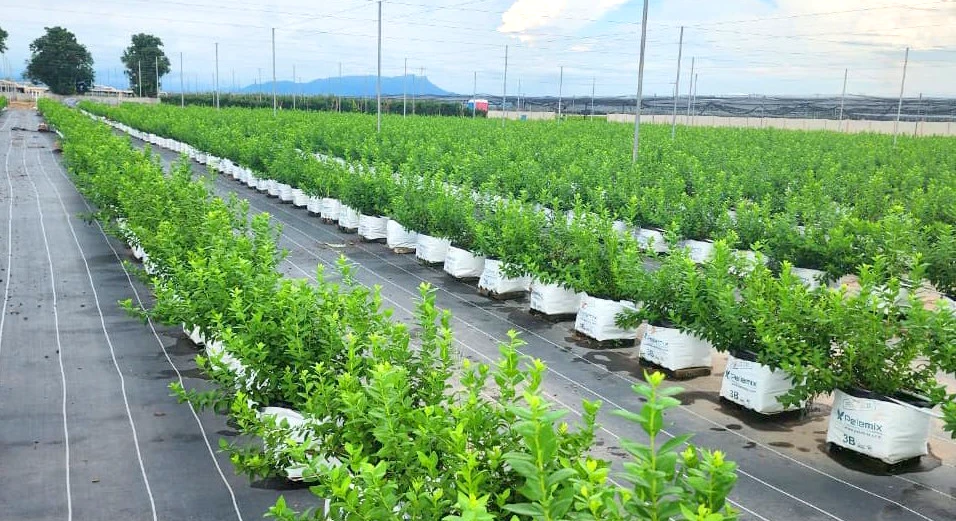
We recently visited the Compositán farm, located in Virú, La Libertad, one of the company's largest farms and where they primarily produce blueberries. We spoke with Juan Valdivia Chumbe, Danper corporate manager, who told us about the company's operations in the area. "We have six production farms. We're currently on the Compositán farm, which has around 200 hectares of different varieties of blueberries, but the entire farm has a growth potential of 2000 hectares. Here we have different crops: avocados, asparagus, peppers, blueberries, and some basil," he noted.
Main markets of the world
Danper's blueberries are exported to major markets around the world, thanks to a strategy that involves having a variety of varieties to meet the unique needs of each market. "We focus heavily on Europe, the second market is the United States, and then some China. But our core objective is more seasonal. We always try to focus the largest volume of our early harvest on China, and then we have a strategic plan to expand our production to Europe and the United States with a significant volume."
Regarding the opening of new markets, Asian countries such as Japan and Indonesia are attractive destinations for producers. Juan Valdivia noted, "The important thing here will be genetics; these are markets that seek fruit with good caliber, good flavor, and a good post-harvest life. We currently have our own varieties that can target these exclusive markets, but we are also searching for free varieties that have the attributes these countries are looking for."

The United States and tariffs
The United States is an important market for Peruvian exports. President Donald Trump's announcement of new tariffs has put companies on alert, and they have different strategies to maintain their sales. "On the production side, we are focused on reducing costs. We know there is an additional percentage of tariffs that the United States is proposing, but we have not yet quantified the direct impact. There is an initial estimate, but we will reduce this internally through production and resource management," he stated.
Blueberry varieties
Danper has been working with different varieties of blueberries, some of which are already being marketed and a significant number are in the testing stage. José Luis Gómez Plasencia, Manager of Agricultural Production, Northern Zone, Blueberries, told us about it, “We currently have 64 varieties under test and about 6 commercial varieties. Of those under test, we have varieties from different genetic houses such as University of Florida, IQ Berries, Fall Creek, OZblue y Planasa. While among the commercial varieties we handle are Ventura, Mágica, Sekoya Pop, Sekoya Beauty, Madeira and Biloxi.”
If there is a variety that has given good results to the company, Gómez Plasencia points out that it is Ventura, which has adapted well to the climate and conditions of the area, "it is a fruit that has a very good post-harvest life, with good yield, you can reach between 25 and 32 tons per hectare, it has a good flavor, an interesting average size, a good balance of brix and acidity and a good shelf life because it can easily reach China and that is an advantage."
Regarding the Chinese market, he noted that it's a market worth exploiting and that it pays more than other countries, so the highest-quality fruit is primarily destined for the Asian giant. "The Asian market generally has higher quality standards, in terms of flavor, size, and firmness, and these new varieties are the ones that are aiming to meet those characteristics."
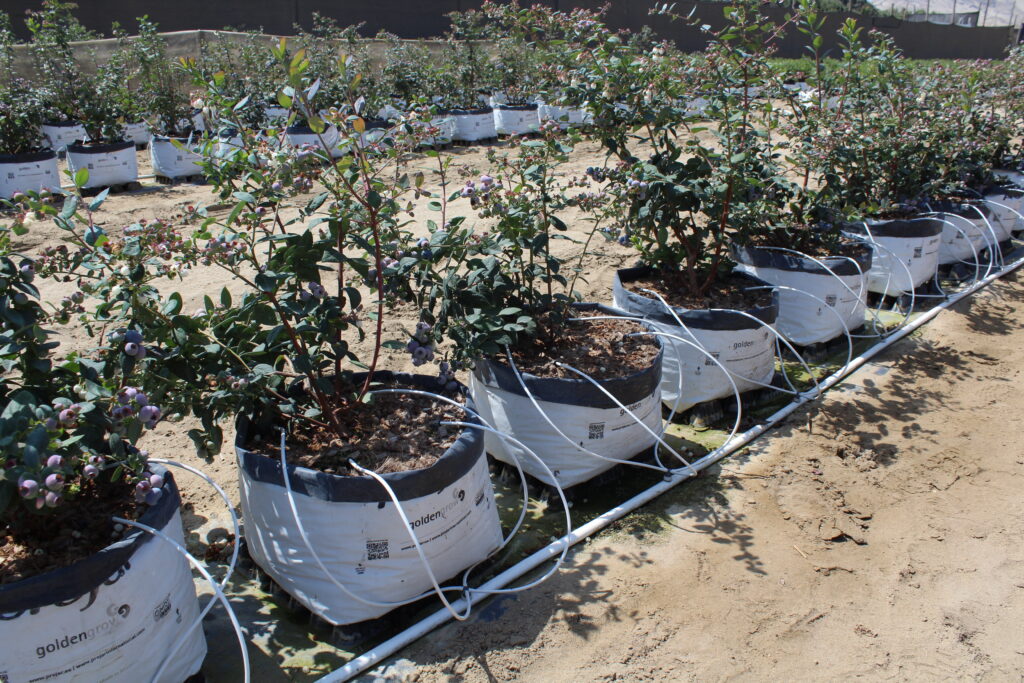
Photography Blueberries Consulting

The northern area is conducive to productivity
The climate and geographical conditions of the La Libertad area have been very well suited to blueberry production, as confirmed by Gómez, “Here in the area, maximum temperatures never exceed 28 degrees and minimum temperatures never fall below 15 degrees. This has worked quite well for us, both for vegetative growth and for floral induction and the entire reproductive aspect of the crop. Regarding relative humidity, this can be a disadvantage in some areas, such as those close to the beach, where humidity can be a bit higher, but with proper management, it isn't a major problem. Climatically, we are in a very interesting area. We would like to have a bit more of a temperature differential, like Ica, for example, but this is a good, interesting area.”
To Elena Vega, Head of Irrigation OperationsThe La Libertad area has good yield potential, although it's slightly difficult to achieve the fruit's flavor because the temperature differential is very short. "If we look at it in terms of production potential, I'd say it's a very good area, and we also have water from the Chavimochic project. We don't lack water, unlike the Olmos Project, where there are water shortages, or in Ica, where water must be extracted from a well. Here, we have good-quality water, with low conductivity, and little chlorine and sodium, which harm or cause stress to the crop. This is one of the best areas for blueberry production," he maintains.
Challenges in the harvest
“The challenge is extensive because we're in an area with high cloud cover when the harvest begins, so from a fertigation perspective—where I'm working—it's quite important to monitor how much of what we add is transported to the fruit so that it has a good nutritional level and therefore arrives safely. That's our biggest challenge. The other thing is that we don't achieve very low minimum temperatures, and there are varieties like Ventura that tend to delay harvesting a bit because we don't accumulate minimum temperatures. These are significant challenges for the area,” says Elena Vega.
Replacement before growth
Finally, regarding the growth of the Peruvian blueberry industry in the coming years, Vega maintains that varietal replacement will determine the short term. “The industry may grow, but companies in Peru are more focused on varietal replacement. In Peru, there are more than 5000 hectares of Biloxi that will gradually be replaced, perhaps that's why the growth rate won't be as high, because there will be more replacement than growth. That's what I think in the short term.”

In this sense, genetic research and companies' commitment to finding varieties that meet specific market requirements will play a fundamental role in the industry. For Peru to maintain its leading position on the global scene, it will be necessary for entrepreneurs to invest in agricultural genetics and technology.
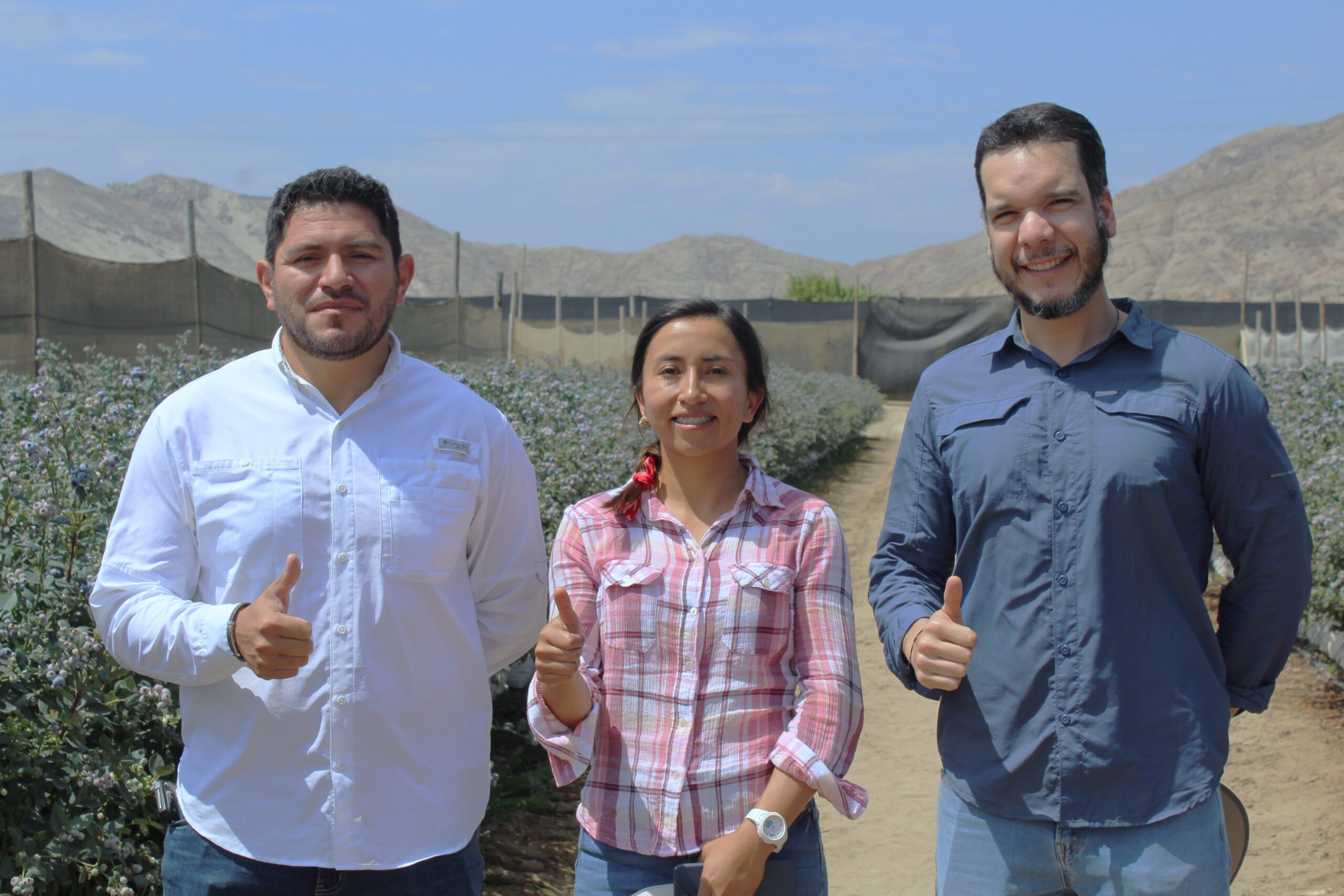
Photography by Blueberries Consulting – Juan Valdivia Chumbe, Danper Corporate Manager; Elena Vega, Head of Irrigation Operations; José Luis Gómez Plasencia, Manager of Agricultural Production, Northern Zone, Blueberries.
Previous article
The premiumization of PolandARTÍCULOS RELACIONADOS