Will rising blueberry imports from China and Zimbabwe threaten Morocco's position in Singapore?

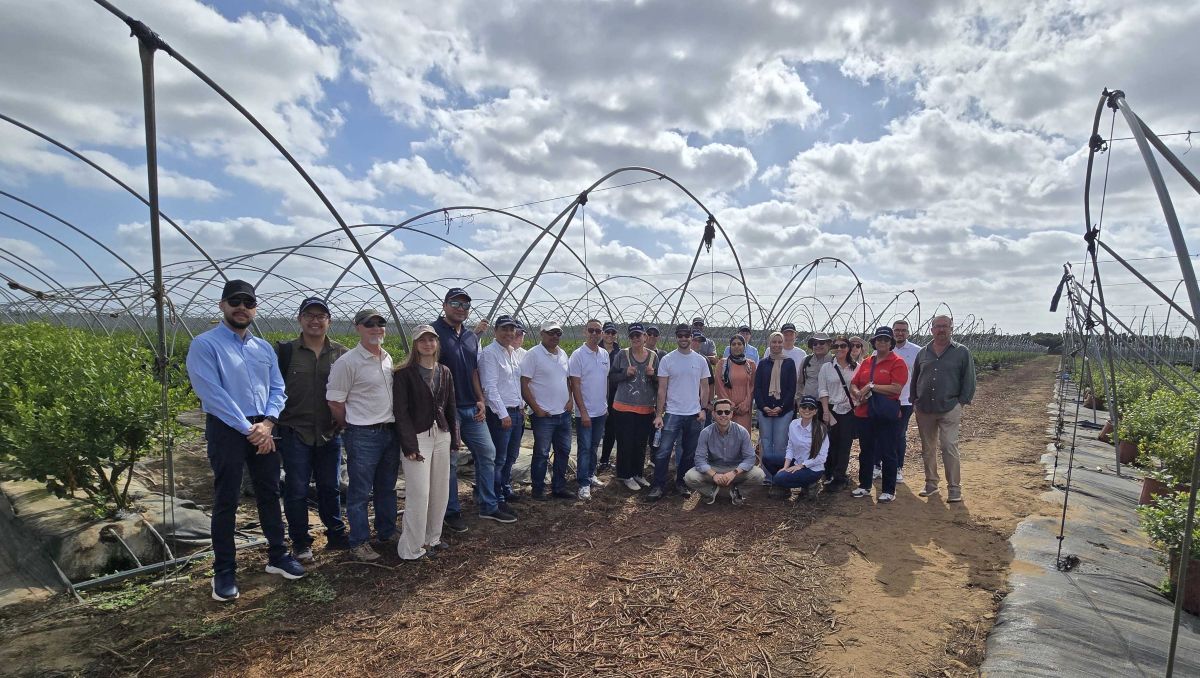
A historic trade mission of Moroccan exporters to Singapore and Malaysia, organized by FAO, the EBRD, and Morocco Foodex from 21 to 25 April 2025, facilitated meetings with over 25 leading importers and allowed participants to assess the wholesale and supermarket markets in these countries. As blueberries were a central focus of the mission, this article examines the current dynamics of the Singapore blueberry market and Morocco's competitive position, targeting professionals in the fresh produce sector, highlighting EastFruit.
Blueberries: Singapore's fastest-growing produce category
Industry players unanimously report that blueberries are the fastest-growing fruit and vegetable category in Singapore. “In 2024, blueberries surpassed strawberries to become Singapore’s most imported berry in terms of value,” says Andriy Yarmak, an economist at the Food and Agriculture Organization of the United Nations (FAO) Investment Centre. “Blueberry imports have been growing at an average annual rate of 18%, and this growth has recently accelerated.”

This increase contrasts with the stagnation of Singapore's total fruit and vegetable imports, which have grown by only 2% annually in US dollars, below the average inflation rate in US dollars. As a result, blueberries have become Singapore's top five imported agricultural products, surpassing oranges and approaching apples. Several factors are driving this growth:
- Health and Convenience Trends: Blueberries align with the growing demand for healthy, portable snacks as alternatives to less nutritious options.
- Improved quality and availability: Global supply chains now deliver consistently high-quality blueberries year-round with minimal price volatility.
- Global supply expansion: Increased production from a variety of sources ensures a consistent supply.

Changing supply dynamics: rise of China, Zimbabwe and South Africa
The Singapore blueberry market has experienced a dramatic shift in supplier dynamics. South Africa has established itself as the leading exporter in terms of volume, while the United States, the market leader in 2020, fell to ninth place in 2024. Notably, three countries—China, Zimbabwe, and South Africa—have significantly expanded their presence.
- China: Increased blueberry exports to Singapore by more than 23 times between 2020 and 2024.
- Zimbabwe: Shipments increased 15-fold over the same period.
- South Africa: tripled its exports and secured first place.
These countries have displaced traditional suppliers such as the United States, Chile, and Spain, whose exports have declined. Peru, the world's leading blueberry exporter, doubled its shipments to Singapore, securing second place, while Morocco also doubled its exports, placing sixth, behind South Africa, Peru, China, Australia, and Zimbabwe. Morocco's market share in Singapore's blueberry imports increased slightly, from 8% to 9%, during this period.

Morocco's competitive advantage and opportunities
Despite rapid growth in China, Zimbabwe, South Africa, and Peru, importers believe Morocco retains significant potential to expand its blueberry exports to Singapore. Its key advantages include:
- Seasonal niche Morocco's supply window complements that of other major exporters, allowing for year-round market coverage.
- Reputation for quality Moroccan blueberries are highly valued for their quality, a critical factor in Singapore's demanding market.
An emerging opportunity lies in ocean shipments, which have already shown promise as the Singapore market absorbs increasing volumes. However, importers express concern about the 25- to 27-day transit time, as Singaporean consumers demand firm, juicy, crisp, and sweet blueberries. Soft or less sweet blueberries are unlikely to sell.
Challenges: Growing price competition
Importers highlight the intensification of price competition, driven by China's aggressive expansion and the entry of new suppliers such as Turkey and India. This trend indicates increased downward pressure on prices, forcing all suppliers to maintain profitability while simultaneously meeting Singapore's strict quality expectations.
Conclusion
Moroccan blueberry exporters are well positioned to capitalize on Singapore's growing demand, leveraging their seasonal advantage and strong reputation for quality. However, success will depend on addressing logistical challenges, particularly ocean freight, and navigating an increasingly competitive pricing landscape. As new players enter the market, Moroccan exporters must focus on differentiation through quality and reliability to consolidate their presence in this dynamic market.
ARTÍCULOS RELACIONADOS