Fruit Attraction 2026: Surexport warns that blueberry production is growing faster than consumption
By: Martin Carrillo

Global blueberry production continues to grow, and consumption is also increasing, but not at the same pace. According to Francisco Manuel Pajuelo, Marketing Director of Surexport, this difference will be one of the variables that will shape the market's evolution in the coming years.
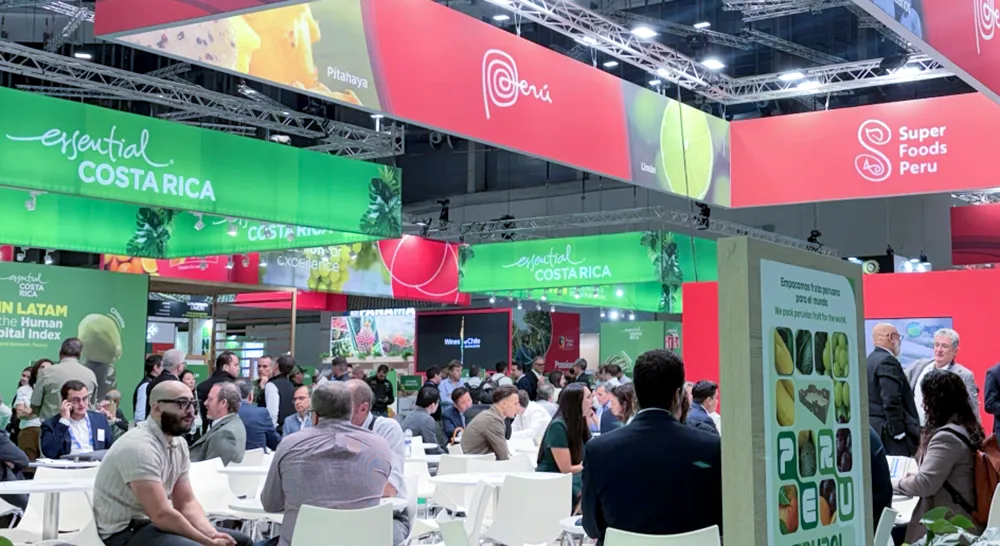
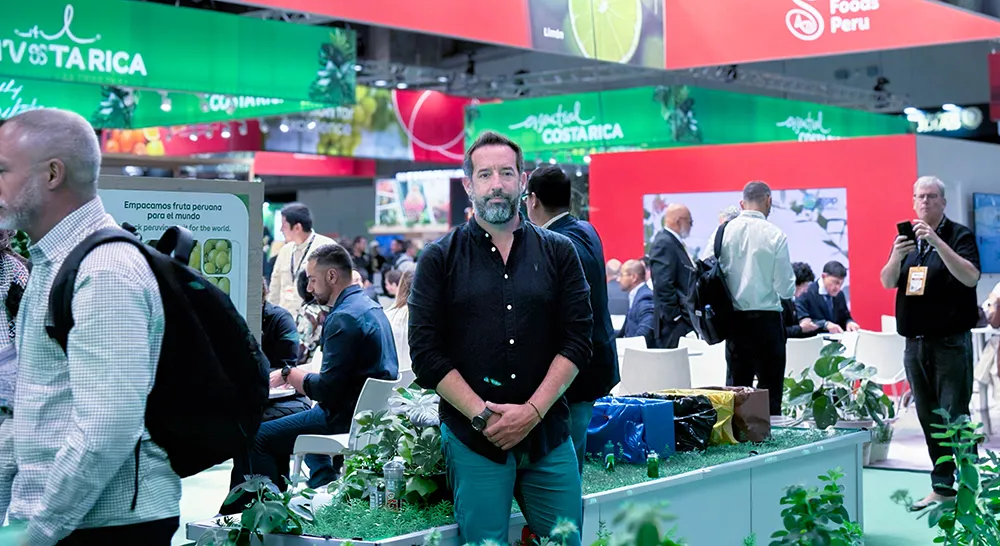
Blueberries Consulting spoke with Pajuelo during Fruit Attraction 2026, in Madrid, about the evolution of the business, the varietal advance and the multi-origin strategy with which Surexport seeks to maintain a homogeneous supply throughout the year.
"Consumption continues to rise and production continues to rise, but consumption is still not rising at the same rate as production," he noted.
Looking ahead to 2027, Pajuelo expects the globalization of blueberries to continue and even speaks of a “path towards becoming a commodity.” In this process, he believes prices could trend slightly downward, while genetics will continue to play a central role in differentiating the product.

Genetics will continue to make a difference.
In that broader market, Pajuelo positions genetics as one of the main differentiating factors.
“The factor that is making the difference is genetics,” he says, highlighting varietal advancement as an important piece both for market development and for Surexport’s trajectory.
The company, with 36 years of activity, has worked with exclusive varieties since its beginnings and, according to Pajuelo, varietal development will continue to play a central role as the global supply grows.
The criteria for evaluating a new variety, however, have been broadened. It is no longer enough for it to simply deliver productivity and agronomic profitability.
“For a variety to be competitive, it is no longer just about being productive and profitable […] at an agronomic level, but it has to meet a series of factors that today's consumer is looking for,” he explains.
Among these attributes, he mentions flavor, crunch, size, and shelf life. Size remains relevant, but Pajuelo introduces a nuance: although there is currently a demand for larger fruit, he believes that in the medium and long term this attribute could lose relative importance compared to other characteristics.
Shelf life also plays an important role in this evaluation, especially for a fruit that must maintain its condition during transit. Added to this are the ease of consumption and versatility of blueberries as a snack.

From the field to the consumer
For Pajuelo, varietal development must respond to both productive performance and the consumer experience. Flavor, texture, and final condition thus become part of a selection process that is no longer fully evaluated in the orchard.
The blueberry also boasts attributes that align with consumer trends linked to convenience and healthy eating. It's an easy-to-eat fruit with a nutritional composition that, according to the executive, favors its growth within the category.
However, there is one limitation that Pajuelo still observes in the market: the price.
According to the report, blueberry consumption is increasing significantly, but its price remains a barrier for many families. It is expected that this situation will gradually change as the product becomes more readily available.
That potential adjustment is also part of his outlook for 2027. Pajuelo believes that prices could fall slightly while production and consumption continue to grow at different rates.
Consistent quality throughout the year
Surexport's response is not limited to varietal development. Pajuelo incorporates a second component: service and the ability to maintain a consistent supply from different origins.
“We believe it is very important to be able to supply a consistent quality throughout the year, combining different production windows in different origins,” he explains.
Surexport works with production in Spain, Portugal, Morocco, and Peru, among other countries mentioned by Pajuelo. This strategy allows them to combine different production windows to maintain availability and quality throughout the year.
Genetics and multi-origin thus appear as parts of the same strategy: working with varieties capable of delivering the attributes sought by the market and, at the same time, coordinating different production areas to maintain a homogeneous standard of supply.
At the end of the conversation, Pajuelo broadened that perspective beyond the commercial operation. “Our work cannot be solely about selling fruit,” he stated, linking the sector's growth to the blueberry's ability to contribute to better nutrition and expand its presence among consumers.
Increased global availability will continue to put pressure on the business, but Pajuelo maintains a clear line for Surexport: genetics, quality and continuity of supply to compete in an increasingly global blueberry market.
Previous article
Fruit Attraction 2026: Agualima and Euroandes chart new opportunities for Peruvian blueberriesnext article
ARTÍCULOS RELACIONADOS