Technical Tour Lima 2026: field, criteria and lessons learned applied to the blueberry industry
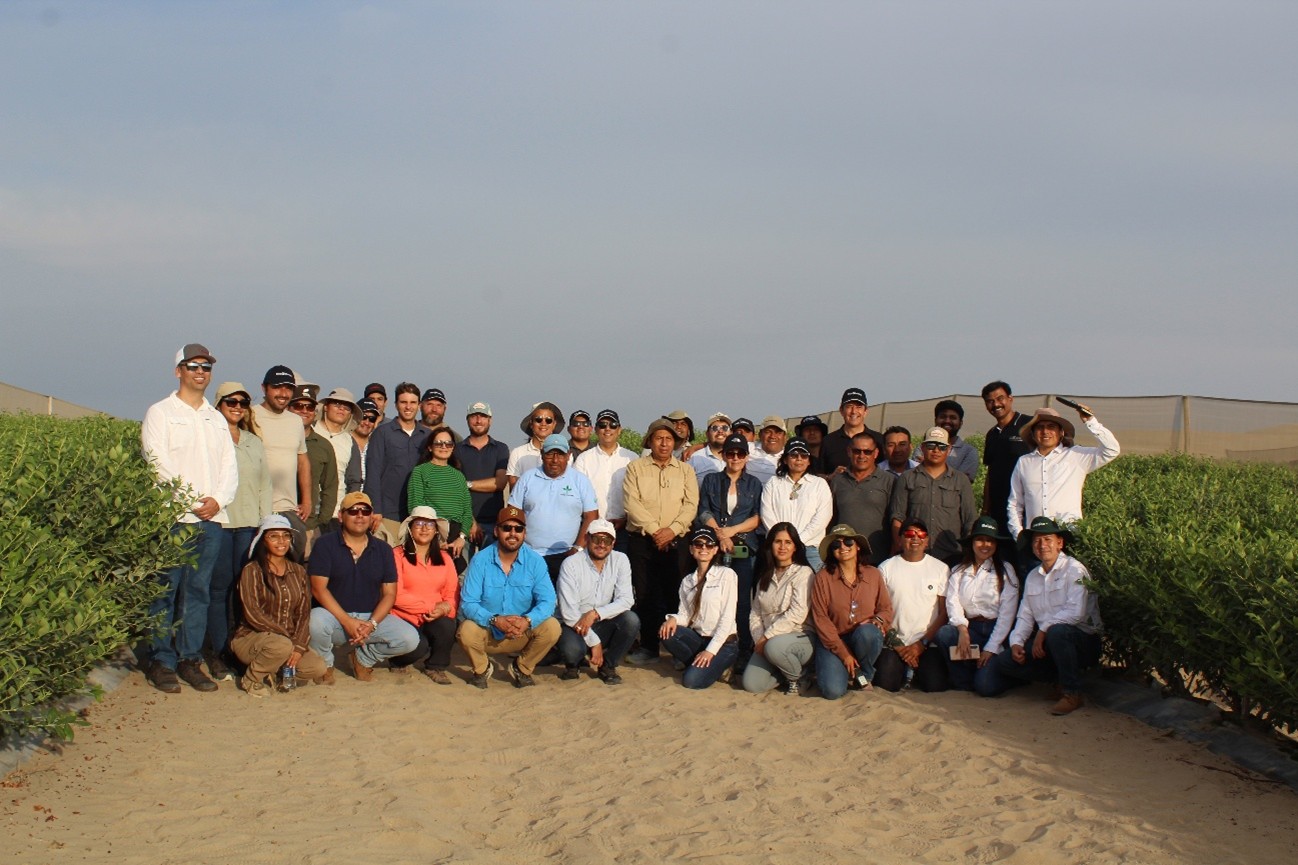
The Lima 2026 Technical Tour was established as the inaugural milestone of the world tour of blueberry for the current year, in addition to being the prelude to the XXXIX International Seminar Blueberries Peru 2026The tour, which took place on Monday, March 9, included visits to the Family Farms Peru and GrandBerry farms, located in the Ica region.
The central objective was to connect producers, exporters, and decision-makers with the operational realities of Peruvian fields, allowing for direct immersion in the strategies that maintain the country's position as a global export leader. The unique value of this event lay in the opportunity to observe decisions being made in the field and compare approaches on the fly. Beyond theory, participants witnessed firsthand applicable criteria for working with the varieties cultivated by Peruvian companies, enabling technical teams to return to their farms with protocols validated under real-world production conditions.

What was observed in the field
During the visits, the most notable observation was the transition and coexistence of potted and in-ground production. A rigorous approach to nutrient control, irrigation management, and precise root management to prevent loss of firmness was evident.
In GrandBerry, the delegation was received by Brian Jiang, general manager, who explained that the Chinese-owned company has been operating in Peru for two years. They have a 76-hectare farm where the Bianca variety is primarily grown in pots. Last season, they produced 600,000 kilos of blueberries destined for the Chinese market.
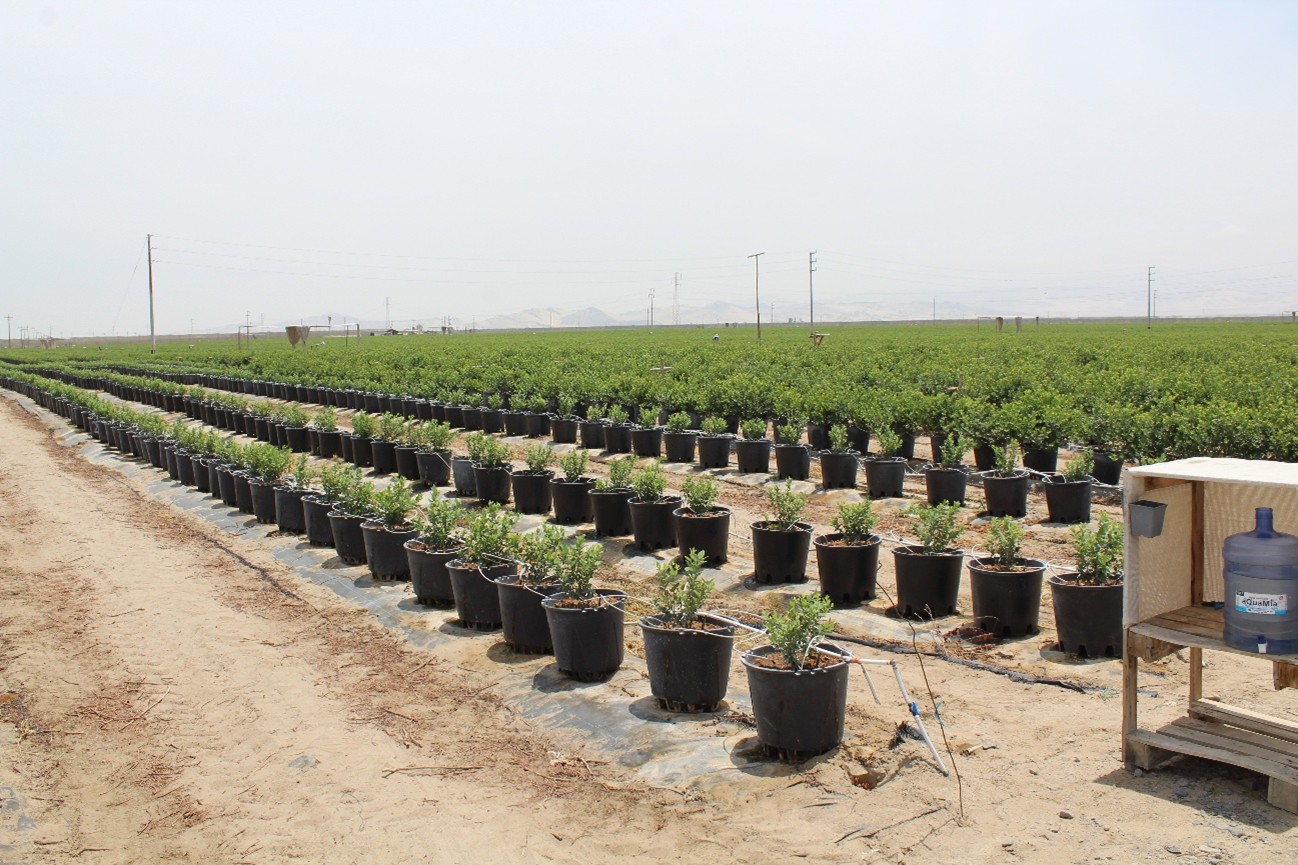
GrandBerry field © Blueberries Consulting
Meanwhile, at Family Farms Peru, the participants of the technical tour got a close-up look at the work of one of the most important companies in the south of the country. Juan Pablo Bentín, production manager, led the tour of the farm, which has 600 hectares of blueberries planted in the ground. He explained that operations began in 2020 and they currently work with six varieties, among which Eureka Gold stands out.

Technical criteria taken away by the attendees
The learning was structured around a "decision checklist" for the season. Participants reviewed criteria such as preventative biostimulation, pest and fungal control, and pruning and fertilization adjustments. For the attendees, the technical tour provided a hands-on experience in the field, showcasing the various aspects covered in the online course of the diploma program developed by Blueberries Consulting and the University of Almería, Spain.
María del Carmen Salas, researcher and doctoral professor at the University of Almería and director of the diploma program, stated: “This technical tour provides the practical component, the direct contact with the field, which helps resolve many doubts that don't arise when you're attending a theoretical lecture. And of course, the second part will be during the seminar, where companies, universities, and research centers will have the opportunity to spend two days together in Lima, completing the cycle of comprehensive training. I believe it's the best way to gain in-depth knowledge in a very short time.”he said.
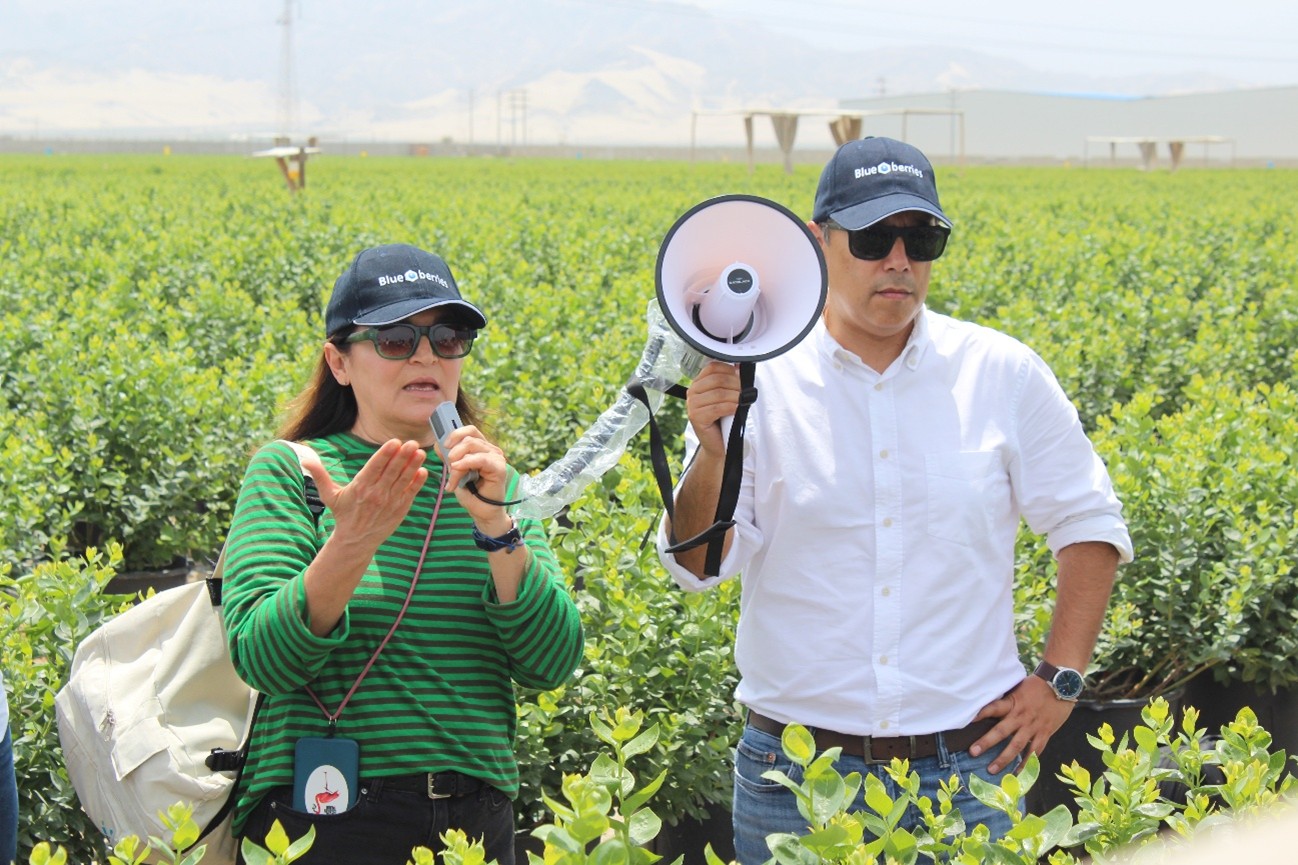
Dr. María del Carmen Salas from the University of Almería and Jorge Esquivel, director of Blueberries Consulting. © Blueberries Consulting
Regarding the work carried out by companies on Peruvian soil, specifically in Ica, he mentioned: “I’m incredibly surprised by the difficulty of having a crop of this scale here. We’re talking about crops covering 600 hectares in areas that, as you can clearly see, are shifting sand dunes, and to establish a crop and have it be a success—I think that’s overcoming so many barriers that one would think were impossible. I mean, anyone would say this can’t be done, and yet it’s being done.”
María José Quilodrán, representative of the Portuguese company Green Factor, indicated that trying to understand the entire blueberry production chain led her to participate in the technical tour.Quality responsibility is no longer just about meeting certain parameters; our obligation as a company is to deliver the best to our customers. Therefore, these kinds of tours allow us to build a consensus on what post-harvest processes entail and what happens during them, comparing it with the daily realities of life in the fields.”
"The best things from each country are meant to be put into practice, whether in our experiences in northern Portugal or southern Portugal, but they are necessary and that is why we are here and hope to continue being present in the other countries where these types of seminars are held.”, Anadio.
Finally, another participant, Felipe Salvador, from the Brazilian company CerradoX, mentioned: “I’m really enjoying what we’ve seen. It complements what we’ve already covered in the online talks, and I think it’s very valuable because it puts everything we’ve learned into practice, and we can interact with colleagues and companies. It’s especially helpful to see the different varieties, which is quite new for us in Brazil; we don’t have much access to that. It’s good to see that we’re on the right track because Peru is a reference point for us, and our management practices are very similar. Of course, there are challenges like the different climate and all that. You can’t just copy and paste, but we have a very good foundation. So this type of activity, this type of opportunity, is very important.”
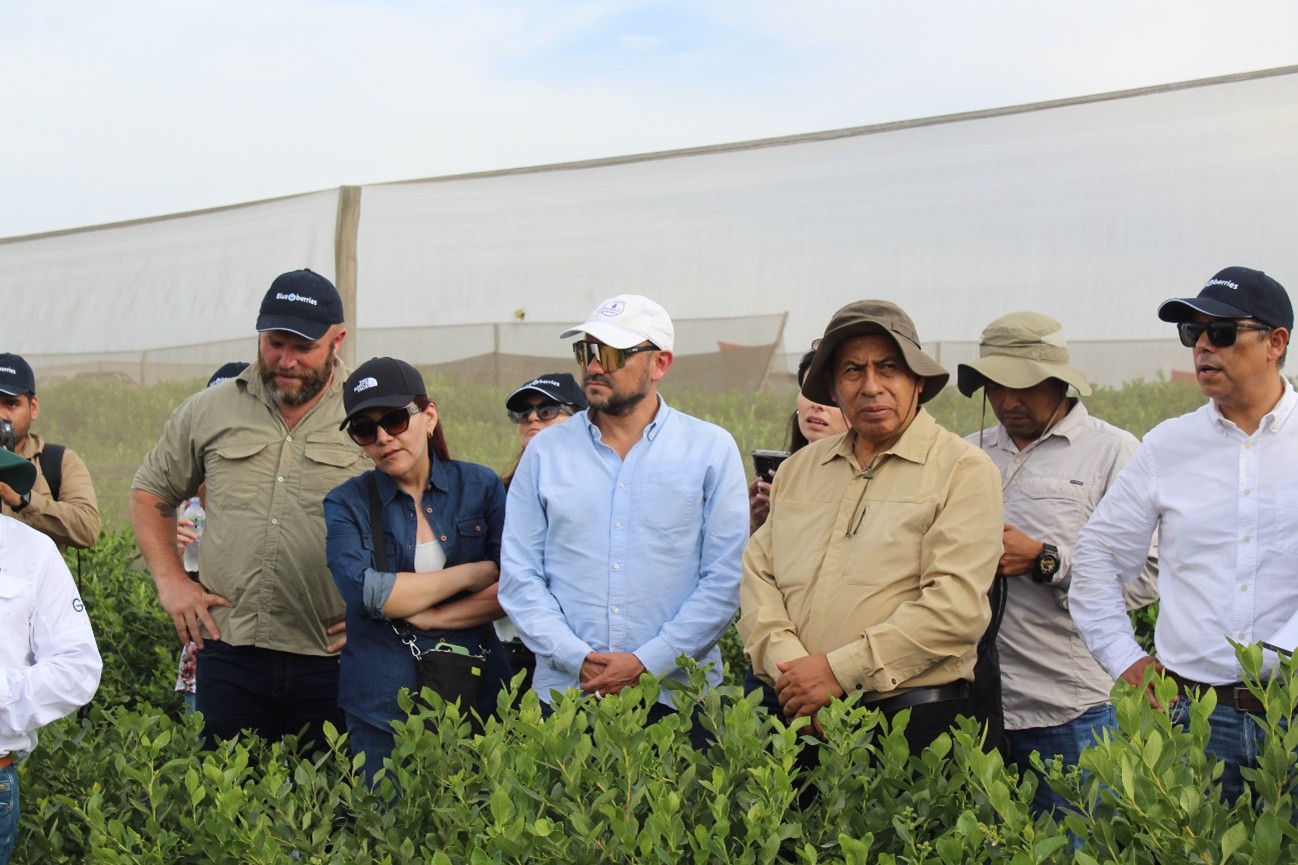
Technical Tour 2026 © Blueberries Consulting

Bridge with the seminar and the next campaign
Field experience acts as the logical link to the seminar's central themes: efficiency, quality, and final product condition. While the field experience focused on technical execution, the seminar program will delve deeper into market analysis and post-harvest loss reduction, thus completing the cycle between agronomic decisions and commercial outcomes.
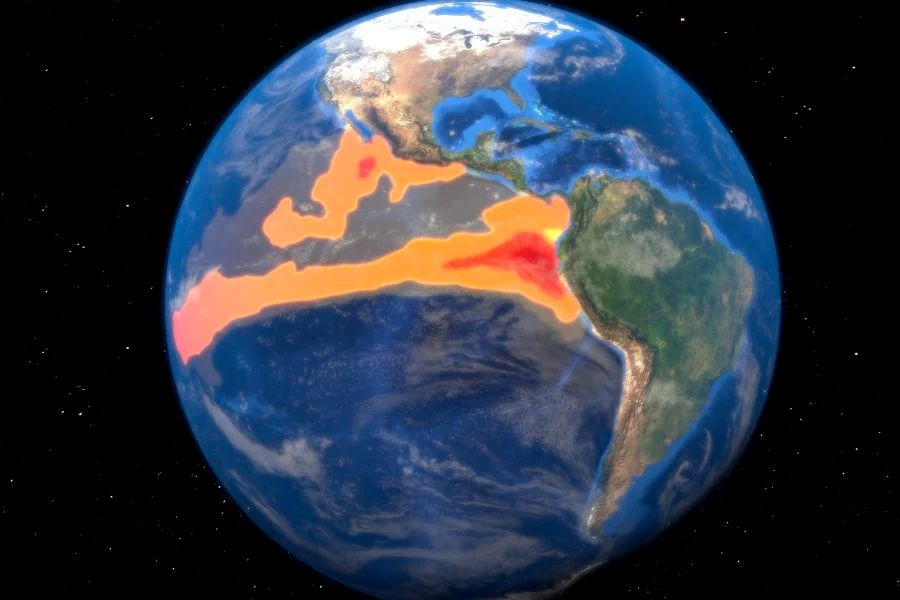
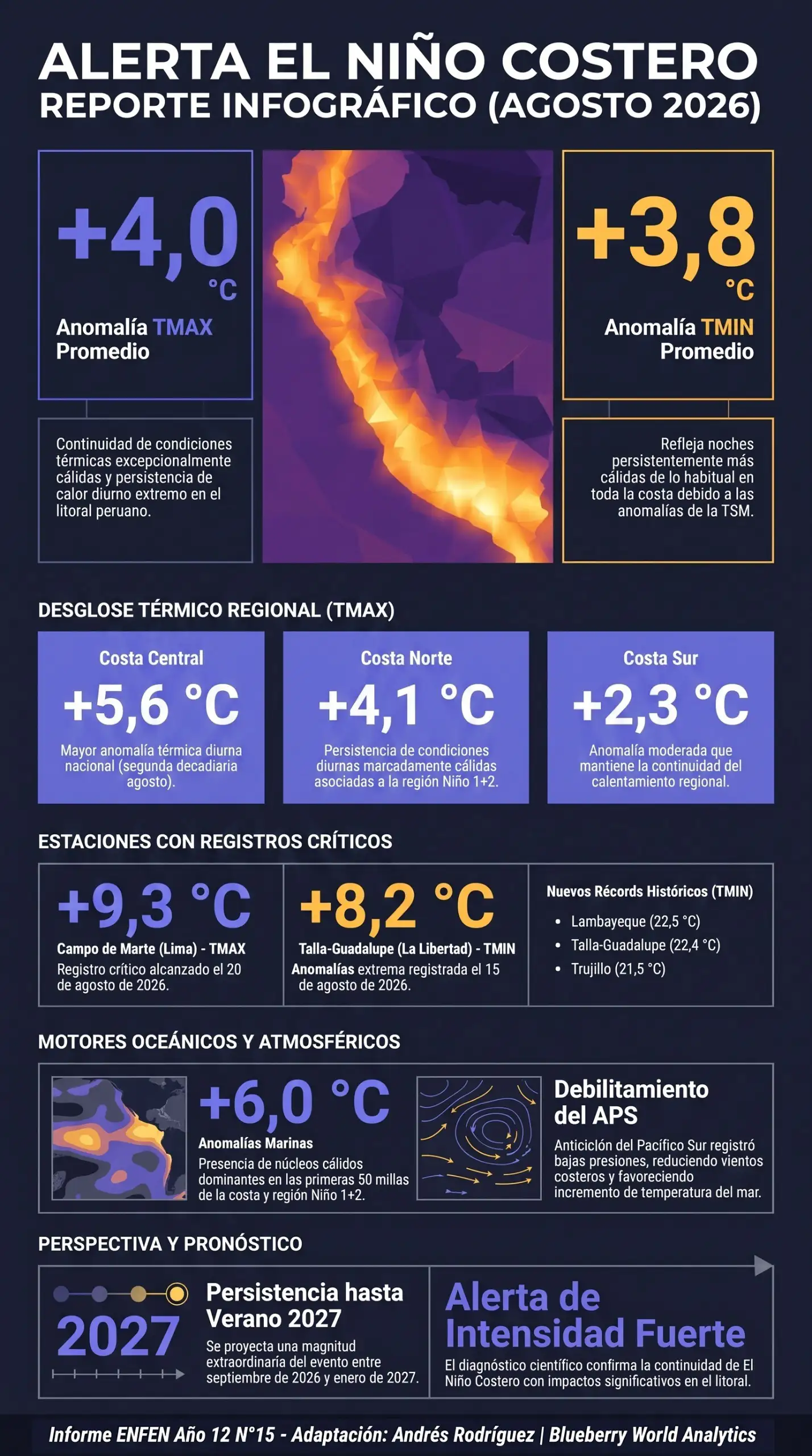
Towards the next campaign of blueberryWhat's changing is the precision. The industry is not only looking for volume, but also resilience in the face of climate challenges like the 2026 Coastal El Niño. The producers concluded their participation in the tour by ensuring that every decision made in the field translates into an export box with the firmness and flavor that the global market demands.
ARTÍCULOS RELACIONADOS