Blueberry science is growing and shaping the sector's innovation map
By: Natalia Rubio Iversen
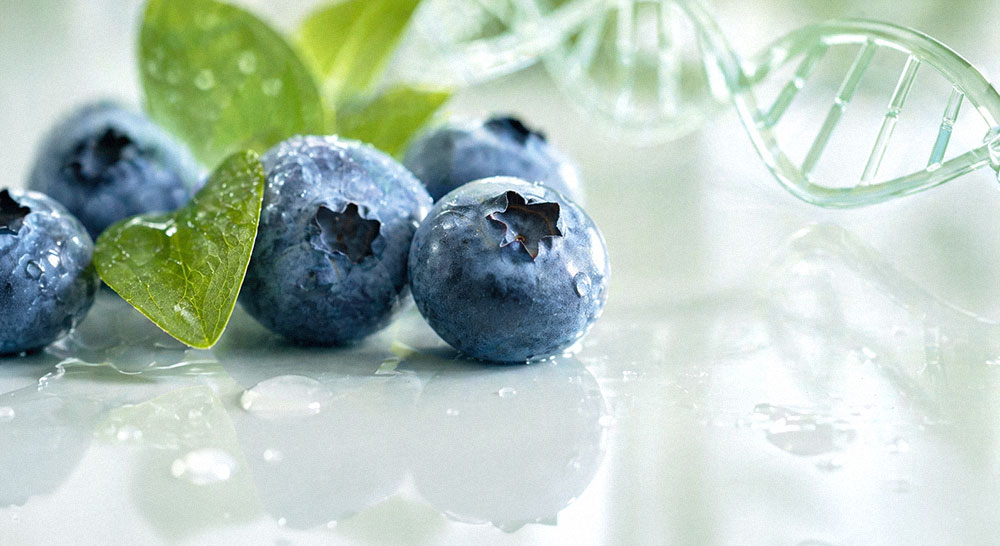
El blueberry It has established itself as a global industry and, in parallel, as an increasingly active scientific field. The analysis, published in Horticulturae, reviewed literature indexed in Scopus between 1987 and 2025 and reported a sustained upward trend, with a peak of 42 articles in 2024.
The article is led by David Alejandro Pinzon (IPRED, Industrial University of Santander) and co-authored by Gina Marcela Amado, Jader Rodriguez, and Edwin Villagran (Tibaitatá Research Center, AGROSAVIA). Its contribution is to provide a snapshot of the field, observing how scientific production is organized, which areas are experiencing the most development, and where opportunities arise to connect research with the needs of the sector.

What does a bibliometric perspective contribute?
Bibliometrics allows us to observe the trajectory of a research field through its growth over time, its collaborative networks, institutional leadership, and the way in which its research topics are organized. In this case, the study shows a sustained increase in publications and a recent leap that confirms the consolidation of the field. blueberry as an area of research.
Beyond the count itself, its value lies in the order it provides. It helps to identify which topics dominate, which are expanding, and how productive, technological, and applied science dimensions connect within the same knowledge ecosystem—useful information for understanding which evidence is gaining traction in management, post-harvest, and quality.

A more interdisciplinary field
The work describes an expansion towards disciplines that integrate production, physiology, post-harvest, quality, and analytical tools. It also reports a significant presence of Agricultural and Biological Sciences, along with Engineering and Biochemistry, Genetics, and Molecular Biology, confirming the increasingly cross-cutting nature of research in this field. blueberry.
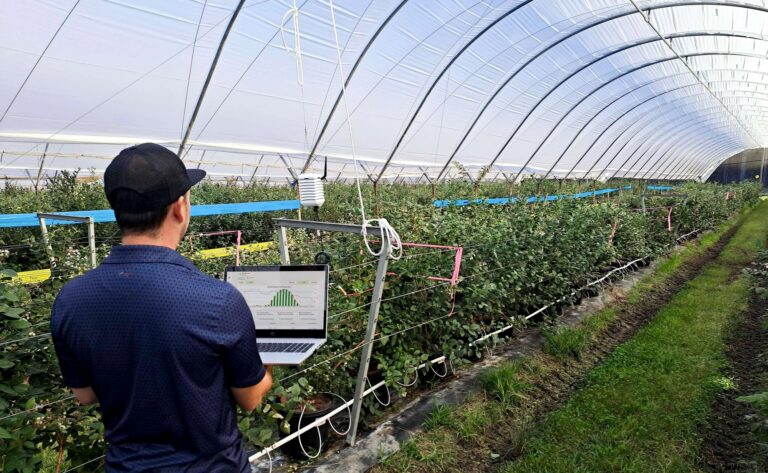
The thematic mapping groups the literature into axes that include physiology and health, plant protection, agronomic management and digitization, as well as compound processing and stability and analytical characterization. This structure helps to understand why innovation in blueberries is advancing in parallel in genetics, management, technology, and quality.
© waybeyond

Community engagement and transfer
As a framework for the sector, this type of analysis helps guide collaborations between universities, research centers, and companies when seeking to transfer evidence to production. Engagement with the field becomes more effective when information is translated into pilot projects, field validations, and standardized measurements, with shared indicators and clear objectives.
In an industry where efficiency, resilience, and measurable quality are gaining importance, understanding the pulse of research allows us to view trends with more perspective and identify opportunities for technically based collaboration.
Download here The complete study is available in the Studies section of Blueberries Consulting. Pinzon, Amado, Rodriguez and Villagran (Industrial University of Santander – AGROSAVIA).
Read also:
- Applied research in blueberries: new studies now available for download at Blueberries Consulting
- Blueberry: Four applied studies are now available for download from Blueberries Consulting
- From heat stress to final quality: the physiology that defines the modern blueberry today
- INIA warns of a new stage for the blueberry industry: focus on quality, efficiency and differentiation
- Academic research creates tool to measure the global competitiveness of blueberries
ARTÍCULOS RELACIONADOS