Technology as a strategic factor in the Chinese agricultural industry
China produces nearly 350 million tons of fruit annually, equivalent to one-third of global production. Its growing domestic demand in recent years, driven by the increased purchasing power of its middle and lower-middle classes, combined with its massive production volume, has made technological innovation in fruit growing a strategic state priority.
In this context, Chinese state authorities launched the “2024-28 Four-Year Smart Agriculture Plan,” which promotes the application of artificial intelligence (AI), big data, GPS satellites (Beidou), and national agricultural data platforms with a view to consolidating food security.
Complementary tools
Precision agriculture and mechanization in production and harvesting are complemented by sensor technology, IoT, and real-time monitoring tools. For example, some farms, such as those in Guangdong and Maoming, have installed 5G sensors that measure variables such as soil moisture, temperature, pH, and pest activity. This data enables automatic adjustments to irrigation and nutrition, reducing costs and risks associated with climate change. Companies such as Nongbo Innovation y Haisheng Group They offer IoT platforms with QR codes for each tree, facilitating tracking and traceability of fruit crops.

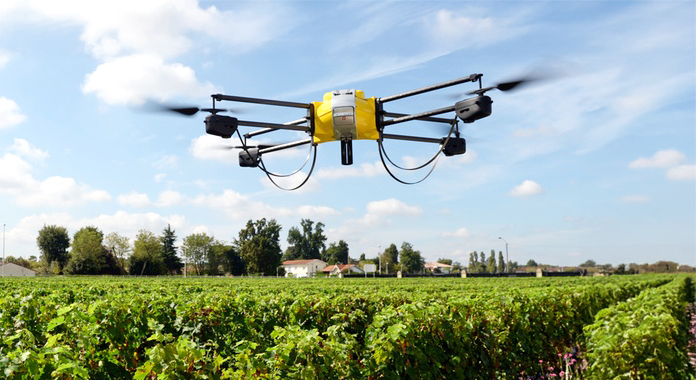
From the sky, China operates more than 200 agricultural drones, capable of applying pesticides, fertilizers, or conducting aerial surveys in search of a planned target or one of interest to the farmer. In parallel, companies such as XAG, FJ Dynamics y EAVision They develop robots for spraying, autonomous driving and harvesting delicate fruits.
Robotics and pruning
Pruning accounts for up to 25% of labor costs in fruit growing. Recent research presents robotic platforms capable of pruning autonomously, adapting to different fruit species (apple, grapevine, cherry), thanks to artificial vision and machine learning. Furthermore, LiDAR-camera fusion technologies allow fruit to be located with millimeter precision, significantly improving performance in automated harvesting. In another perspective, researchers from the China Agricultural University They have developed AI glasses with augmented reality. These glasses scan fruit, identify diseases, advise on pruning or harvesting, and reduce errors in some manual tasks from 10% to less than 2% in vineyards.
Leader in blueberries
In the last decade, China's blueberry production has grown more than tenfold, driven by successful public and private strategies that have focused on the technological modernization of agriculture. By 2024, China had more than 80 hectares dedicated to blueberry cultivation, with a production exceeding 500 tons, making it the largest producer in Asia and one of the largest worldwide.
Improved varieties and biotechnology
In Chentuan (Shandong Province), a R&D and production center, eight new blueberry varieties adapted to the local climate were developed: earlier, sweeter, more resistant, and with a 10% higher yield than traditional varieties. This technology requires long selection cycles, with trials lasting more than seven years to ensure productive stability. China is also integrating "Breeding 4.0" approaches, combining AI, big data, and high-throughput phenotyping to accelerate the harvest of new, resistant and customized varieties.

greenhouses
In Huaining, Anhui, blueberries are grown in smart greenhouses equipped with IoT technology, automatically controlling temperature, humidity, and soil pH. A single operator, using their mobile phone, can monitor tens of thousands of plants, enabling harvests up to two months earlier and double the yield compared to outdoor cultivation.
Examples are multiplying in Chinese fruit growing, such as in Qidong (Jiangsu region), a 21,3 ha farm with IoT sensor technology and controlled CO₂, managed by just three workers, generates an estimated annual value of 200 million yuan (almost USD 28 million).
In Langxi, Anhui, a cultivation base equipped greenhouses with 5G technology, allowing real-time monitoring of irrigation, nutrition, and climate from a mobile phone. A person monitors 47 pots of blueberries on 3,3 hectares using their smartphone. This extends the season and significantly improves fruit quality.
Recent academic proposals feature intelligent drones equipped with computer vision (YOLO model) capable of detecting both bushes and visibly exposed fruit, significantly improving yield estimation without destructive harvesting. These approaches enable dynamic sampling strategies, yield mapping, and more precise logistical planning.

future
China has transformed its blueberry industry through advanced technological innovation at every stage: from AI and big data breeding, to precision agriculture in smart greenhouses and IoT, to intelligent analysis and harvesting drones.
These advances not only increase productivity and quality, but also open up export opportunities and sophisticated value chains. However, consolidating a global brand, strengthening logistics and infrastructure, and protecting varietal property will be crucial to maintaining leadership and increasing the international presence of Chinese blueberries.
Projections 2030
In terms of planted area, the projected crop is expected to reach 120 hectares and a production of over 900 tons, with further expansion in value-added products such as functional powders, juices, and cosmetics, as well as growth in domestic markets and exports to Europe and the Middle East.
(This article is an excerpt from a comprehensive report on the Chinese industry that will be published in the next issue of Blue Magazine.)
Previous article
Danper, one of the main blueberry producers in PeruARTÍCULOS RELACIONADOS