Mexico is betting on varietal replacement and hydroponics in its blueberry crops
By: Alejandro Yoshioka
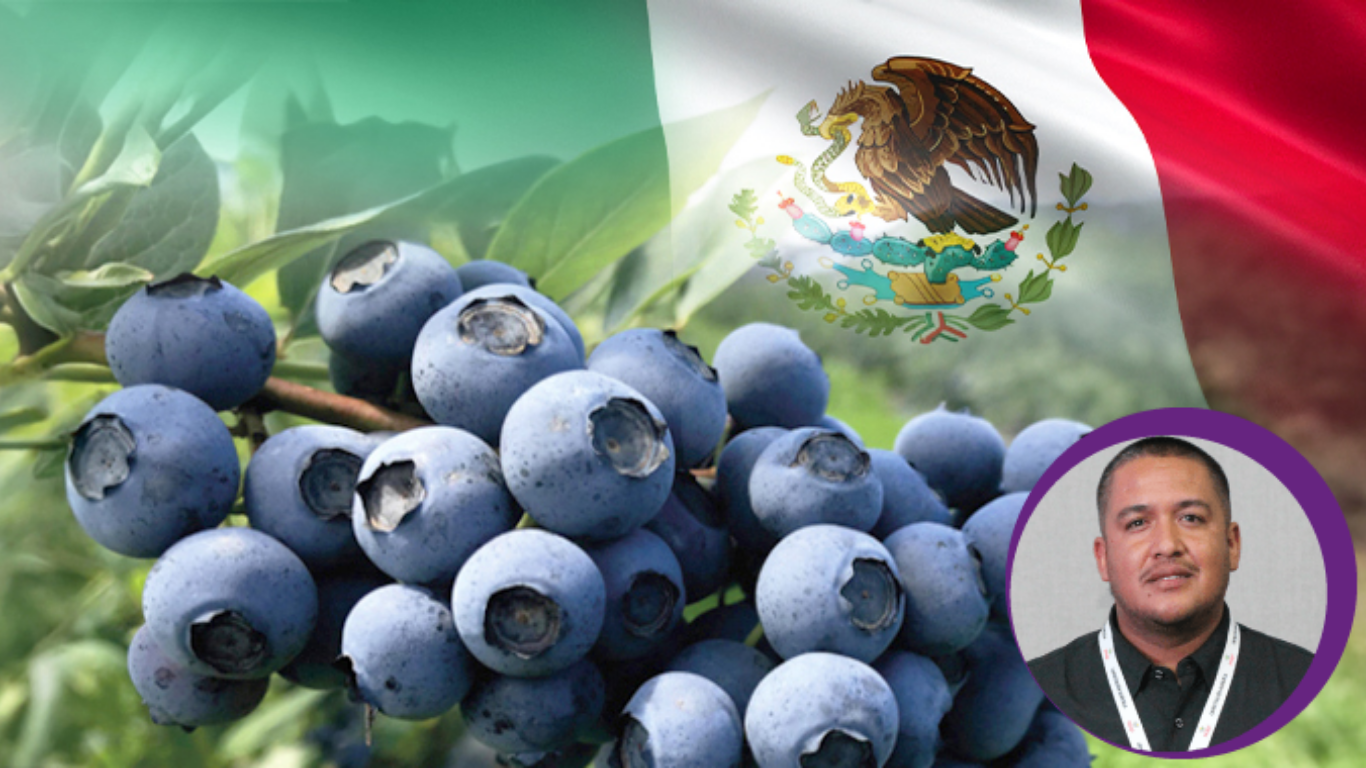
The industry of blueberry en Mexico The company is undergoing a strategic redefinition marked by varietal replacement and the search for more profitable market opportunities compared to its South American competitors. The objective in this process is to consolidate its position as a key supplier to the United States, leveraging its logistical proximity and refining its varietal offerings to meet market demands.
To learn more about this evolution, we spoke with Eduardo Betancourt Esparza, independent consultant in the cultivation of berries, founder of BETABLUE and agronomist specializing in Arid Zones from the Autonomous University of Chapingo.
Varietal replacement: from successful pioneers to newer genetics
Betancourt explains that the blueberry in Mexico It began with varieties that marked a very successful period. Biloxi was a pioneer around 2010, and Ventura gained ground in the following years. However, he points out that today much of that land has already been replaced by newer genetics, geared towards improving productivity and achieving jumbo sizes.
“There are still areas of Biloxi and Ventura remaining, but they are few: at most 20% to 25%, mainly in Michoacán, one of the producing areas of Mexico”He explains. In his opinion, Michoacán presents particularly favorable conditions, being a highly productive area located at 2.000 meters above sea level, with less pressure from pests and diseases and lower temperatures. "This allows Biloxi and Ventura to remain productive and has prevented varietal replacement from being as intense," the consultant comments.
He even adds that some fields are 10 or 11 years old, with long-lived plants that continue to produce.
The situation changes in lower-lying areas like Sinaloa, Guanajuato, and Jalisco, where conditions are more adverse and varietal replacement has been more intense. In their experience, the process is already well underway.
“In the fields I advise, there’s about 15% left to be replaced with new varieties; I have very little Biloxi and other older varieties left,” he notes. He then explains that the replacement process has been particularly active in the last three years and that several fields are now entering a crucial stage.
“In several fields we already have second and third-year plants entering their productive maturity. In these areas the varieties are earlier maturing than in colder areas, which is why the replacement has progressed so quickly,” concludes.
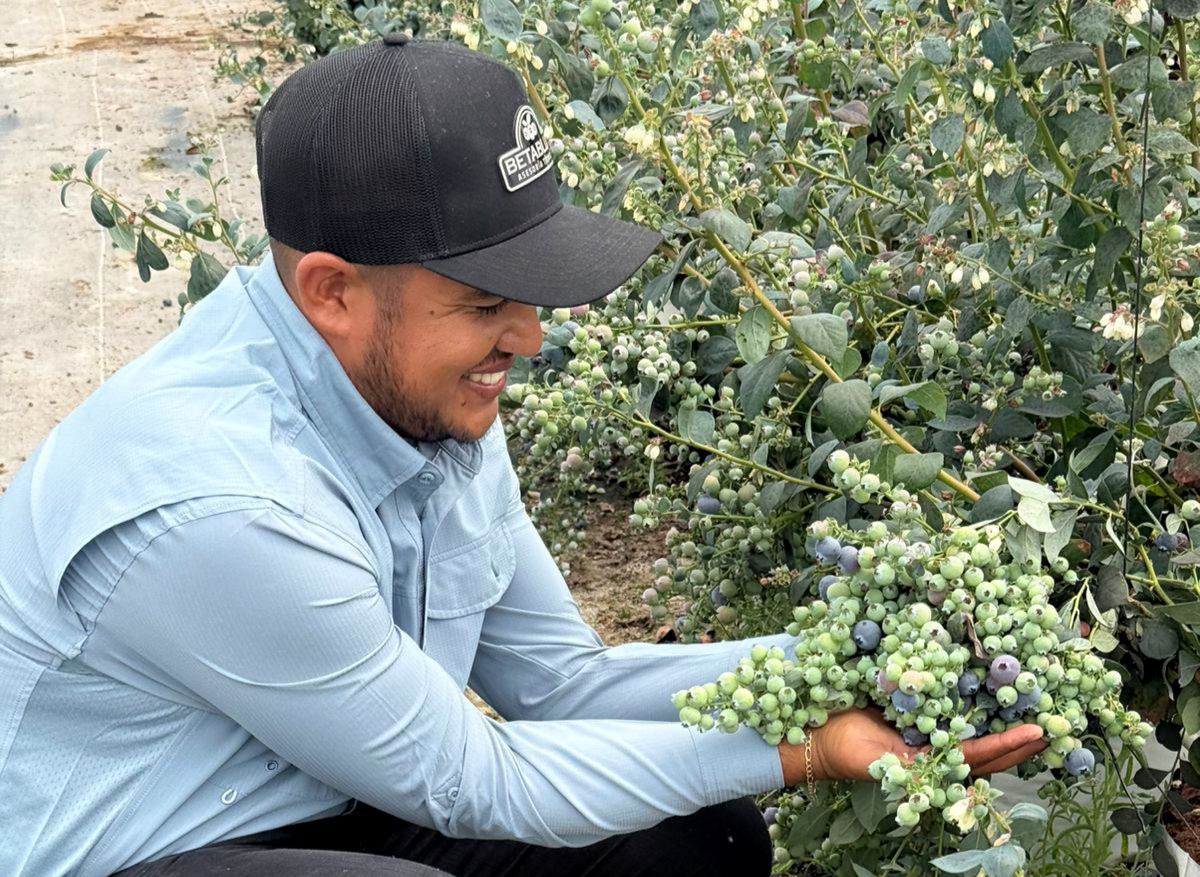
Eduardo Betancourt Esparza © Blueberries Consulting

What are the new varieties looking for: productivity, size and post-harvest quality
When discussing the selection criteria, Betancourt emphasizes a competitive advantage that Mexico maintains in its favor: its proximity to the United States. “Unlike Peru and Chile, we have the market very close; we can reach Texas in about 18 hours,” comment
However, he emphasizes that this advantage does not eliminate the need for careful selection. “Even with this proximity, we closely monitor the post-harvest life of the fruit. And today we focus on productivity and size, two key factors at this time.”
Regarding productivity, he notes that the goal is to exceed 20 tons per hectare, ideally from the first year. In terms of size, he adds that they aim to achieve a minimum of 50% jumbo size, with fruit over 19 mm.
Genetics that lead the replacement
Regarding which varieties are supporting this change, Betancourt indicates that a significant part of the replacement in Mexico comes from Fall Creek genetics.
"We have two very good and productive varieties: Sekoya Pop, which is the most widely planted variety in the world, and AzraBlue. In my opinion, these two varieties are the most productive and the most suitable for most of the projects we advise on."He says.
Furthermore, he values the results observed with Planasa genetics, mentioning Madeira, Manila, and the Maldives. In his case, he specifies that adaptation depends on the territory and altitude.“Of those three varieties, personally, I like Madeira, but for certain areas above 1.800 meters above sea level, they are very adaptable varieties.”, Señala.
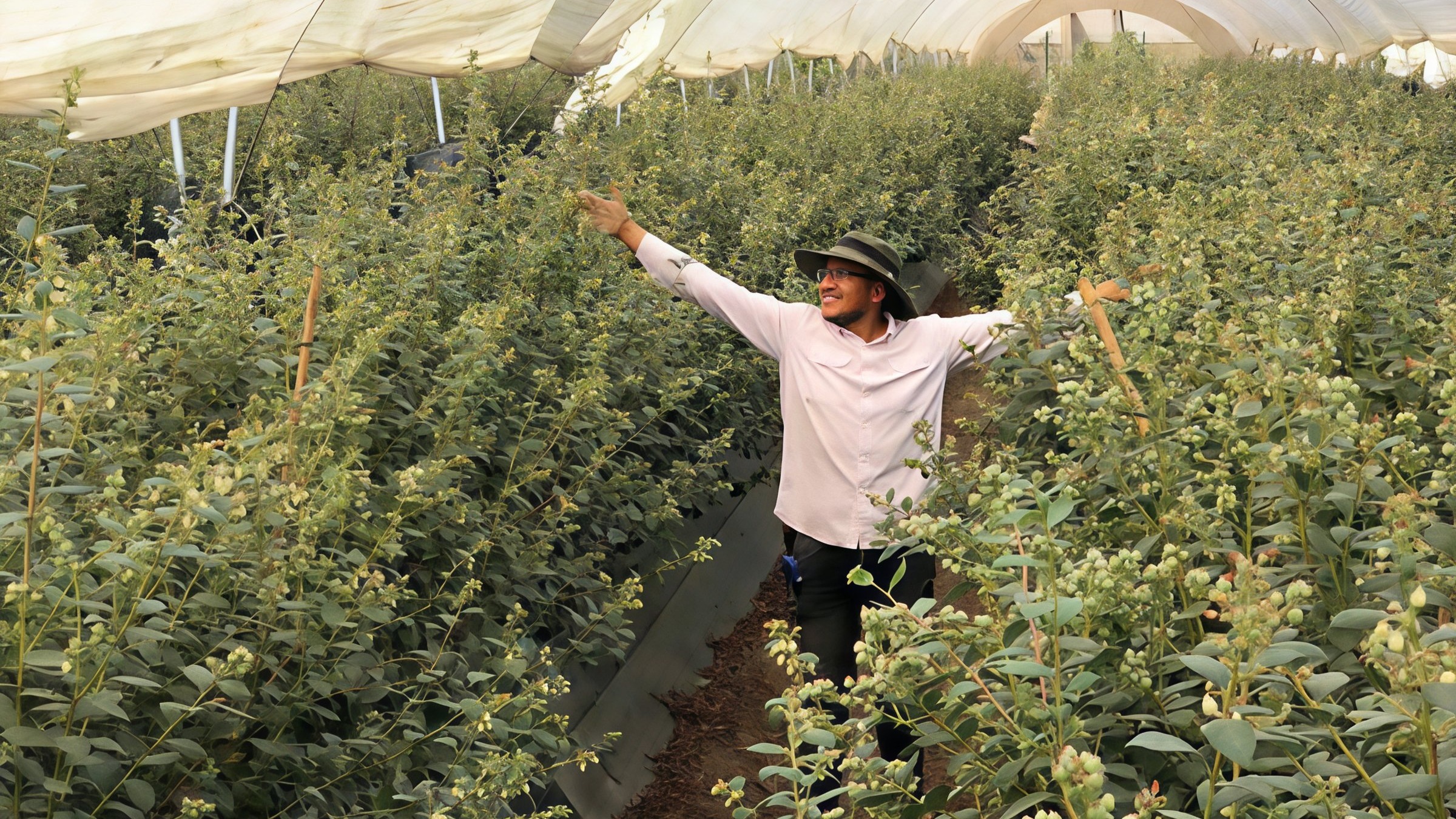
Eduardo Betancourt Esparza © Blueberries Consulting

Mexico in the global landscape: increasingly narrow windows
The United States remains the target market for major producers of blueberry of the world, so the competition with Peru and Chile has become more visible on the calendar. Betancourt sums it up in one idea: the fight for qualifying windows is getting tighter.
“The windows are narrowing. Peru enters very early, from July with significant volumes, and Mexico has a clear window: February, March and April,” he comments.
In that context, he explains that the agronomic adjustments seek to sustain a peak supply at the most favorable time. “We are adjusting the pruning to shift production towards our optimal growing window. In spring, we will prune later, even into July, to aim for a peak harvest starting around February 15th.”, Señala.
At the same time, he emphasizes the pressure for quality.We are also very aware that the fruit has to be of very good quality. That's why we are choosing jumbo-sized varieties that are relatively easy to produce.”, Anade.
Even so, he notes that Mexico's territory offers different harvest windows depending on the production zone. In colder areas, for example, pruning tends to be concentrated in December or January, which pushes production toward the same window as in Peru. There, the challenge lies in efficiency, as prices adjust accordingly.
“When we coincide with Peru, the price can drop to 4 or 5 USD per kilo, and that greatly affects the producer.”, Explica.
However, it also points out that in cold areas productivity can compensate for some of that scenario. “In colder areas we have achieved 30 to 32 tons per hectare: there is less pest pressure and the fruit is better sized. Although it takes longer to ripen, it usually gains firmness and better Brix levels,” he affirms
Market: The United States dominates, but interest in domestic consumption is growing.
Betancourt estimates that 95% of the blueberries Fresh produce grown in Mexico is sold to the United States, so its arrival in other markets such as Europe, China or Japan is limited and, when it does occur, it is usually by air.
“On a normal day we harvest, pack and ship the fruit the next day; we don’t have to do the whole process for long journeys that Peru and Chile require,” comment
However, he notes an opportunity that has gained relevance: the domestic market. “Major national and international companies are already moving a lot of fruit in the domestic market. That percentage is mostly handled by marketing companies, but it's becoming increasingly common to see them blueberries Mexicans in supermarkets, and that's a very important opportunity,” sustains.
© Blueberries Consulting
2026 Season: More area entering harvest and curve forming
With the harvest approaching, Betancourt projects that Mexico will seek to increase its production and see concrete results from varietal replacement. His analysis indicates that the largest planted area is concentrated in Jalisco and Guanajuato, accounting for approximately 70% of the total.
"In these places the harvest is just beginning; we are starting with the heaviest cuts.” He comments. Regarding early progress, he points out that the earliest varieties have already shown volume. “Varieties like Sekoya Pop and AzraBlue have already yielded around 9 or 10 tons harvested”, indicates.
He then adds that there are still varieties yet to enter the market strongly. “There are other varieties we still have left, like Biloxi, Atlas, Jupiter, and others that we're just starting to harvest in early February. So, the peak is just beginning.” Explain.
Hydroponics: the system change that boosts productivity and precocity
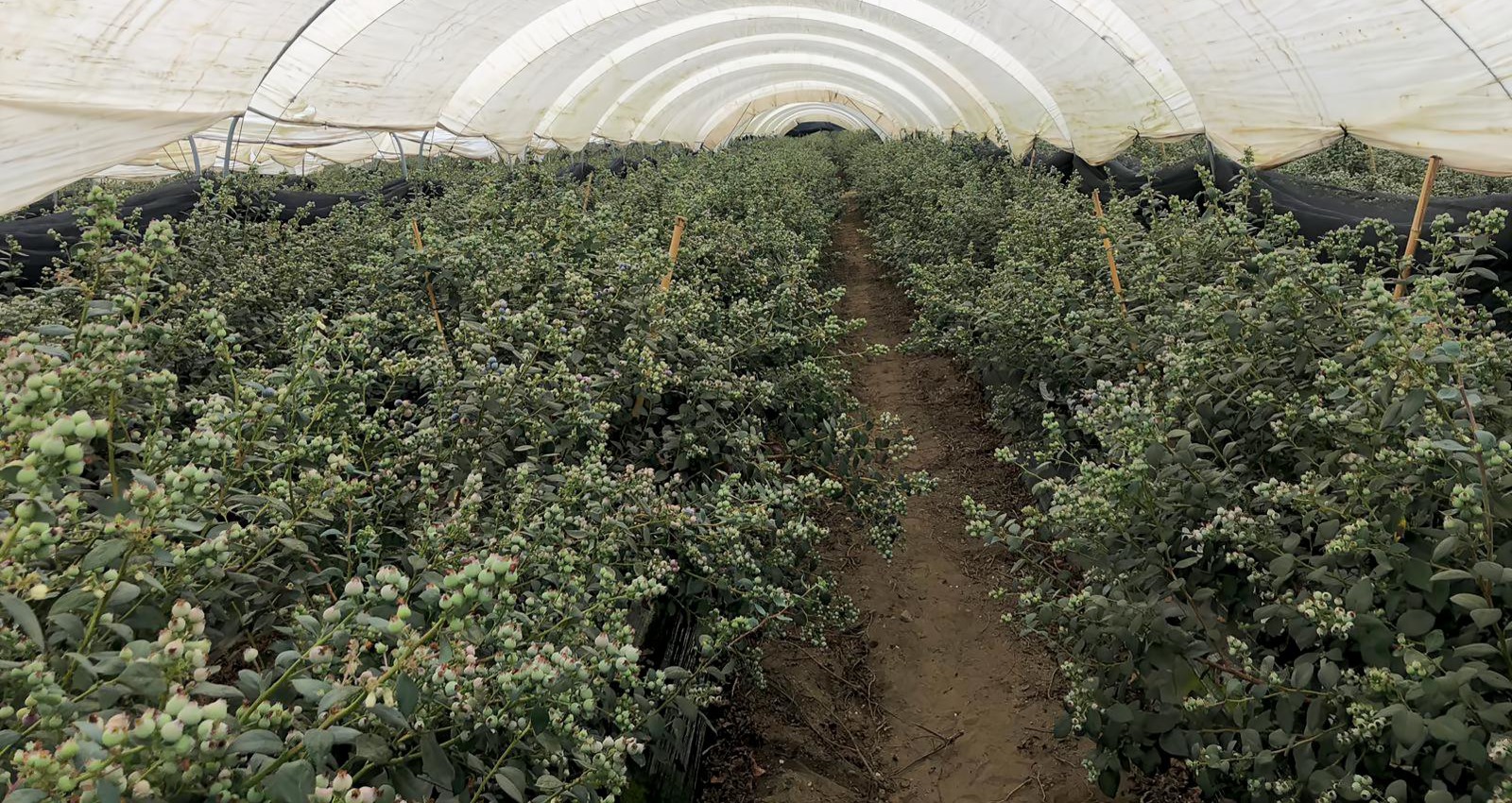
In the final part of his analysis, Betancourt argues that the consolidation of varietal replacement is accompanied by a key productive change: the migration towards hydroponics. “We are doing everything hydroponically,” He states, and adds that even producers who used to work in soil have transitioned to pots.
From his experience, the path is clear: “We have to migrate 100%.” In his portfolio, of the 1.000 hectares he advises, “Only 30 remain in the ground; the rest are in pots,” He explains that the learning curve was demanding, but today his handling of the situation has stabilized.
“We have matured as an industry. The learning curve for hydroponics was quite complex, but I think we have it pretty much mastered now. We know how to manage wood diseases, we know how to manage pests, and we already have very good experience with new genetics.”He says.
For Betancourt, the commitment to hydroponics is not only about productivity, but also about precocity. “For example, in areas from 50 meters to 1.700 meters above sea level, planting in April and starting to produce in November, we can harvest 23 tons hydroponically. In soil, with the same management approach, 10 tons would be a lot.”
He then adds that intensive handling and containerization have been decisive. “Before we used 30-liter containers; now we are working with 50 to 55 liters of coconut fiber substrate,” points out
With that adjustment and a more balanced nutrition, he says they have managed to exceed 20 tons from the first year and, in cold areas like Puebla, reach sectors with up to 35 tons per hectare.
Based on that, their outlook is optimistic. “It’s going to be a pretty good season. With very good quality, very good sizes, and it’s going to peak in February, March, and April. That’s our window, that’s our target season.” finished
ARTÍCULOS RELACIONADOS