Serbia and Romania lead the blueberry industry
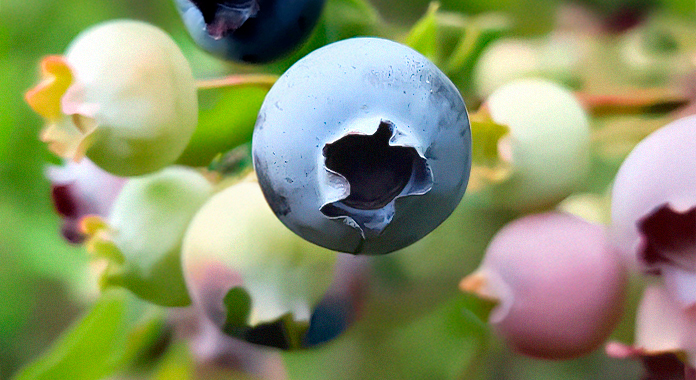
Serbia's blueberry industry has undergone a remarkable transformation over the past decade, evolving from a modest agricultural sector to one of Europe's most dynamic fruit production success stories.
With nearly 3.000 hectares of modern blueberry plantations currently in operation (a nearly fourfold increase from the 650 hectares recorded in 2018), Serbia has firmly established itself as a key player in the European blueberry market.
The numbers speak for themselves in this rapid growth trajectory. From 839 blueberry producers in 2018, Serbia will register 4161 in 2023. From just under 750 tons in 2018, Serbia now exports between 5500 and 6000 tons of premium blueberries annually, mainly to the EU and Russian markets. Together with Romania, Serbia has become the largest blueberry producer in Southeast Europe, a region that together exported more than 12 tons of fresh blueberries in 000.

A season of promises
Ana Bošnjak, Agro Bel System, one of Serbia's leading blueberry producers and exporters, is optimistic about the current season. "We were fortunate that our blueberries were spared the late frosts that negatively affected stone fruit in Serbia and the region," he explains. "The rainy weather in April had no adverse effects, and the good, warm weather in late May and early June favored fruit filling and ripening. We expect excellent quality with satisfactory yields."
This positive outlook reflects the resilience and sophistication that currently characterize the Serbian blueberry sector. Modern cultivation techniques, combined with favorable conditions, allow Serbian producers to consistently offer high-quality fruit to the most demanding European retailers.
What distinguishes the Serbian blueberry industry is its professional approach to production and supply chain management. Agro Bel System exemplifies this evolution, working with more than 90 agricultural cooperatives that operate modern plantations with advanced technology. "We provide them with advice, helping them select technological solutions and care measures throughout the season," notes Bošnjak. "What is crucial is mutual trust and strict adherence to quality and food safety standards."
This professionalization is reflected in the composition of the industry. A significant percentage of investors in Serbian blueberry production come from other economic sectors, bringing a business perspective that elevates the entire value chain beyond traditional agriculture. The immediate payment system for delivered fruit guarantees positive cash flow for producers, especially during harvest season, when costs are highest.

Diversification and innovation
Duke remains the dominant variety in Serbian blueberry production, with particular attention paid to the optimal harvest season, from early June to mid-July. However, forward-thinking growers are diversifying their portfolios.
“Some of our growers are starting with Sekoya varieties, and we're also considering this option,” Bošnjak reveals. “National supermarkets are also looking for this assortment to expand their seasonal offerings and introduce newer, more attractive varieties.”
This strategic approach to varietal selection demonstrates the industry's responsiveness to market demands. Serbian producers supply the domestic market with blueberries until mid-September, demonstrating their ability to extend the season and meet diverse consumer preferences.
Like their European counterparts, Serbian blueberry growers are facing rising labor costs, with an increase of between 12% and 15% compared to the 2024 season. This challenge has prompted innovative solutions, such as collaborating with workers from Asian countries and investing in renewable energy.

Agro Bel System has launched a solar energy production project to address rising energy costs, demonstrating the sector's commitment to sustainable and profitable operations.
Investments in modern sorting and packaging machinery allow Serbian exporters to ship more than 80 percent of their total blueberry volume in retail packaging, thus meeting the specific requirements of European supermarket chains.
Traditional export destinations include Poland, Germany, the Czech Republic, the Netherlands, and other EU countries, with stable and growing demand creating opportunities for expansion.
The blueberry sector in Southeast Europe, in general, presents attractive opportunities for European buyers seeking reliable, high-quality suppliers. Romania leads the region's exports with 6.020 tons, closely followed by Serbia with 5.689 tons, which together account for more than 95% of Southeast Europe's blueberry exports. This concentration of expertise and production scale creates opportunities to establish strategic partnerships with European retailers and importers.
Previous article
Europe leads trade with Morocco despite a slight decline in 2024ARTÍCULOS RELACIONADOS