Economic diplomacy boosts Morocco's promotion abroad
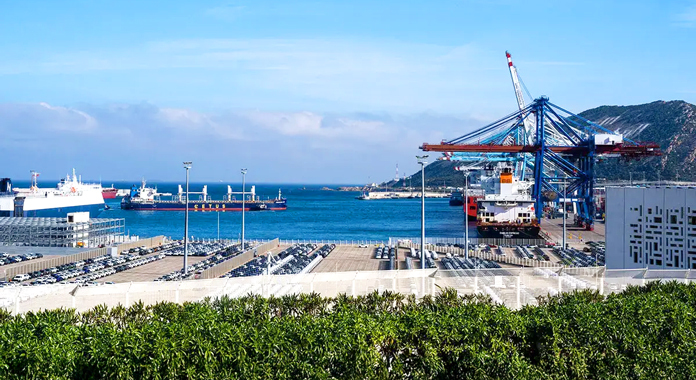
The push Morocco is giving to economic diplomatic action aims to preserve its strategic interests and the country's crucial role in the economic dynamics of the African continent.
With this goal in mind, Morocco is adapting to new competitive realities, developing its export offering to position the country not only as the future center of Africa, but also as a significant player on the international economic scene.
Morocco has significant opportunities for international cooperation and plays a key role in contributing to the development of the African continent. Through the continued activation and enhancement of its economic diplomacy, the North African country has gained experience in trade negotiations, enhancing its strategic positioning in Africa and its visibility on the international stage.
According to the United Nations, Morocco has demonstrated dynamism in defending Arab and African causes within the UN General Assembly. Thus, during the three occasions in which the North African country has been a non-permanent member of the UN Security Council, Morocco has represented Africa in the votes on several important resolutions relating to the situations in Mali, Burundi, and the Central African Republic.

The development of economic diplomacy is turning Morocco into a true African hub, thanks to its numerous investments in future-oriented sectors such as infrastructure, telecommunications, agriculture, finance, and energy. This was confirmed by the President of the African Union Commission, Ali Youssouf, in a speech read on his behalf during a reception held on July 30 in Addis Ababa by the Embassy of Morocco in Ethiopia and the Permanent Mission of the Kingdom to the African Union (AU) and the Economic Commission for Africa of the UN-AEC.
The president of the CUA He highlighted the Moroccan business presence in many AU member states and praised its economic dynamism. Youssouf underscored how Morocco's strategy in terms of diplomacy, geopolitics, economics, and culture has made this country an attractive hub for investors.
Moreover, Ali Youssouf took advantage of the occasion of the 26th anniversary of the accession to the throne of king Mohamed VI to express its deep gratitude to Morocco, appreciating its multifaceted contribution to the harmonious functioning of the African Union.
Economic diplomacy
Economic diplomacy is one of the fundamental pillars of Moroccan foreign policy. Therefore, several measures have been adopted this year, such as the creation of the Directorate General of Economic Diplomacy inside of the Ministry of Foreign Affairs, as well as the appointment of economic attachés in most Moroccan embassies.
Within the framework of the Moroccan Government's plan regarding foreign trade, Economic diplomacy allows us to capitalize on Morocco's diplomatic network, which comprises nearly 110 embassies and 60 consulates. The goal is to leverage these advantages to promote Moroccan products and take advantage of the country's competitive advantages in the current challenging circumstances.

Morocco's network of relations around the world is very relevant, especially in Africa, where it has More than 1.000 agreements signed with African countries since 2000.
Regarding the agreements signed by Morocco with countries on other continents, the following stand out:
- Free Trade Agreement with Türkiye (2003).
- Free Trade Agreement with the Mediterranean Arab countries through the Agadir Declaration (2004).
- Agreement with the United Arab Emirates (2003).
- Free Trade Agreement pending signature with the countries of the West African Economic and Monetary Union (UEMOA) and the Central African Economic and Monetary Community (CEMAC).
- Free Trade Agreement with the United States (2005).
- Free Trade Agreement under negotiation with Canada.
- Association Agreement with the European Union (1996) and Advanced Status with the EU (2008).
In this regard, Morocco not only maintains bilateral agreements with the United Arab Emirates, Turkey, Egypt, Tunisia, the United States, and Jordan, but also enjoys other multilateral agreements with Mediterranean Arab countries. Thanks to economic diplomacy, Morocco has signed nearly 7.500 international agreements, of which almost two-thirds were signed during the reign of Mohammed VI. according to data from the Moroccan Ministry of Foreign Affairs.
Foreign policy
Morocco's foreign policy, guided by the strategy of King Mohammed VI, prioritizes bold economic diplomacy, capable of mobilizing energy to develop partnerships, attract investment, promote the country's attractiveness, gain new positions, and intensify foreign exchanges.
Based on a new approach to the Kingdom's diplomatic action, the King's ambassadors are considered, as he stated in a speech given on August 30, 2013, to be soldiers who must deploy all their efforts in the service of their country's economic objectives.

On the occasion of the National Day of Moroccan Diplomacy, held on April 28, 2000, in Rabat, the Moroccan sovereign emphasized that Moroccan diplomacy must mobilize to capitalize on the new image established in international public opinion of a democratic and modernist Morocco, an example of moderation and tolerance.
The purpose of diplomatic work is to explore new areas of economic cooperation, to deepen Morocco's strategic dimension in order to make it a model partner in the perspective of a supportive partnership, as well as to take full advantage of globalization, integrate into the global economy, and, above all, mitigate its negative effects on the country's development, giving a new impetus to its foreign relations.
Morocco's international relations are part of three distinct geostrategic spaces:
- A space of proximity that represents Morocco's neighborly relations with Algeria, Spain, and Mauritania.
- A complex space, comprised of Morocco's cultural heritage: the Arab-Muslim world, Africa, and the Euro-Mediterranean region.
- A global space, with the planet as the new scale of globalization.
In parallel with these three spaces, Moroccan diplomatic action is based on three relevant principles: Neighbourhood, solidarity and partnership within the framework of three global approaches of geopolitical, geoeconomic and geocultural order.
Reflection and action in the field of diplomacy, in its various spheres, including the economic aspect, aim to comprehensively defend Moroccan interests abroad, consolidate the country's traditional ties, establish strategic partnerships, and engage the country in emerging global issues.
However, the main objective of Morocco's diplomacy and foreign policy remains: Resolving the Western Sahara conflict through a realistic and credible autonomy project. With determination, pragmatism, realism, moderation, foresight, firmness, the King's participatory approach, strategic vision, and diversification, Morocco is increasingly strengthening its new mode of operation on the international stage.
Participate in the International Blueberry Seminars most important, and be part of the World Blueberry Tour!
To participate and learn more details about the XXXVIII Morocco Seminar 2025 enter the following link: XXXVIII International Seminar on Red Fruits
To purchase tickets click HERE
ARTÍCULOS RELACIONADOS