Peruvian blueberries reduce their concentration of destinations and move towards a more balanced distribution

El Peruvian blueberry It shows a less concentrated destination structure for the current season. In the latest available cut, the ÍHerfindahl-Hirschman Index (HHI) It stands at 0,3043, below the levels observed in previous seasons, indicating a relatively more even distribution across markets.
The signal reflects an adjustment in the weight of the main destination and the strengthening of other trade routes. Rather than an abrupt change, the data suggests a gradual diversification, which can contribute to resilience, although it also requires greater commercial and logistical coordination to maintain consistent returns.

An indicator that reflects the distribution
The HHI measures how concentrated exports are in a few markets. When the index falls, it means that the volume is being distributed more widely among destinations, reducing the relative dominance of one or two main buyers.
In the current analysis, the decrease in HHI aligns with a mix where the leading market continues to lead, but with a smaller relative share, and where other destinations increase their weight within the total exported.
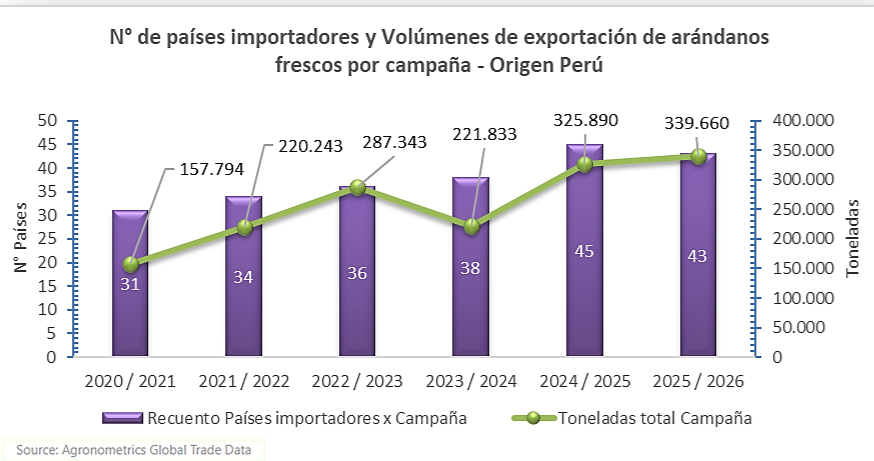

The United States is still in first place, but its weight is less.
The United States maintains its leadership in blueberry Peruvian, although in the last cut its participation stands at 47,1%, a lower level than the range observed in previous seasons, when it remained more stable above half of the total.
This adjustment is one of the factors that explains the decline in the HHI. With less concentration in the main destination, the export portfolio tends to be better diversified, but it also increases the need to manage more markets with different demand, price, and turnover dynamics.
Europe and Asia gain relevance
The second axis is strengthened through the Netherlands, which operates as a logistics platform to Europe, while Asia increases its weight driven by the growth of China and the gradual advance of other markets in the bloc.
This shift contributes to a more distributed structure and reduces dependence on a single destination. Even so, a cautious approach is necessary, as the performance in the final stretch of the season could alter the relative importance of some markets.
A trend that is confirmed by the closure
The current HHI provides a consistent signal of ongoing diversification, but the definitive structure solidifies when the full season is incorporated. In previous seasons, the final weeks have tended to concentrate significant shipments to certain destinations, so the indicator may adjust as the season progresses.
In short, the blueberry Peru's export portfolio shows a more balanced range of destinations in the latest available data. The trend points to less trade concentration, which could strengthen the business's resilience, provided the export strategy maintains continuity, logistical efficiency, and consistent quality across a broader market landscape.
ARTÍCULOS RELACIONADOS