Blueberries in coconut fiber: a strategy for more controlled and efficient production
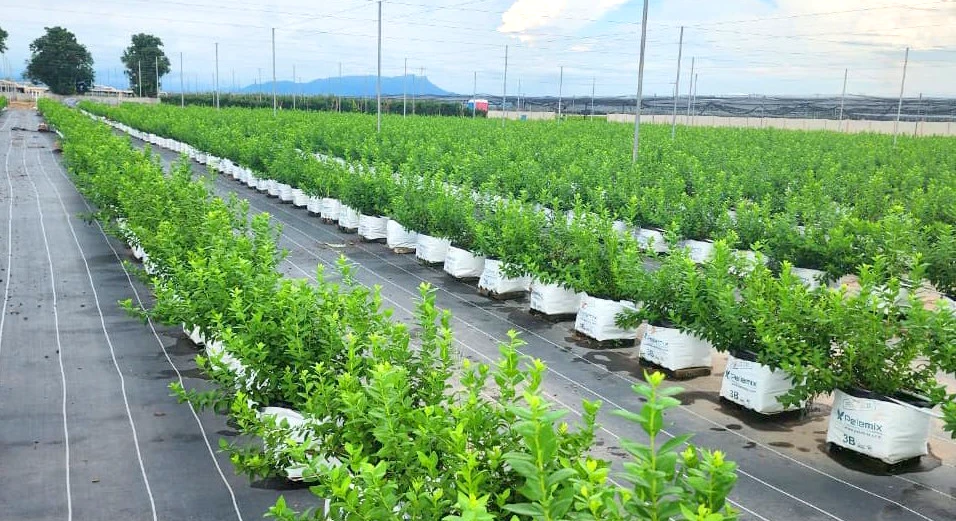
In commercial farms of blueberries In the United States, Chile, Peru, and other leading markets, a significant shift is underway. Growers who traditionally cultivated in soil are moving their crops to container systems, and at the heart of this transition is coconut fiber, a material derived from the coconut husk.
The reason is simple: growers need greater control over root zone conditions, water use, nutrition, and crop uniformity. As labor costs rise and the availability of suitable farmland declines, substrate-based growing systems are becoming established as a practical solution for modern crop production. blueberries.
Commercial experience and various studies demonstrate that soilless cultivation systems help overcome many of the challenges associated with native soils, such as poor drainage, pH variations, root diseases, and nutritional imbalances. Research conducted by the University of Florida and other institutions has shown that blueberries Grown in well-managed substrate systems, they can achieve faster establishment, earlier entry into production, and higher yields than those obtained in open fields, without compromising fruit quality.
How coconut fiber solves these challenges
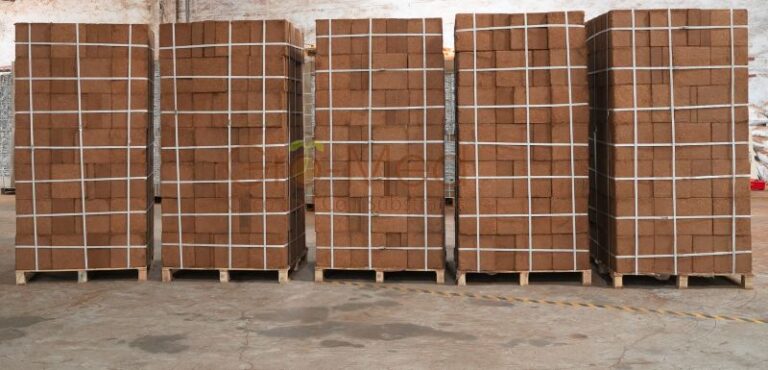
Coconut fiber, a renewable byproduct of the coconut industry, offers a technically optimized growing medium that addresses the main limitations of traditional cultivation. blueberries.

Air-water balance
The porous structure of coconut fiber provides excellent water retention along with efficient drainage, keeping roots hydrated without causing waterlogging. A study published in Scientia Horticulturee (Noguera et al., 2003) concluded that its physical properties—total porosity, aeration capacity, and water retention—are highly favorable for container-grown crops. This allows for more frequent irrigation with smaller volumes of water and reduces the risk of anaerobic conditions in the root zone, a problem to which blueberries are particularly susceptible.
Root development
The fibrous structure of coconut fiber promotes vigorous and uniform root development. In the cultivation of blueberryWhere root health directly influences plant vigor, fruit set, and long-term productivity, this aspect is fundamental to maximizing yield.
Efficiency in the Use of Water and Nutrients
precision irrigation
The predictable drainage and water retention characteristics of coconut fiber allow for more precise irrigation strategies. A study by Fernández-Fernández et al. (2019), published in Agricultural Water ManagementThe study demonstrated that berry crops grown in containers with coconut fiber required significantly less water to maintain optimal moisture levels, achieving yields equal to or greater than those obtained in open fields. In regions with water scarcity or stricter regulations, these savings are especially relevant.
Nutritional control
The high cation exchange capacity (CEC) of coconut fiber gives growers precise control over the plant's nutritional environment. Unlike other substrates that retain and release nutrients unpredictably, coconut fiber allows for accurate adjustment of fertigation programs.
Research by Verlinden et al. (2009), published in HortScienceThey confirmed efficient nutrient absorption in fertigation systems with coconut fiber, facilitating the precise application of macro and micronutrients during each stage of cultivation, including the preference of the blueberry by sources of ammoniacal nitrogen.
© Vaighai Agro products Limited

pH Management
The blueberries They are highly sensitive to the pH of the root zone and perform best in ranges of 4.5 to 5.5. Unlike agricultural soils, where the pH can vary considerably within the same plot, coconut fiber provides a uniform substrate whose acidity level can be easily adjusted to the needs of the crop.
In addition, washed coconut fiber with low electrical conductivity (<0.5 mS/cm) helps create a more stable root environment, reducing salt stress and improving nutrient availability.
Disease risk reduction
Soil pathogens, especially Phytophthora cinnamomi and species of Pythium, represent some of the most significant threats to the commercial production of blueberries.
Because it contains no native soil pathogens, coconut fiber provides a clean environment from the start of cultivation. Several studies also suggest that certain microbial communities naturally present in processed coconut fiber may contribute to the suppression of certain root pathogens, providing an additional layer of protection for the crop.
The profitability of the system
The economic benefits of transitioning to containerized production systems using coconut fiber are widely documented:
Yield increases per hectare of 20% to 40% compared to traditional soil systems, driven by higher planting density and optimized root zone management.
Improvements in water use efficiency of between 30% and 50% compared to open field sprinkler irrigation systems.
Shorter crop establishment time, allowing commercial production levels to be reached one to two seasons earlier than in conventional systems.
An economic analysis published in HortTechnology (Williamson et al., 2020) concluded that, although containerized systems require a higher initial investment, their net present value surpasses that of traditional systems over a 15-year horizon, thanks to higher yields and lower losses due to disease.
© Vaighai Agro products Limited

Why are producers choosing gro-med blue b?
As the cultivation of blueberries As it becomes more technical and specialized, the quality and consistency of the substrate become increasingly important.
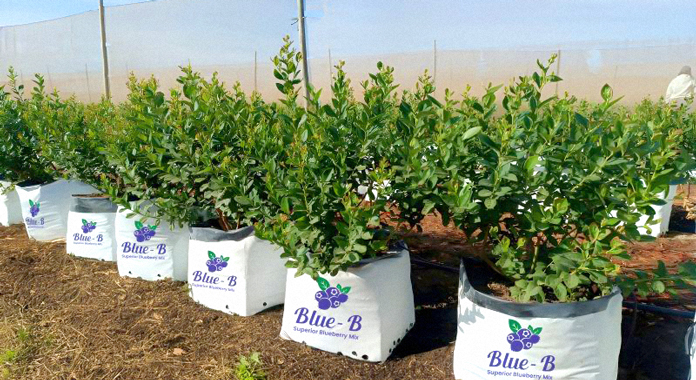
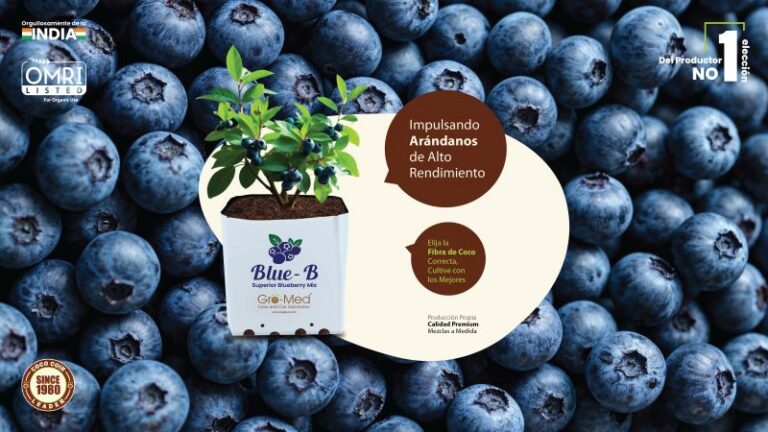
Gro-Med's Blue-B substrate solutions have been specifically developed for the commercial production of blueberriescarefully combining coconut fiber and coconut chips to offer the ideal balance of moisture retention, aeration and drainage required by a healthy root system.
Manufactured in India and exported to more than 75 countries, Gro-Med substrates undergo rigorous quality control processes including washing, aging, screening and laboratory testing to ensure uniform physical and chemical properties in every batch.
For large-scale commercial operations, this consistency in particle size, moisture, electrical conductivity, and pH provides a solid basis for standardizing irrigation, fertigation, and crop management programs across the farm.
As Pounraj Kulandaivel, Director of Gro-Med, points out:
"The producers of blueberries Today, they seek predictability. They need a substrate that performs consistently in every bag, every container, and every season. At Gro-Med, our goal is to provide a solution that helps maximize root health, water efficiency, and long-term productivity.
A strategic decision for modern production
Modern production of blueberries It is migrating towards coconut fiber-based systems because they offer higher and more consistent yields, greater water use efficiency, lower health risks, and a more sustainable alternative to traditional soil cultivation.
For large-scale commercial operations, adopting coconut fiber substrates is no longer simply a technical improvement: it's a strategic decision. The combination of higher yields, better fruit quality, lower disease incidence, water efficiency, and environmental sustainability makes coconut fiber the ideal choice for modern production. blueberries.
And when that coconut fiber comes from a manufacturer like Gro-Med, where quality, uniformity, and specific engineering for blueberries These are absolute priorities; producers gain the confidence and predictability needed to grow successfully.
ARTÍCULOS RELACIONADOS