Argentina: Senasa certified exports

From Tucumán came almost 1.000 tons of blueberries.
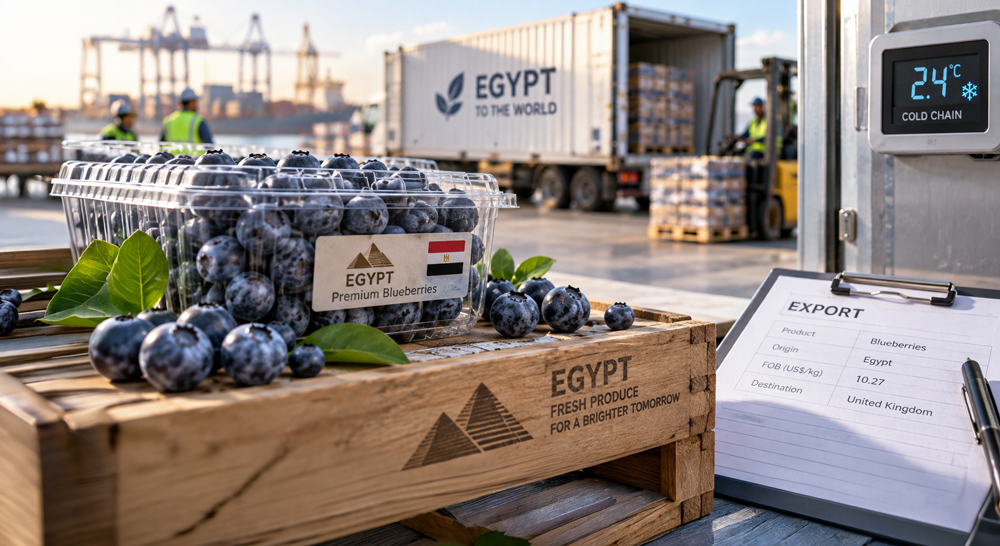
The National Service of Health and Agri-Food Quality (Senasa) supervised and certified the export, by air from Tucumán, of almost 1.000 tn of blueberries of the 2017 / 18 campaign to the United States and England. Of that total, 946.678 kilograms were destined for Miami, Orlando and New York, while 15.622 went to England.
The Animal and Plant Health Inspection Service of the United States Department of Agriculture (USDA-Aphis) established a treatment protocol for the export of fresh blueberries, which is done with methyl bromide at 15,6 ° C and benefits the final quality of the product at destination.
According to the phytosanitary requirements of the United States and the work plan agreed between Senasa and Aphis, the blueberry receives a pre-shipment authorization after being treated with methyl bromide. For this, the chambers of the fumigation centers must be authorized by Senasa and Aphis, and the fruit treated under the inspection of an agent of the National Agency.
All phytosanitary procedures are operating normally and at the request of the interested parties. It is important to note that there are some problems that are overcome to ensure that the planes are loaded in a timely manner, said the Regional Director of Senasa NOA South, Carlos Grignola.
In Tucumán, 11 fumigation centers are enabled, with a total of 17 bromination chambers. In addition, 26 packaging has approval from the Agency for export.
The Senasa has the function of phytosanitary certification of blueberries, controlling strict compliance with the work plan agreed with the Aphis.
The Senasa developed in Tucumán a monitoring network by means of 25 traps of the "delta pegamentosa" type located in the blueberry production area to detect in an early form the presence of the plague commonly known as "vine moth" Agency technicians monitor them regularly, always with negative results.
Argentina is free of Lobesia botrana in blueberries, although certification is maintained from regular controls. "We emphasize that the responsibility to continue keeping the country free of Lobesia lies with both the public and private sectors.", Expressed Carlos Grignola.
Source: Lagaceta.com.ar
Previous article
Summary of the global blueberry marketnext article
Hortifrut's strategy in Peru ...ARTÍCULOS RELACIONADOS