China uses drones to transport vegetables from the field to the market
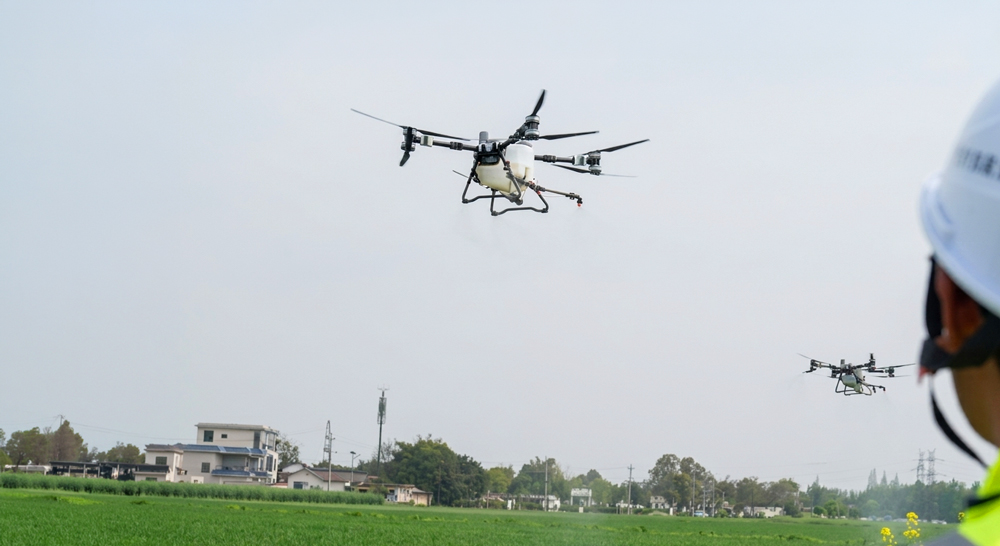
In the Xindu district of Chengdu, China, drones are being used to transport vegetables from fields to sorting centers as part of local logistics operations.
The system operates using designated landing points, where produce is received directly from the field, loaded onto drones, and then transported to the sorting facilities. This method is particularly useful for small-volume orders that require rapid delivery and preservation of freshness.
“Pick and deliver is especially suitable for small batch orders that require punctuality and freshness. It allows for quick delivery,” said Gou Senlin of Sichuan Liuhang Agriculture Co.

Drones can transport products over distances of up to four kilometers and complete delivery to sorting centers in just five minutes. Once sorted and packaged, the products are dispatched by truck. Deliveries are made the same day within Sichuan and the following day to other regions.
“This 'air express line' takes advantage of the most valuable freshness window for agricultural products and responds to the characteristics of modern, order-based agriculture, with small batches, multiple shipments, and high efficiency,” said Mao Zaiyou of the Xindu District Transportation Bureau.

According to the company, each four-kilometer flight costs between 15 and 20 yuan, equivalent to between 2 and 3 dollars, and each drone can carry up to 30 kilograms. During the current season, the system has fulfilled approximately 90.000 orders.
Since implementing these operations last year, the company has expanded its services to nearby areas. Currently, approximately 80% of its activity is linked to the agricultural sector, including crop protection, planting, and transportation.
Chengdu brings together more than 500 companies linked to the low-altitude economy, with aircraft capable of covering a wide variety of payload capacities.
“To advance agricultural modernization, we are promoting technological integration by combining drones with the Internet of Things and big data, aiming for complete traceability from field to table and ensuring greater freshness. These new flying agricultural tools will be key to developing new, high-quality productive forces in agriculture during the 15th Five-Year Plan (2026-2030),” said Li Yunfei of the Agriculture and Rural Affairs Bureau.
Read also
Xinjiang consolidates its position as a key player in China's winter blueberry market
China's zero-tariff policy will boost Zimbabwe's blueberry exports
Previous article
China's zero-tariff policy will boost Zimbabwe's blueberry exportsARTÍCULOS RELACIONADOS