From growth to resilience: the global blueberry industry facing climate change
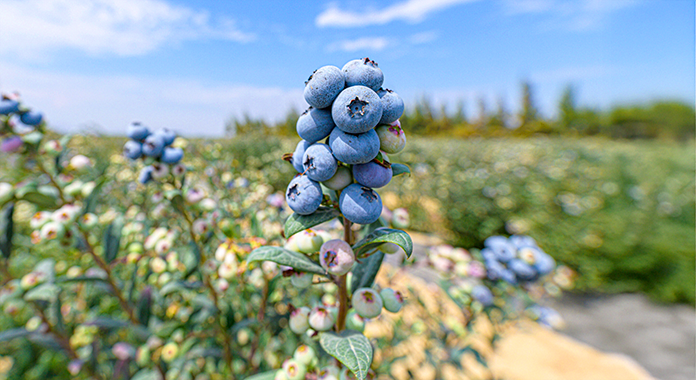
El blueberryCorn, a symbol of the agro-export dynamism of the Global South, has become one of the crops most sensitive to the climate transformation affecting global agriculture. What two decades ago was a niche crop in the Northern Hemisphere is now a strategic industry for countries in Latin America and Africa. However, its rapid growth faces a reality that is profoundly redefining the crop's competitiveness and geography.
Fruit and vegetable growing systems are highly sensitive to temperature variability, and blueberry It is an emblematic case: it requires well-defined chilling hours, available water at critical times, and climatic stability during flowering, fruit set, and harvest. The sustained increase in temperatures, which according to the IPCC has already reached 1,2 °C above pre-industrial levels, coupled with extreme weather events, places the crop in a zone of operational and economic risk.
Latin America: between expansion and climate limits
The region that drove the globalization of blueberries is experiencing the first structural signs of change.
ChileThe region, which led international trade for years, is experiencing a sustained loss of chilling hours in its central zone, affecting bud break and reducing fruit size and uniformity. The production frontier is expanding southward, while the central valley is beginning to lose competitiveness due to climate variability and higher management costs.
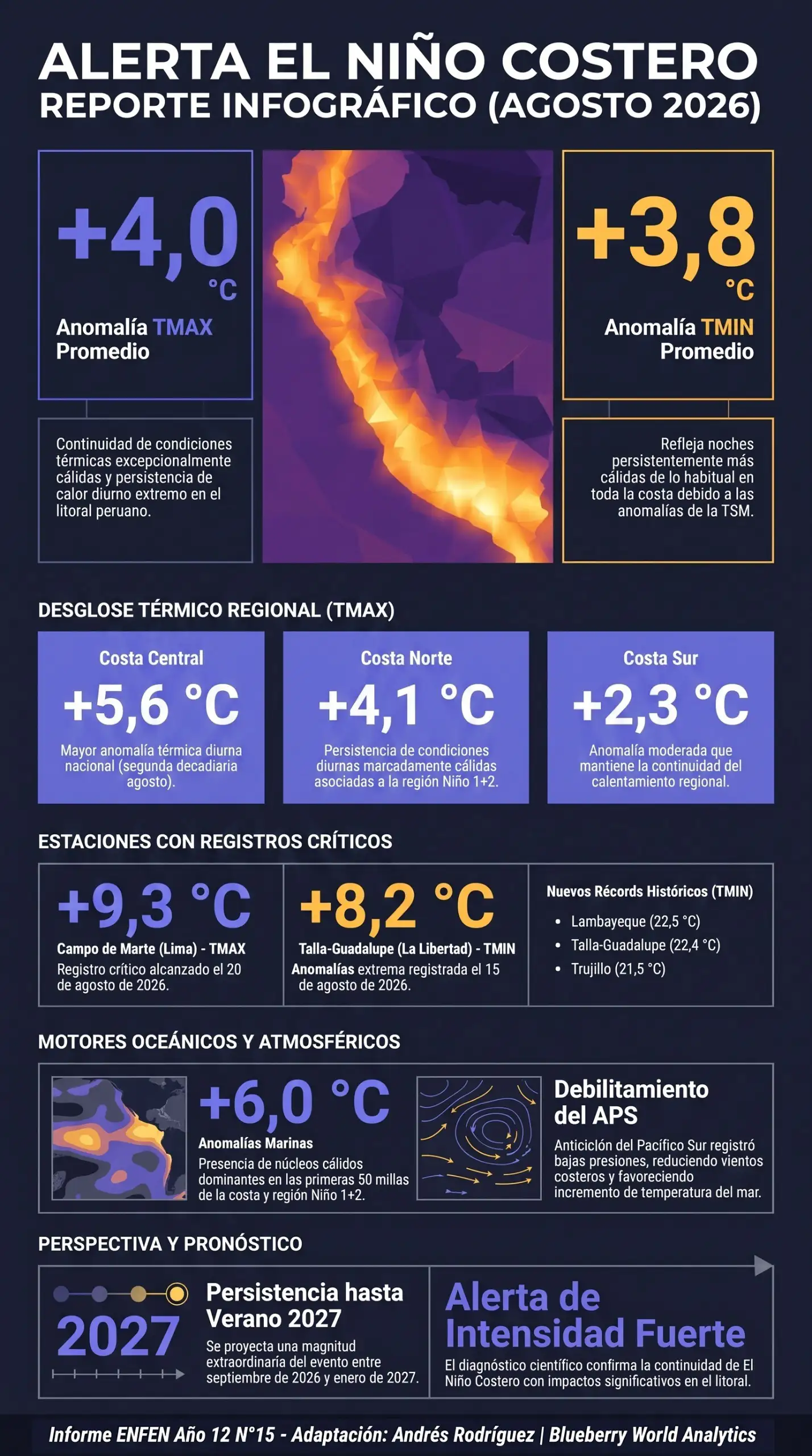
En PeruExport success depends on a technologically advanced and highly efficient irrigation system. However, heat waves associated with El Niño and the advance of salinization threaten the sustainability of this model. Projections point to a scenario of greater water stress by 2030, which will require new varieties, adaptive management practices, and greater energy efficiency.
Mexico It faces significant advances in flowering and alterations in the phenological cycle, especially in Michoacán and Jalisco. This affects coordination with pollination and fruit condition. Meanwhile, Argentina It observes a clear shift in cultivation towards cooler and more stable Patagonian areas, although with logistical challenges and infrastructure costs.

Africa: Accelerated growth under climate pressure
The African continent has become a key player, especially in early supply to Europe.
MoroccoWith an intensive production model and proximity to European ports, the region faces heat waves exceeding 40°C and increasing pressure on water resources in the Loukkos Valley. The risk of productivity loss by 2035 necessitates urgent investment in water efficiency and shading.
En South AfricaThe rise in temperatures opens up new areas for cultivation, but competition for water intensifies with other fruit industries. And in ZimbabueBlueberries have emerged as an alternative for agricultural diversification, although the limited water infrastructure and the dependence on external varieties represents a significant challenge.
Physiological and health impacts: quality under threat
From a biological point of view, the blueberry It is particularly vulnerable. Reduced chilling hours compromise bud break; high nighttime temperatures decrease anthocyanin synthesis, affecting color and post-harvest life; and ripening becomes uneven, reducing commercial quality.
Climate change also favors the expansion of plagues and diseasesPathogens such as botrytis o Phytophthora their incidence increases, while insects such as Drosophila suzukii They are now establishing themselves in regions where they previously posed no threat. This increases management costs and reduces profit margins, especially for smaller producers.

Economics and logistics: a model under pressure
Production costs have increased due to the need for adaptive infrastructure: more precise irrigation, shading systems, radiation shielding nets, increased energy for pre-cooling, and monitoring technologies. According to recent estimates, in South America, costs per kilogram have risen by approximately 18% in the last four years, putting pressure on profitability.
In logistics, heat waves and erratic weather complicate maintaining the cold chain in ports and along shipping routes. Countries like Peru and Morocco, which export in high ambient temperatures, must resort to more energy-intensive technologies, increasing their carbon footprint in a market where Europe and North America are raising their sustainability standards.
Innovation and adaptation gaps
The industry has responded with a strong push to the genetic innovation and the use of precision farmingBreeding programs seek varieties with lower chilling requirements and greater thermal tolerance, while sensors and predictive models allow for more accurate adjustments to irrigation and nutrition.
But the adaptation is uneven. Large companies are advancing quickly in new technologies, while small producers... Latin America y Africa lack access to climate financeagricultural insurance and technical assistance. This gap threatens to deepen territorial inequalities and limit the sector's resilience.

A future that is shifting south
By 2050, climate models anticipate a shift in suitable areas between 200 and 500 km south in the southern hemisphere and at higher altitudes in the northern hemisphere. Southern Chile, the Mexican highlands, or higher altitude regions in Morocco could gain importance, while traditional areas would lose productive capacity.
Dgrowth to resilience
Climate change is no longer a projection. It is a daily reality that is redefining how we grow, invest in, and market our food. blueberryThe industry will need to move from a model of accelerated expansion to one of based on resilience: water efficiency, genetic innovation, territorial governance and verifiable sustainability.
Latin America and Africa – now key players in the global market – have the opportunity to lead this transition. The challenge is not only to maintain supply, but also to ensure that blueberries remain a viable, competitive, and sustainable crop in a world where the weather is no longer a predictable ally.
This note is a summary of a report that will be published in the next edition of Blue Magazine.
ARTÍCULOS RELACIONADOS