Strong growth, great challenges

Antonio Walker takes a breath and begins the enumeration. Interest rates are low, the dollar has risen, international demand for fruit is strong and prices ditto. The leader of fruit growers in the Maule Region adds the recovery of rainfall from the Metropolitan Region to the south and the growth of exports to Asia.
«As a fruit grower I am very optimistic about what is coming in 2015. It's been a while since we had such a positive scenario. We are going to start growing in an important way in the medium term. I think it is a strong response to those who despised agriculture in the years that copper was with high prices«summarizes Antonio Walker.
There are bases for the optimism of the union leader. According to the latest analysis of the liquidations to the producers of table grapes, that Fedefruta makes, in the 2013-2014 campaign the producers received the highest returns of the last seven seasons. The thompson variety stood out with a rise of 48,6% in that period.
In other areas there are positive developments. At the end of December, the first shipment of live heifers to China departed. There were more than seven thousand animals that were sent from Puerto Montt. The expectations of the organizers is to continue with more shipments. In any case, the immediate effect was already felt, with a revaluation of Chilean cattle. Even, connoisseurs of the Chinese demand assure that in the future the ovines can be added.
«I believe that the conditions are in place for the agroforestry sector to grow over the 5% in 2015. We project significant growth in exports of vegetables, pigs, poultry, fresh fruit, wines and dairy products. There are solid factors, so it will not be just a good year, but we are facing the start of a very positive cycle for our sector«, summarizes the Minister of Agriculture Carlos Furche.
However, not everything shines in the agro 2015 version. In front of the good external panorama, there are signs of attention at the local level. The new year brings uncertainties in the legislative field, with the discussion of labor reforms and the Water Code.
In addition, in areas such as Petorca, Limarí and Copiapó the drought is pushing the agro of these areas to a critical situation. Meanwhile, the cultivation of the apple could not get on the triumphal trolley of fruit growing, due to the large remaining stocks in the Northern Hemisphere, which would punish the prices.
Below, some of the elements that will mark the destination of the farm in 2015.
Prepare for good weather
After several complex years, with increasing costs in energy, scarce labor and falls in profitability, there is a time of good returns. Now, rather than reducing costs to keep the business above the waterline, the challenge is to occupy the largest resources available to farmers. We must bear in mind that agriculture is one of cycles and the important thing is to take advantage of good times to prepare for bad times.
The councils are on two fronts: reorder the relationship with the banks and renew the fields. Rodrigo Manasevich, director of the Utilitas consultancy, explains that during the last years a significant number of producers had to incur bank debt to continue with the operation of their companies.
«The first thing you would do is use the highest returns in reducing the financial burden. This allows you to plan more calmly the future of your business. There is nothing worse than negotiating with a bank when one is complicatedor," says Manasevich.
The executive emphasizes that this strategy is associated with an 2015 in which there will still be a need to clear political variables in the area of labor and water management, which, according to him, makes it reasonable not to make strong investments immediately.
However, Antonio Walker believes that it is time to get his hands on the fields.
«We have been several years in which fruit investments have been low. The result is that we have a lot of orchards with problems of competitiveness and that are a brake to take advantage of the good time that comes for the fruit sector", it states.
The union leader believes that it is time to invest in gardens of low height and greater density, easier to work for seasonal workers and with the possibility of machining a greater amount of work. In addition, he believes that we must take a leap towards the new varieties that have emerged in recent years and that are more in tune with the demands of consumers.
Walker proposes to plan a renovation of 5% to 10% annual of the orchards.
Chinese funds arrive
Of being almost irrelevant five years ago, today exports to China are marking the destination of several items. The most recent example is how the start of exports of heifers to that country altered up to 130% the price of animals in the dairy industry. The situation adds up and continues in cranberries, cherries and nuts. Also the pigs and birds begin to dance to the Chinese rhythm.
So far, yes, business has been more like a one-way trip: Chileans trying to open markets in the Asian power.
However, 2015 could mark a greater involvement of Chinese investors in the Chilean agriculture.
The example has already been given by 2013 Lenovo Holdings, a Chinese conglomerate that bought five fruit companies developed by the venture capital fund Growth Agrícola.
In fact, the visits of importers and oriental marketers to Chilean orchards multiplied in 2014. The Chinese were very interested in partnering with local farmers to control part of the production.
A connoisseur of oriental interest points out that at 2015 two Chinese investment funds will land on the property of fruit orchards. For them, it represents the opportunity to give greater stability to their business, since Chile has become an important supplier.
In addition, unlike in Australia or California, in the United States, the arrival of capital does not generate nationalist suspicions.
The union fights that come
For agriculture, the arrival of 2015 brings two major fights: the reforms of the labor legislation and the Water Code.
Regarding the last, the president of the National Society of Agriculture, Patricio Crespo, said that, according to the union, some of their positions violate the constitutional rights of farmers.
Of particular concern is the legal effect that producers may have on the passage from being owners of water rights to being considered holders of them.
Meanwhile, Minister Carlos Furche calls to put cold pads to the concerns of farmers.
«The executive sent in October an indication to the bill that is being processed. Modifications are proposed in relation to the rights not granted and the notion that water is a national good for public use is strengthened, establishing priorities in its use, starting with human consumption. In addition, agroecological sustainability is strengthened, with the regulation of minimum flows, and a period is established in which the usufruct of the water right is given for thirty years, renewable, provided that the use of water has been as far as possible. requested, used productively. It seems to me that all these are more than reasonable modifications. What corresponds is that we have a good debate in Congress, which is where you have to do it«says Carlos Furche.
If the fight of the guild organizations in the reform of the Water Code will be hard, in the labor market they seem to start with an advantage. The Minister of Labor, Javiera Blanco, along with her husband Carlos Furche, met with the Agricultural Roundtable, which brings together both employers and agricultural workers, at the end of December.
In the sector it was valued that the White minister committed herself to use in 2015 as a basis of the discussion on the labor legislation the advances of the table. The objective here is to move towards a legal framework that recognizes the particularities of the sector, governed by laws made to face urban contexts.
Eye with the milk and the drought nortina
Not everything will be legislative fights in 2015. Elements such as drought in the north or how to finance research and development (R & D) and promotion in the dairy sector will also require attention from farmers.
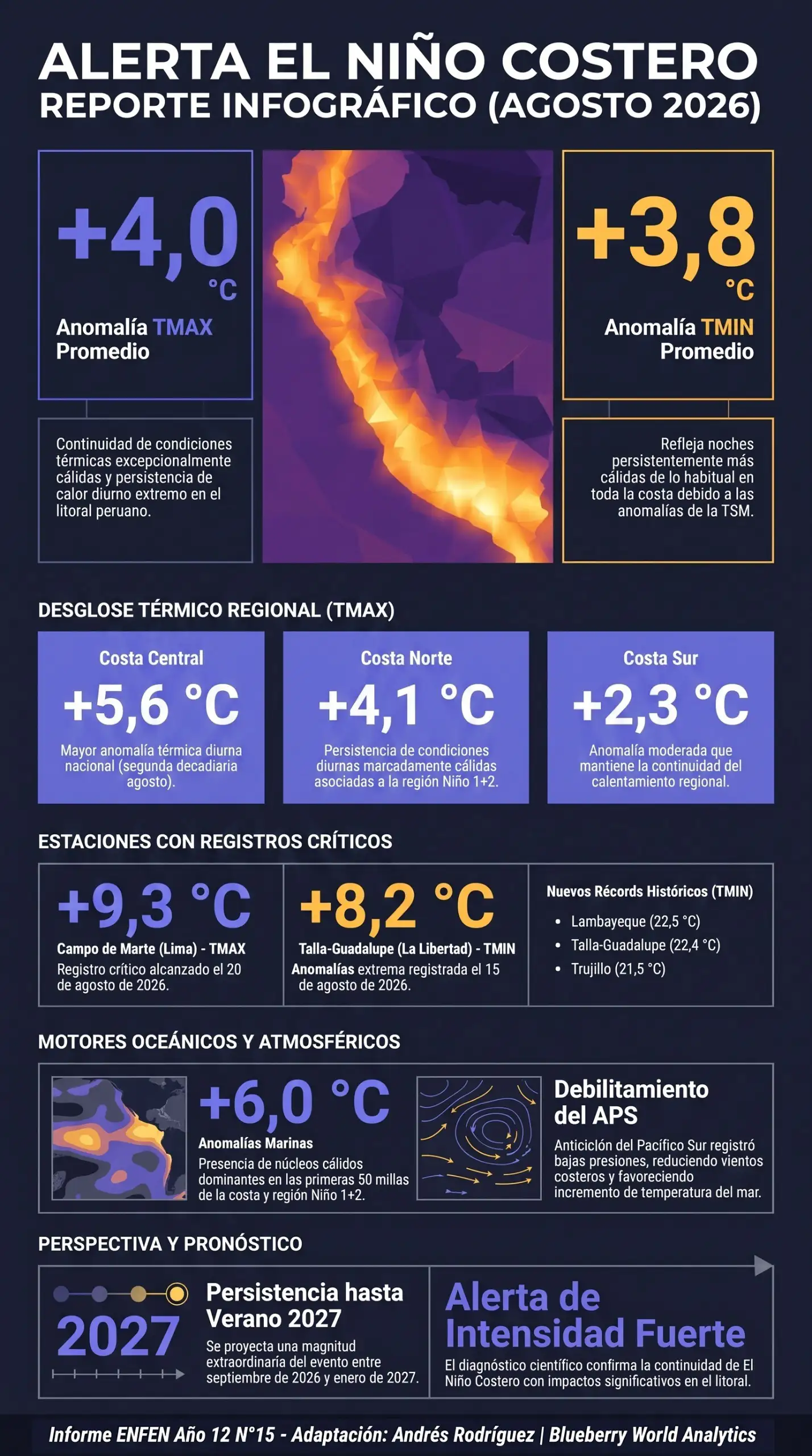
The possible arrival of the El Niño Phenomenon had hope for northern farmers this year. In areas such as Petorca, Limarí and Copiapó, drought has limited production. Many producers have opted for irrigation only for maintenance, to save the plants, but with zero production. Even so there have been problems, because as the layers are very low, the resulting water has more salts and minerals, which poses major agronomic challenges.
However, 2014 passed and the heavy rains did not reach the north, although they were regularized in the central zone and had an increase in the south. Meanwhile, the authorities, although they have meteorological reports that point to a rainier winter than the previous ones, are reluctant to assure that this will happen.
Meanwhile, in the south the unions will be on alert during 2015 due to their tense relations with the processors. The conflict over the "Development Bonus", which has Fedeleche and Soprole facing each other, escalated to the Supreme Court.
Of course, local dairy organizations are preparing for a scenario in which the judiciary dictates that the bonus, equivalent to $ 1,2 per liter, must be delivered directly to the producers. This money is collected, until now, by the processors, which derive it from three actors: the regional guilds (which in turn finance Fedeleche); the Consorcio Lechero, responsible for R & D in the sector, and Promolac, dedicated to promote the consumption of dairy products in the country.
The regional unions have refined strategies to retain producers and receive funds from the Development Bonus. What is not clear is what will happen with the Dairy and Promolac Consortium. «The processors also benefit from these two organisms. Why do we have to finance them if they have given negative signals about the guilds?«, threatens a southern leader.
According to Minagri projections: "More than 5% should grow the agroforestry sector in 2015«.
Carlos Furche Minister of Agriculture: «When you face a positive cycle like the current one, it is easier to focus on solving the deficits that we have in the agricultural and forestry sector. For example, there are spaces to open more modern fruit packings and to improve certain technological aspects of the production of table grapes«.
Antonio Walker President Fruseptima: "In situations such as the reform of the Water Code, sometimes the remedy can be worse than the disease. The important thing is to face those who speculate with water rights. We must avoid harming farmers, who have made efforts to be more efficient in the use of water«.
Source: Revista del Campo
ARTÍCULOS RELACIONADOS