Morocco, the big beneficiary of the tariff war

The next meeting of the red fruit industry in the city of Tangier, that the September 10, on the occasion of 38th International Seminar of Blueberries Consulting, will take place in a very auspicious framework for the Moroccan economy and for the berry industry specifically.
Amid the avalanche of tariffs imposed by the US on the vast majority of countries around the world, including the Americas, Europe, Asia, and much of Africa, Morocco has secured very favorable treatment from the Trump administration, with a tariff of just 10%, equivalent to the minimum set, compared to 20% for the European Union, 30% for Algeria, and 28% for Tunisia in the African region.

Privileged
Amid the global uncertainty and fear caused by the trade war declared by the Donald Trump administration, Morocco stands out as a big winner and potentially privileged player in the conflict. This position could boost its economic situation to unprecedented levels in the region.
As an aside, Morocco is one of the countries with the most Free Trade Agreements (FTAs), and its positive bilateral relationship with the US is demonstrated by the FTA agreed by both countries in 2006, the only such agreement signed by the US with an African country.
Commercial center
Analysts predict that this commercial advantage, combined with its strategic location, could generate growing international interest in turning Morocco into a commercial and industrial hub for companies seeking to reduce their exposure to markets hit hard by US tariffs, and for European industry seeking protection in the African country. The truth is, everything suggests that Morocco could be one of the big winners in this reconfiguration of global trade.

On the other hand, the emergence of "nearshoring," or the establishment of operations in countries close to consumer centers, is another factor playing in Morocco's favor. Morocco is located just a few hours' flight from major European capitals and operates in similar time zones. With half the tariffs the European Union will have to bear, it's only a matter of time before European companies begin producing in Morocco.
The Cranberries
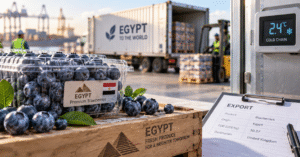
In the case of the blueberry industry, the current season is in full swing, arriving with high volumes of fruit. This productive growth also extends to new producers joining the industry, so the planted area will also grow, ensuring future seasons with high numbers. This demonstrates not only a consolidated and vigorous industry, but also a stronger positioning of the Moroccan blueberry industry globally.
In the following graph the volumes to November of 2024


In this other graph what goes until April of 2025

Blueberry export volumes are projected to grow by 20% compared to the previous season, exceeding 70 tons of fresh blueberries and 8 tons of frozen blueberries. The cultivated area exceeds 7000 hectares and is located primarily in the northern part of the country, in the Loukkos region. The other major production center is in central Morocco, primarily in the Souss Massa region, although production is already expanding to the south and highlands.
In short, the auspicious economic scenario that is visualized for Morocco and the good figures of the blueberry industry, guarantee that the XXXVIII International Seminar on Red Fruits The event, which will be held at the Royal Tulip City Center Hotel in Tangier, will be of great interest to producers and various stakeholders in the berry industry and, above all, very attractive to foreign entrepreneurs and investors.
To learn about available sponsorships, click here. HERE
To purchase tickets click HERE
ARTÍCULOS RELACIONADOS