Málaga Fruit Day: more blueberries and better genetics raise the logistical demands
By: Natalia Rubio Iversen

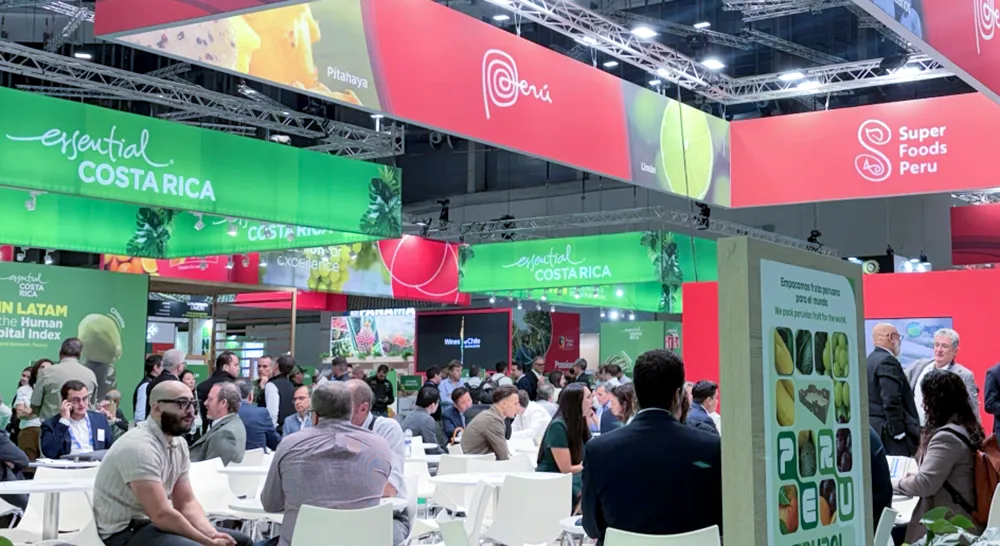
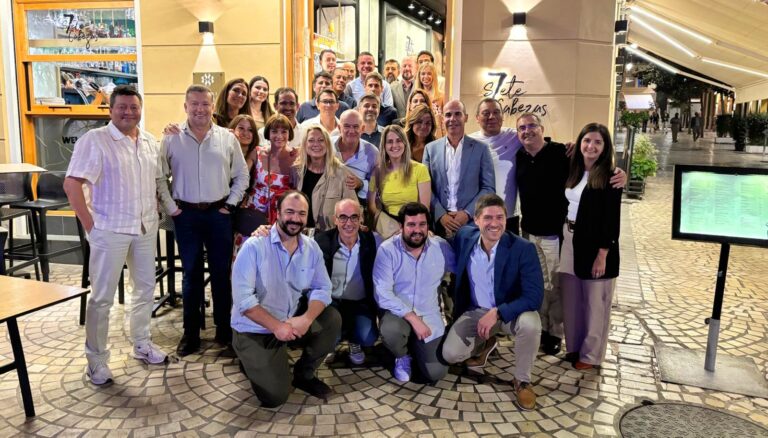
The third edition of Málaga Fruit Day, held on October 9th after Fruit Attraction, focused its discussion on how to move a growing supply of Latin American fruit to Europe without compromising its quality during transit. The event brought together approximately 160 attendees, almost 60% of whom came from outside Spain. Including the first Logistics Festival, held that same day, the total attendance reached nearly 500 professionals and more than 120 companies.
One of its central themes was the panel “Málaga, Gateway to Fresh Latin American Fruit,” moderated by Rafael Losilla, director of Revista FyH, and featuring René Díaz, CEO of UCC; Ernesto Aramburú, SVP Sales & CS Latam of Hapag-Lloyd; Antonio Cuenca, Foreign Trade Specialist at AGAP; Juan Antonio Reyes, CEO of Reyes Gutiérrez; and Jorge Esquivel, CEO of Blueberries Consulting.
The meeting began with a presentation by Mauricio Quesada, director of the Board of Directors of CADEXCO, Costa Rica, who addressed geopolitical developments and their influence on the fruit export market. From there, the discussion moved on to routes, services, arrival conditions, and new entry alternatives to Europe.
The meeting was part of the Port of Malaga's strategy to strengthen ties with the Latin American fruit and vegetable sector. In the preceding weeks, it had presented its refrigerated goods offering at Fruit Attraction and conducted a trade mission to Chile with exporters, operators, and shipping companies linked to the Chile-Europe corridor.
Within that discussion, Jorge Esquivel focused his analysis on blueberries. The industry produced 2,33 million tons in 2025 and still has a significant volume to incorporate in the coming years, while varietal replacement modifies the quality of the fruit reaching the market. “The question is always quantity or quality, and here both will be the case,” stated the director of Blueberries Consulting.

Fernando Balart, Marketing Director of Frutas de Chile; Jorge Esquivel, CEO of Blueberries Consulting; and Miguel Canala-Echeverría, General Manager of Frutas de Chile, during Málaga Fruit Day 2026. © Blueberries Consulting

More fruit and a higher quality benchmark
For Esquivel, the increase in production cannot be separated from the varietal change taking place in some of the main origins. In Peru, he used Sekoya Pop as a reference point for the shift towards materials with better attributes of firmness, texture, and post-harvest behavior, a process that is raising the commercial benchmark against fruit of lower quality or condition.
Based on this evolution, Esquivel spoke of a new quality “baseline.” During periods of peak supply, he explained, fruit falling below this benchmark will have more difficulty competing, while fruit above it will be able to maintain a price difference.
Part of the incoming supply will also come from young fields that are still increasing production and from genetic renewal programs. Given this growth, Esquivel maintained that there is still room to expand consumption of blueberries, particularly in Europe, and mentioned promotions and larger family formats as tools to support that growth.
Genetics does not eliminate transit days
The panel also addressed the advancement of logistical tools for perishable products: controlled atmosphere, monitoring of temperature, humidity, CO₂ and oxygen, as well as online monitoring of containers from origin.
But better conservation tools don't eliminate the effects of time. "Every day that passes is another day of deterioration, so genetics doesn't solve the problem, but it does alleviate it," Esquivel noted.
Improved genetics can better maintain condition during extended transits, but they don't correct problems related to harvesting, refrigeration, handling, or transportation. Therefore, reliable services, stable schedules, and sufficient capacity will remain crucial as available volume increases.

Jorge Esquivel, CEO of Blueberries Consulting, during the round table “Málaga, gateway for fresh Latin American fruit”, held as part of Málaga Fruit Day 2026. © Blueberries Consulting

Malaga wants to turn the opportunity into a burden
The panel discussion “Málaga, Gateway to Fresh Latin American Fruit” focused much of the discussion on how to transform the interest in new flows from Latin America into regular operations. For Málaga, this aspiration depends on more than just its geographical location.
Carlos Rubio, president of the Port Authority, stated during the opening that the objective is to continue providing service to companies on both sides of the Atlantic and to advance in speed and quality of operations.
René Díaz, CEO of UCC, highlighted that Málaga's scale allows for a more personalized service and that the port has good connections to consumer centers. At the same time, he identified greater integration of the cold chain within the port area as one of its main areas for improvement and warned of the need to move quickly to keep pace with other Mediterranean ports also seeking to attract this traffic.
Changing ports doesn't happen overnight. Ernesto Aramburú, SVP Sales & CS Latam at Hapag-Lloyd, explained that when a logistics chain is already organized around a port, modifying it requires first demonstrating that the alternative works consistently and building trust with customers. During the panel discussion, he summarized this as the need to prove that the service works before a new alternative "takes off."
But the route needs something even more basic: sufficient cargo. During the question and answer session, representatives from the shipping sector warned that one of the immediate risks for Málaga is not having enough shipments to regularly maintain the service. Production may increase and the port may have capacity, but the frequency depends on those volumes actually being channeled through the route.
For blueberryHaving competitive frequency, capacity and transit times will be crucial as volumes destined for Europe increase.

Carlos Rubio Basabe, president of the Port Authority of Malaga, during one of the activities of Malaga Fruit Day 2026. © Blueberries Consulting
The condition is built from the field
The logistical discussion led Esquivel back to the beginning. Addressing the effects of climate anomalies, he maintained that the industry will have to more precisely adjust the selection, characterization, and placement of varieties. “We have to keep making adjustments […] at the level of variety selection, variety characterization, and placing varieties in the right locations,” he noted.
The post-harvest performance of a variety also depends on where and under what conditions it was produced. Logistics can preserve those conditions and slow down deterioration, but cannot recover attributes that were lost before shipment.
For the director of Blueberries Consulting, Varietal replacement increases the possibilities of reaching more distant markets with better fruit, but it doesn't diminish the importance of the rest of the supply chain. The condition in which that fruit is ultimately sold blueberry It will continue to depend on decisions that begin in the field and continue through harvest, cold weather, transit, and distribution.
The day ended with a visit to the facilities of the Port of Malaga, bringing to the field a discussion that during the morning had addressed trade flows, services and infrastructure necessary to receive them.
Malaga Fruit Day 2026. © Blueberries Consulting
Read also:
- José Moyano: “Port institutions are key to ensuring that blueberries reach the European market in good condition.”
- The Port of Malaga boosts its international connectivity with companies from Chile and Peru
- Juan Pablo Avendaño: “Logistics must preserve the commercial value of blueberries”
- The new blueberry war isn't in the fields: it's in logistics, data, and timing.
- Callao and Chancay reorganize the routes of Peruvian blueberries
- Few gateways, different import networks: this is how Peruvian blueberries are distributed at their destination
Previous article
Fruit Attraction 2026: Surexport warns that blueberry production is growing faster than consumptionnext article
ARTÍCULOS RELACIONADOS