Asiafruit: Indonesia and its untapped market potential

Indonesia remains one of the markets with the greatest potential for the global fresh produce industry. Increased urbanization, a young, health-conscious population, and a growing middle class are driving demand for higher-value fruit—including berries—while simultaneously diversifying the ways to reach consumers.
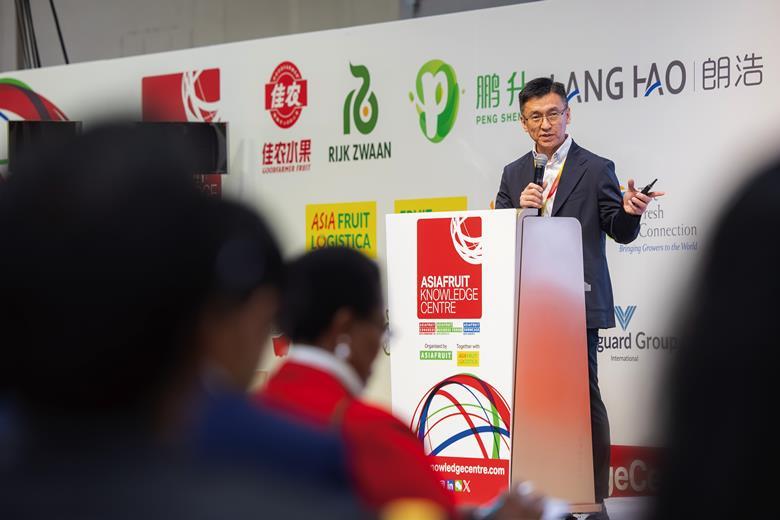
Sukmana noted that the country has experienced rapid digitalization: “Looking back to 2018, only 50% of the population had internet access. But the pandemic accelerated the expansion of the network, and today Indonesia has more than 220 million users, around 81% of the population,” he said, citing data from the Indonesian Internet Service Providers Association.
At the same time, economic development is no longer concentrated solely on the island of Java. “Improved infrastructure and inter-island logistics are driving growth in other regions, especially in the east of the country,” he explained. This has allowed imported fruit to reach more cities and online channels, rather than just Jakarta or Surabaya.

Imports dominated by China
Today, most of the imported fruit entering Indonesia falls into five categories: apples, pears, grapes, tangerines and longanChina is the main supplier for almost all products, except for longan, which comes mainly from Thailand.
According to Sukmana, in 2024 China contributed the 96% of imported pears, slightly above the five-year average (95%). Its share also increased in apples (from 86% to 89%), grapes (from 68% to 72%) and mandarins (from 71% to 78%). “This shows not only China’s pricing power, but also its ability to renew varieties, improve quality and extend the season by expanding production areas.”he said.
Meanwhile, Indonesia has seen rapid growth in blueberries and cherriesThis is partly because China began offering more affordable alternatives in these categories.

A more frequent consumer… and a more demanding one
According to Sukmana, the real engine of demand lies in the urban population with middle and upper incomes, which today represents close to 18% of the country (about 50 million people). “They are primarily Generation X, Millennials, and Gen Z. They are more health-conscious, value convenience, and prefer time-saving solutions.”, Dijo.
This change also transformed shopping habits: from large monthly purchases to weekly or even daily shopping. In this context, the hypermarkets have lost presence —some international ones have even left the country— while the convenience stores keep growing.
One striking fact is that the traditional markets They did not disappear, as many had anticipated. “They have been modernized: local governments and real estate developers include them as a service within new housing projects, improving the buying experience.”He said.
© Fruitnet

The biggest obstacle: licenses and quotas
Despite its potential, Indonesia remains a challenging market for fresh fruit exporters. The main reason is the system of import permits and quotas, which determines which products are included and in what volume.
“It is very difficult for the industry to read the real demand because the volume that arrives is conditioned by the quotas defined by the authority.”Sukmana warned. For example, pears are the most imported fruit. not necessarily because the consumer demands them morebut because it is a product without quotas, so the volume is not restricted.
Even so, the underlying message was optimistic: with more connected cities, rising digital consumption, and a middle class that wants better quality fruit, Indonesia remains a developing market for imported fresh fruit.
ARTÍCULOS RELACIONADOS