Brazil aims to lead the global bio-input market with tropical expertise and technology.
This was explained in an interview with EFE by Laudemir André Müller, the Agribusiness Manager of the Brazilian Trade and Investment Promotion Agency (ApexBrasil), who indicated that increasing the export of green solutions is a fundamental strategy for "consolidating the country's leadership" in sustainable agriculture.
Given the rapid expansion of bio-inputs, driven by their sustainability and profitability, Müller noted that Brazil "occupies a strategic position in this global movement" by combining unique biodiversity—the basis for the discovery of microorganisms with agricultural potential—with cutting-edge research, a mature industry, and innovative farmers.
In Brazil, the use of these natural products has increased by an average of 22% over the past three years—four times the global average—reaching 158,6 million hectares treated in the 2024-2025 harvest, representing 26% of the crop area.
Likewise, the country, which registered a 35% growth in the domestic market for bio-inputs in the last harvest, now has more than 170 bio-input producing companies and a portfolio of more than 1.000 products.
"Brazil's difference lies in the development of formulations adapted to extreme climatic conditions in the field, in addition to the controlled greenhouse environment prevalent in markets like Europe," the economist stated.

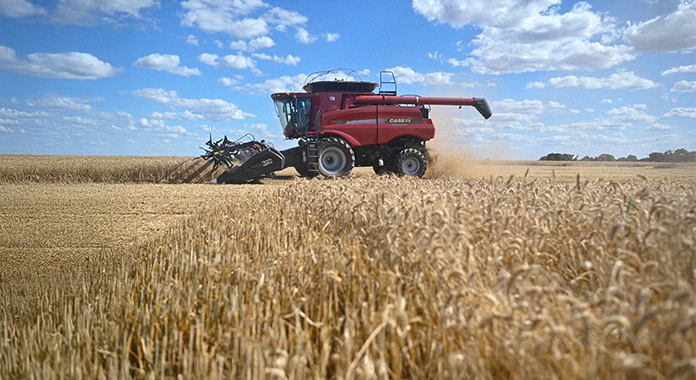
A wheat harvest in rural Brasilia, Brazil.
Furthermore, the South American giant has made progress in sustainable formulation technologies, which "increase product performance in the field and consolidate the country as one of the few capable of offering competitive bioinputs suited to the demands of resilient and productive agriculture."
According to the agricultural and development expert, these characteristics make Brazilian bio-inputs "competitive in a context of climate change and demand for sustainable solutions."
Especially in grain crops, sugarcane, cotton, coffee, and fruit, these natural products have been instrumental in increasing production efficiency, reducing pests and diseases, and decreasing the use of nitrogen fertilizers.

A farmer at the Recanto Machado Farm in the Brazilian state of Minas Gerais. EFE/Fernando Bizerra FILE

Cooperation and leadership
In this context, ApexBrasil, which carries out various initiatives to open new markets for Brazilian companies, joined the non-profit civil association Croplife Brasil last May to launch the "Bioinsumos do Brasil Project."
The initiative seeks to consolidate the country as a global player in providing nature-based agricultural solutions, especially "high-quality and technologically advanced bio-inputs."
Actions include the creation of an international brand, the development of market intelligence studies, participation in global trade fairs, and technical missions to strengthen cooperation with partner countries, in addition to the alignment of public policies and regulatory convergence.
With a budget of nearly $1 million, the project's initial focus is Latin America, "due to its logistical proximity and similar climate and soil."
Subsequently, the focus will be on the European Union and North America, which are key to "giving visibility to Brazilian success stories in sustainable production," Jorge Viana, president of ApexBrasil, explained to EFE.
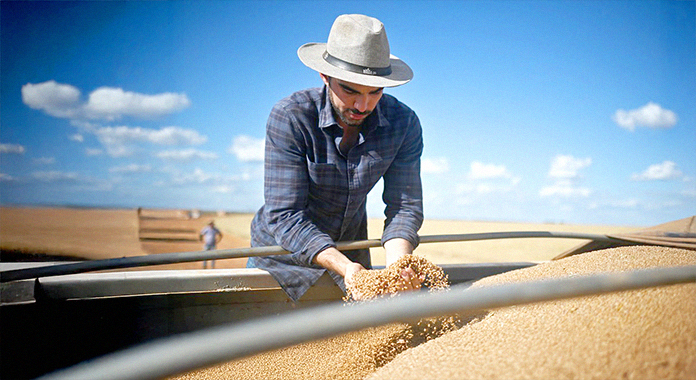
A man harvesting wheat in rural Brasilia, Brazil. EFE/Andre Borges

Science and innovation
The executive noted that Brazilian agriculture, although one of the most competitive in the world, thrives in a challenging environment, with naturally poor soils, high temperatures, increasingly unpredictable rainfall, and intense pressure from pests and diseases.
"This scenario, which in many countries would be an obstacle, has become a stimulus for innovation in Brazil," he added.
In this regard, he highlighted the role of national universities and centers of excellence, such as the Brazilian Agricultural Research Corporation (Embrapa), which work in collaboration with industry to develop innovative solutions in emerging areas such as bioinformatics and biotechnology applied to tropical agriculture.
ARTÍCULOS RELACIONADOS