The 2026 Coastal El Niño: a test of maturity for the Peruvian blueberry
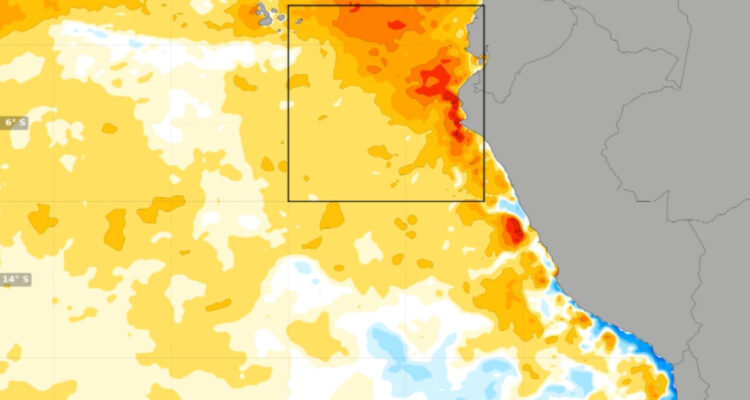
The announcement by the Multisectoral Commission for the National Study of the "El Niño" Phenomenon (ENFEN), which maintains the Coastal El Niño Alert in development until November 2026, once again instills uncertainty in the Peruvian fruit industry.
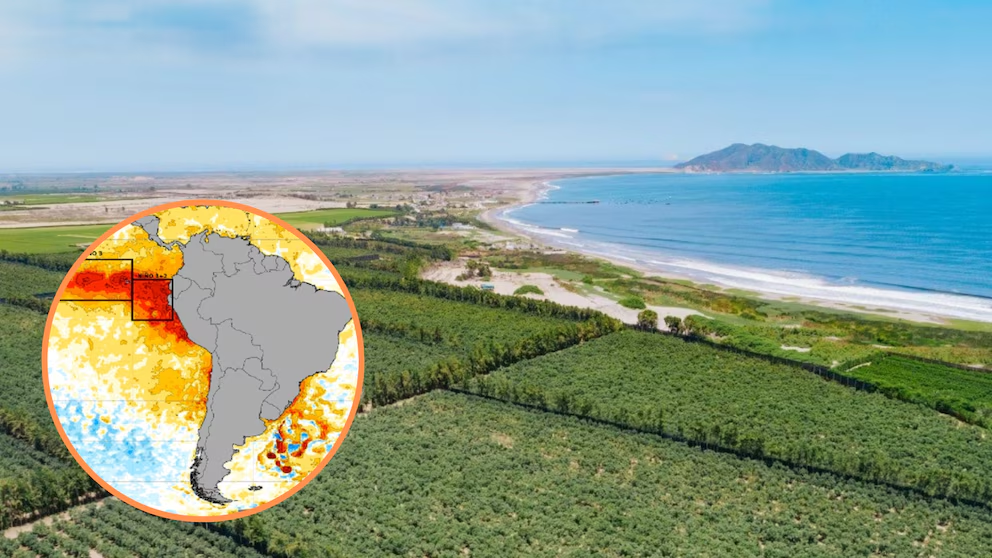
The phenomenon, which is expected to bring weak warm conditions over the next few months with the possibility of reaching moderate intensity before July, is also projected to bring above-average rainfall to the northern coast and temperature anomalies that could reach up to +3°C in coastal areas. For blueberries, this scenario opens a new chapter of technical testing and resilience.
It's not the same child... nor the same industry
Recent history offers unavoidable references. The 2023–2024 El Niño, though erratic, strained production schedules and highlighted the vulnerability of intensive farming systems to atypical rainfall and heat stress. But the 2026 context is different. Peru is the world's leading exporter of fresh blueberries. It handles significantly larger volumes, with cutting-edge genetics and more complex logistics chains. The exposure is greater, but so is the accumulated technical capacity. The key difference lies in the maturity of the system.

Rain and heat: the physiological double-edged sword
The March–May 2026 forecast anticipates above-normal rainfall along the northern coast, with a probability of moderate to heavy and even extreme events. Simultaneously, temperatures are expected to be above normal, with thermal anomalies that could reach +3 °C along the coast.
The combination is significant. In blueberries, the interaction between ambient humidity and high temperatures alters delicate physiological processes, such as floral differentiation, cell firmness, accumulation of soluble solids, and post-harvest behavior.
Previously, many plantations still used less robust genetics with lower tolerance to water stress. Today, varietal conversion has introduced more adaptable cultivars with longer shelf lives and more efficient plant architecture. However, increased production also means more demanding root systems, high planting densities, and dependence on drainage and water management infrastructure. The challenge is not only agronomic but also systemic.
Hydrological risk and logistics
ENFEN also forecasts higher than normal flows in the rivers of the Pacific slope and a greater frequency of flash floods. In 2017 and 2024, land connectivity problems impacted supply chains and delayed shipments. Today, with much higher export volumes and consolidated commercial commitments in the United States, Europe, and Asia, any logistical disruption has an amplified effect. The difference is that the industry now has greater port diversification, contingency protocols, and accumulated experience in managing climate crises.
Peruvian competitiveness no longer depends solely on the volume produced, but on the ability to maintain consistency under adverse conditions.

The climate factor as a competitive variable
While Peru faces a developing Coastal El Niño, competitors such as Morocco, Mexico, and South Africa operate under different climatic dynamics. In Europe, Moroccan supply benefits from geographic proximity and less exposure to Pacific ocean events. In North America, Mexico faces its own thermal challenges but with less exposure to rainfall associated with the Peruvian Coastal El Niño. China, meanwhile, continues to expand domestic production, partially reducing its dependence on imports during certain periods.
In this scenario, Peru's performance under Niño conditions is not only an internal challenge; it is a factor that can reconfigure price dynamics and international trade windows.
© Andina/Infobae Composition
Resilience as a competitive asset
If there's one thing that has characterized the Peruvian blueberry industry, it's its capacity for rapid learning. Following the 2017 El Niño event, drainage systems, climate monitoring, and risk planning were strengthened. After the 2023–2024 episodes, digitalization and the integration of climate data into decision-making were further developed.
The ENFEN statement recommends constant monitoring of weather advisories and risk scenarios. For blueberries, this means integrating real-time forecasts into decisions regarding pruning, nutrition, pest and disease management, and harvest scheduling.
The industry of 2026 is more sophisticated than it was a decade ago. But it is also more exposed to market scrutiny that quickly penalizes any decline in quality.
A known phenomenon in a new context
The 2026 Coastal El Niño does not necessarily foreshadow a negative fishing season. Projections mostly indicate weak warm conditions. However, historical experience shows that even moderate-intensity events can have significant localized impacts.
In this sense, more than a meteorological event, El Niño 2026 will be a test of industrial maturity, and the question is how prepared the entire system—from the field to the port—is to respond without losing competitiveness. And this response will determine not only the harvest season, but also the consolidation of Peru's leadership in the global blueberry market.
This will likely be a recurring theme in the various panel discussions scheduled at the International Blueberry Seminar to be held at the Lima Convention Center on March 11 and 12, and which will be attended not only by the Peruvian industry, but also by many international players in the global blueberry industry and market.
Previous article
Polish blueberry producers are focusing on genetics, quality standards, and a balanced supply.next article
ARTÍCULOS RELACIONADOS