The United States is moving to counter China's $1.300 billion megaport in Peru. A new battle for Pacific trade is brewing.
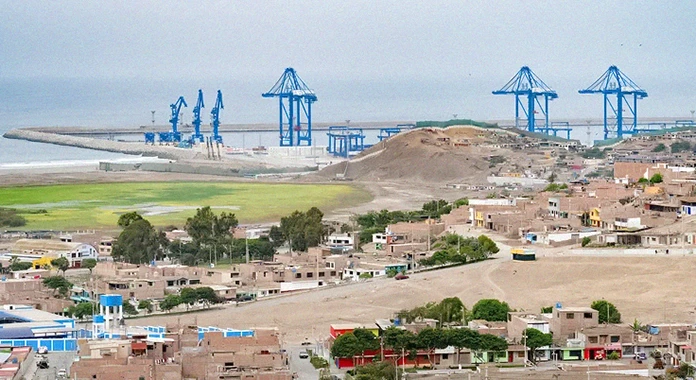
The Chinese-backed megaport of Chancay is being built next to residential areas near Lima, Peru. The facility is located less than 80 kilometers from Callao, where the United States is funding naval infrastructure modernization projects.
The United States has committed US$4,5 million to finance the design phase of an infrastructure project in Callao, Peru, linked to the relocation and modernization of the country's main naval base. The initiative would free up space to expand commercial port operations in an area located less than 80 kilometers from the megaport of Chancay, built with an investment of US$1.300 billion and majority-owned by the Chinese company Cosco Shipping Ports.
The funds, announced by the State Department, will be used for the program's design phase. The project is being developed as the Chinese state-owned company Cosco Shipping strengthens its presence in the nearby port of Chancay, which already has direct maritime connections between South America and Asia.
Both ports are located on the same stretch of Peru's Pacific coast, but their importance extends beyond cargo movement. Washington has expressed concern about Chinese influence over infrastructure considered critical in Latin America, while Beijing accuses the United States of interfering in the region's economic relations.
The new US commitment was announced following a visit to Peru and Colombia between November 1 and 7 by Thomas DiNanno, Under Secretary of State for Arms Control and International Security.
According to the State Department, the US$4,5 million comes from funds previously allocated to the Foreign Military Financing (FMF) program. During his visit, DiNanno toured the infrastructure project in Callao and held meetings with Peruvian authorities to discuss military cooperation and regional security.
The financing comes on top of a much larger proposal announced in January, when Washington authorized a possible sale to Peru for up to US$1.500 billion in engineering, construction and logistics services for the relocation and modernization of the Callao Naval Base.

The U.S. Defense Security Cooperation Agency (DSCA) indicated that the potential operation would include engineering studies, construction management, maritime infrastructure, and technical assistance. Up to 20 representatives from the U.S. government or contracting companies could be deployed to Peru for up to ten years to oversee its implementation.
The figure of US$1.500 billion represents the maximum estimated value of a potential operation requested by Peru and does not represent an amount that Washington has committed to spending, nor direct financial aid. The final value will depend on the negotiations and Peru's requirements.
The project seeks to separate naval operations from civilian ones, allowing for the expansion of commercial facilities in Callao and, at the same time, providing the Peruvian Navy with modernized infrastructure.
Callao and Chancay compete for trade flows to Asia
Callao is currently Peru's busiest commercial port, handling cargo linked to both the domestic economy and foreign trade. However, it faces increasing competition from Chancay, located approximately 80 kilometers north of Lima.
The deep-water port of Chancay was inaugurated in November 2024 and began commercial operations in June 2025. Built with an estimated investment of US$1.300 billion, it is majority-owned by Cosco Shipping Ports and is part of China's Belt and Road Initiative.
Chancay offers direct connections to Asian markets, including Shanghai, and has reduced maritime transit time between Peru and China to approximately 23 days. Its operators have promoted the terminal as a platform for the movement of agricultural products, minerals, and manufactured goods between Asia and South America.
During its first year of commercial operations, the port handled more than 500.000 TEUs, a unit of measurement equivalent to the capacity of a standard 20-foot container, according to figures released by the specialized publication Seatrade Maritime.
Growth continued throughout 2026. Between January and July, Chancay handled approximately 246.000 containers, a 74% increase compared to the same period of the previous year, according to figures cited by the Peruvian newspaper Gestión.

The megaport of Chancay (Photo by Cris BOURONCLE / AFP)

Callao maintained a considerably larger scale, with approximately 1,9 million containers moved during those same seven months.
The figures illustrate the commercial importance of this competition. Chancay is growing rapidly, but Callao remains the main port hub for a significant portion of Peruvian trade.
Both terminals are looking to increase their share of maritime traffic connecting South America with Asia.
A competition that also takes on a political dimension
The competition between the two projects has also taken on a political dimension.
In February, Washington warned that Peru risked losing effective oversight capacity over Chancay after a court ruling restricted the Peruvian regulator's powers to monitor certain operations at the terminal controlled by Cosco.
The State Department accused the port owners of undermining Peruvian sovereignty, prompting a strong response from Beijing.
China rejected the accusations and defended its investments in Peru, while Cosco maintained that the court ruling did not eliminate the powers of the Peruvian customs, police and environmental authorities.
The Supervisory Body for Investment in Public Transportation Infrastructure (Ositran) announced that it would appeal the decision, arguing that the resolution created an exception to the regulatory framework applied to other major ports in the country.
The controversy highlighted a broader concern in Washington regarding Chinese ownership and operation of infrastructure considered strategically important.
US officials have previously warned about the potential military uses of commercial ports operated by Chinese companies. Peru, however, has maintained that Chancay is a commercial facility.
So far, there has been no evidence that the port operates as a Chinese military base.
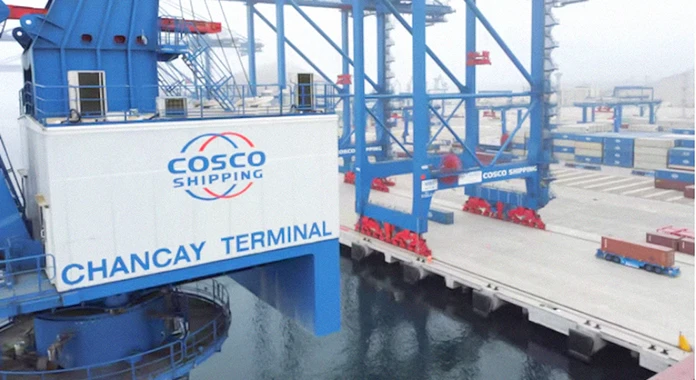
Port of Chancay, in Peru. With it, China increases its capacity to unload its goods in South America and ship those it imports from this region (Reuters)
China maintains a strong economic presence in Peru.
The close trade relationship between China and Peru also hinders Washington's efforts to expand its influence in the country.
China is Peru's main trading partner and one of the largest buyers of its mineral exports, especially copper. Chinese companies have also made significant investments in mining, electricity, and transportation infrastructure, making Beijing a key economic partner for Lima.
Peruvian President Keiko Fujimori has sought to strengthen security cooperation with Washington while maintaining the country's economic relationship with China.
During Secretary of State Marco Rubio's visit to Lima in September, the two governments discussed issues related to infrastructure, security, and Chinese investment. Beijing subsequently rejected U.S. criticism of its projects and maintained that Peru should not be forced to choose between major powers.
The new funding complements other U.S. security cooperation initiatives with Peru. DiNanno also announced $20 million to fund F-16 aerial refueling capabilities and $1 million in technical assistance for potential small nuclear reactor projects.
The Callao project envisions relocating and modernizing Peruvian naval facilities to free up space for the port's commercial operations. Washington had already authorized a potential sale of up to US$1.500 billion in engineering and construction services related to the project, although the final value has yet to be determined.
Meanwhile, Cosco Shipping continues to operate the nearby megaport of Chancay, which offers direct shipping routes to Asia. The two facilities are less than 80 kilometers apart, while Callao remains Peru's busiest commercial port.
The United States has also intensified its attention to Latin America through infrastructure investments and increased security cooperation.
Read also:
- Málaga Fruit Day: more blueberries and better genetics raise the logistical demands
- Callao and Chancay reorganize the routes of Peruvian blueberries
- Wan Hai strengthens its operations in Peru and aims to transport blueberries to Asia
- Shanghai and Ningbo ports face delays of up to two weeks: How does this affect Peruvian trade?
- Few gateways, different import networks: this is how Peruvian blueberries are distributed at their destination
- Peruvian blueberries: Asia demands an increasingly segmented strategy
Previous article
New genetic varieties drive growth in the blueberry market in PeruARTÍCULOS RELACIONADOS