Fruitist: How the jumbo blueberry boosted a brand valued at over US$1.000 billion
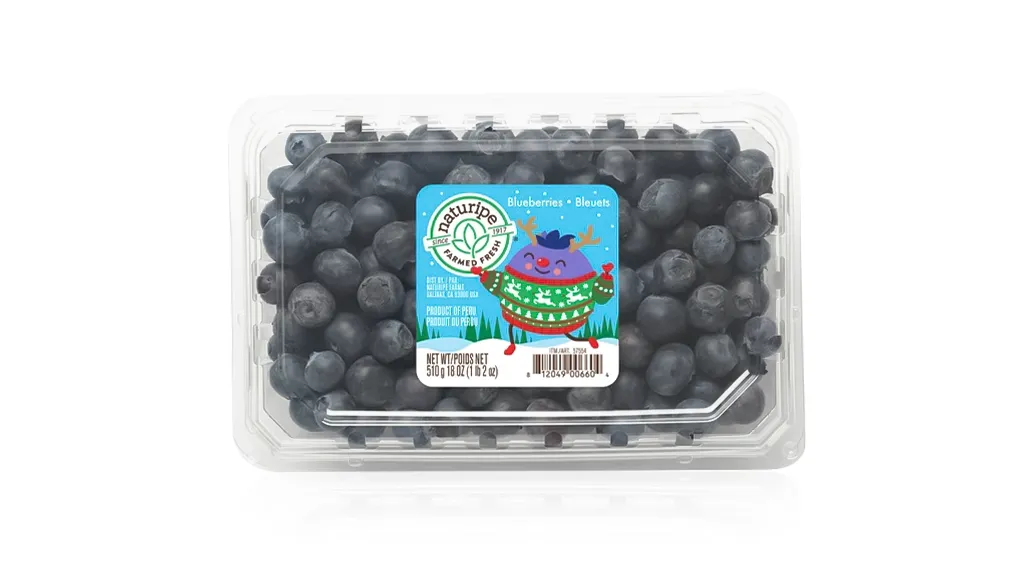
If you've never heard of "berry roulette," you've probably experienced it: you buy an attractive clamshell of blueberries —or strawberries or raspberries— large and intensely colored, but when tasted they turn out to be soft, acidic, tasteless or end up destined for a smoothie.
Fruitist, a Los Angeles-based fruit brand known for its blueberries Jumbo and for offering a consistent consumption experience, they developed their proposal precisely to reduce that variability. “It’s all about size, firmness, and internal crispness,” says Steve Magami, co-founder and CEO of Fruitist.
Berries represent a global market of US$50.000 billion, with North America accounting for just over 30%. According to Fortune Business Insights, it is projected to reach US$75.000 billion by 2034. Strawberries continue to hold first place, but the blueberries They are in second place and have a faster growth trajectory.
Fruitist has raised a total of US$500 million in funding, including a US$150 million round last year, led by investor Ray Dalio and JP Morgan Asset Management, which valued the company at more than US$1.000 billion.
The company projects reaching US$500 million in revenue by 2026, up from US$400 million the previous year. Meanwhile, speculation has intensified regarding a potential initial public offering. One of the key aspects of its development, however, has been the use of technology to produce non-genetically modified berries with more consistent quality characteristics.
A billion-dollar berry
Fruitist's story began by chance. Before entering the agricultural business, Magami worked as a private equity investor focused on growth companies. During a trip through South America to participate in the financing of a large biofuel project, he arrived in Lambayeque, in northern Peru, where he observed blueberries growing in an unusual area, irrigated with water from the Amazon.
Magami had already observed how Peru was becoming an important supplier of off-season grapes and avocados for the northern hemisphere and saw in the blueberry the next segment with growth potential. In 2012, he founded Agrovision with Tom Snyder. “We quickly entered this business and became the largest exporter of blueberries "We are producing premium Peruvian wines, based on planting elite varieties in these truly special microclimates," says Magami.
The company later concluded that Peru could competitively supply berries during the part of the year when the Northern Hemisphere reduced its output, while to cover the rest of the year it needed to supplement production with other countries: Mexico for North America, North Africa for Europe, and China for Asia. Fruitist expanded into these countries, moving away from traditional production areas like California, Spain, and Portugal, with the goal—according to Magami—of building “the first truly vertically integrated, large-scale berry company.”

Unlike competitors such as Driscoll's, which works through contracts with independent producers, Fruitist operates fields in eight countries and oversees production throughout the entire chain.
“It’s very difficult to innovate when you don’t have control over the entire supply chain,” says Magami. “Our model allows us to implement technology throughout the entire value chain.” The strategy includes using technology to harvest, sort, pack, and deliver berries to retailers. Currently, their clients include Costco, Trader Joe’s, Whole Foods, and Walmart.
Among the tools used by Fruitist are AI-based classification and quality control systems capable of analyzing fruit according to size, color, sweetness, ripeness, and the presence of internal and external damage. “We are moving from manually counting berries on the plants to try to estimate when they will be ready, to using computer vision technology,” explains Magami.
The system allows for capturing images of an entire hectare—approximately 2,5 acres—of crops. “We’re talking about an increase of more than a thousand times in data capture,” he adds.
The company, which officially changed its brand from Agrovision to Fruitist in April 2025, also brought on a team of data scientists and engineers to develop what Magami describes as the first model designed to forecast harvest results, information relevant to making decisions related to post-harvest shelf life and the consumer experience.
“We built an algorithm that generates recommendations and allows us to achieve real efficiencies,” he says. “We use predictive models and analytics to identify, for each week of the year, the best way to produce the fruit and the right time to harvest it.” The challenge, he explains, is balancing two variables that can compete with each other: “The sweeter the fruit, the shorter its post-harvest shelf life.”
Size Matters
The sweetness of berries is also evaluated using objective parameters. “Flavor is a combination of acidity and Brix degrees, which are objective measurements,” says Steve Bierschenk, executive vice president of Life Science at Fruitist. Brix degrees express the concentration of soluble solids and are commonly used as an indicator of fruit sweetness.
In addition to these measurements, the company conducts panels with consumers and employees to compare different samples and contrast the sensory results with the instrumental measurements. “They are structured quite similarly to focus groups, where we conduct blind taste tests with leading varieties,” explains Bierschenk. “We do this daily and weekly to help us calibrate what we have observed with our employees and what consumers are preferring.”

According to the company, these improvements have also helped to reduce what is known as commercial waste: fruit that ends up being rejected by retailers due to the presence of mold, excessive loss of firmness, or a mealy texture.
Although the industry's typical shrinkage rate is between 5% and 10%, Magami maintains that Fruitist registers "virtually zero rejections," based on reports from its retail clients. The product's consistency, along with its flavor and shelf life, have contributed to the brand's growth. However, one of the most decisive factors has been its focus on size.
The blueberries Fruitist fruits tend to be larger than the market average, which the article places at approximately 12 millimeters in diameter. Fruitist Jumbos, on the other hand, reach between 18 and more than 22 millimeters. This is also a growing segment. “We have observed that the blueberries "They are growing a little faster than other segments within the berries," notes Jonna Parker, vice president of fresh foods at Circana.
According to Parker, the blueberries They also have a strong perception of healthy food. blueberriesAnd especially premium varieties or larger jumbo sizes are more expensive. What's driving the trend toward premiumization are households with annual incomes above US$100.000. These higher-income households are fueling the growth of berries and the blueberries and, in particular, of the premium varieties.”
From a marketing perspective, size allows for visual differentiation of the product. “It’s about standing out,” explains Kristin Kiesel, a behavioral economist and professor in the Department of Agricultural and Resource Economics at the University of California, Davis. “You can spot them at the point of purchase because they’re bigger. Then you can find them again because they have a brand, but visually they’re already larger than the other berries.”
Kiesel credits Cuties mandarins—and later Halos—with pioneering the trend of snack fruits marketed under a recognizable brand. Sun Pacific's Cuties brand became known for its seedless, sweet, and easy-to-peel clementines, aimed specifically at children and parents looking for a convenient alternative. “They created a brand truly based on convenience and a clearly defined target audience,” he notes. For the berry market in general, Kiesel identifies families with children as one of the primary target groups.
Fruitist has also identified a market for berries as an adult snack, with single-serving formats designed to fit in a car's cup holder. Their positioning among consumers using GLP-1 medications increases their consumption of fresh fruits and vegetables after starting those treatments.
“Jumbos and some other exclusive innovations from certain brands reinforce this double advantage: a trusted brand and a new way to enjoy the product,” Parker adds. “I’ve experienced it firsthand: they’re a little sweeter. Not only are they easier to snack on and closer in size to a grape, but at that price point, they deliver a more premium flavor experience.”
Gaining space in the fruit section
There's another element in Fruitist's story that was a priority for its founders, and it wasn't directly related to berries. As Magami got to know Peru and the local workers better, he wanted the new company to also generate benefits for the communities where it operated. “For me, consistency is very important. If we're going to do this, we have to do it right,” he says. “As a mission-driven company, we want to set a standard. Whether it's in environmental actions, worker well-being, social impact, or sustainability, it was important for us to empower and contribute to the development of the community.”
The company is Fair Trade certified and supports educational, social, and sports programs in the areas where it operates. According to Fruitist, its model is aligned with the United Nations Sustainable Development Goals.
“Our best workers in Peru earn more than their relatives who work in hotels,” says Magami. “We pay them through an incentive system. We have EFI [Equitable Food Initiative] certification, and the retailers who participate in it see it almost as a transfer of part of the price directly to our workers.”
Magami also mentions support and rights promotion programs for women in areas with a history of domestic violence. “One of the things we’re really proud of is that about half of the women who work with us have never had a formal job before,” she says. “For them, bringing home a paycheck for the first time and then having opportunities for development and upward mobility is something that really excites us.”
After Once Upon a Farm, the organic baby food company linked to Jennifer Garner, went public in February with a valuation of US$724 million, speculation increased about a potential initial public offering by Fruitist. Magami is currently avoiding confirming whether the company is considering that option.
Meanwhile, at its Los Angeles offices, Fruitist is working on new projects, including more packaging formats for snacks and varieties of blueberries targeted at specific niches. The company is also considering expanding beyond the blueberryThe brand already sells Fruitist cherries in limited quantities. “Blackberries are on their way. Cherries will take a little longer because the trees need five years to truly reach productive maturity; then will come raspberries and strawberries,” says Magami. “Raspberries are difficult.” Or, more accurately, soft.
That's another way of understanding the "berry roulette".
Read also
- Fruitist secures US$150 million to expand its premium blueberry offering amid the healthy snacking boom
- Blueberries as a snack: Fruitist is betting on new points of sale to reach new generations
- Blueberries in retail: price matters, but it's not enough to generate repeat purchases
- Miguel Ángel Curiel: “Consumer experience is now the main criterion for selecting new varieties”
- Peruvian blueberries: the quality that defines their value in international markets
- The threat of commoditization in the global blueberry
Previous article
The rapprochement between London and Brussels could make Moroccan blueberries more expensive.next article
ARTÍCULOS RELACIONADOS