Morocco leads Spain's fresh produce market

Between January and May, Morocco became the leading supplier of fresh fruits and vegetables to Spain by value.
Official figures from Spanish customs, prepared by the Federation of Associations of Producers and Exporters of Fruits and Vegetables (FEPEX), estimate shipments from Morocco at 834 million euros, a 30% increase compared to the same period last year.
In terms of volume, France remains the leader with 549.069 tons shipped to Spain, an 11% increase. Morocco follows with 322.810 tons, a 26% increase.
The fact that Morocco leads in value but ranks second in volume demonstrates a decisive shift toward higher-quality, better-priced products.

Spanish buyers are now paying more per kilo for Moroccan products, a sign that standards, reliability, and presentation are meeting European expectations.
Morocco's boom is due to years of targeted investment. Modern packaging plants, certified farms, and improved logistics networks now allow exporters to meet the strict deadlines and quality controls required in Spain.
This success also comes at a time when Spanish producers are facing a decline in domestic production and frequent weather disturbances. Importers see Morocco as a stable and competitive source to supply supermarkets.
The trend marks a historic reversal in the trade balance.

Spain, long an exporter to Morocco, now relies on the North African country for an increasing share of its fruit and vegetable supply.
However, renewed growth comes with responsibilities. Managing water resources, controlling export volumes, and protecting rural incomes will determine Morocco's ability to maintain its leadership.
Morocco is facing one of its driest periods in recent years, with water shortages severely straining its main agricultural areas. Irrigation networks in key production areas are under pressure, forcing farmers to adapt their crops and farming practices.

Investments in efficient irrigation systems, desalination, and improved resource management have so far kept production going, but the heavy reliance on limited water supplies raises questions about how long the sector can maintain its current growth rate.
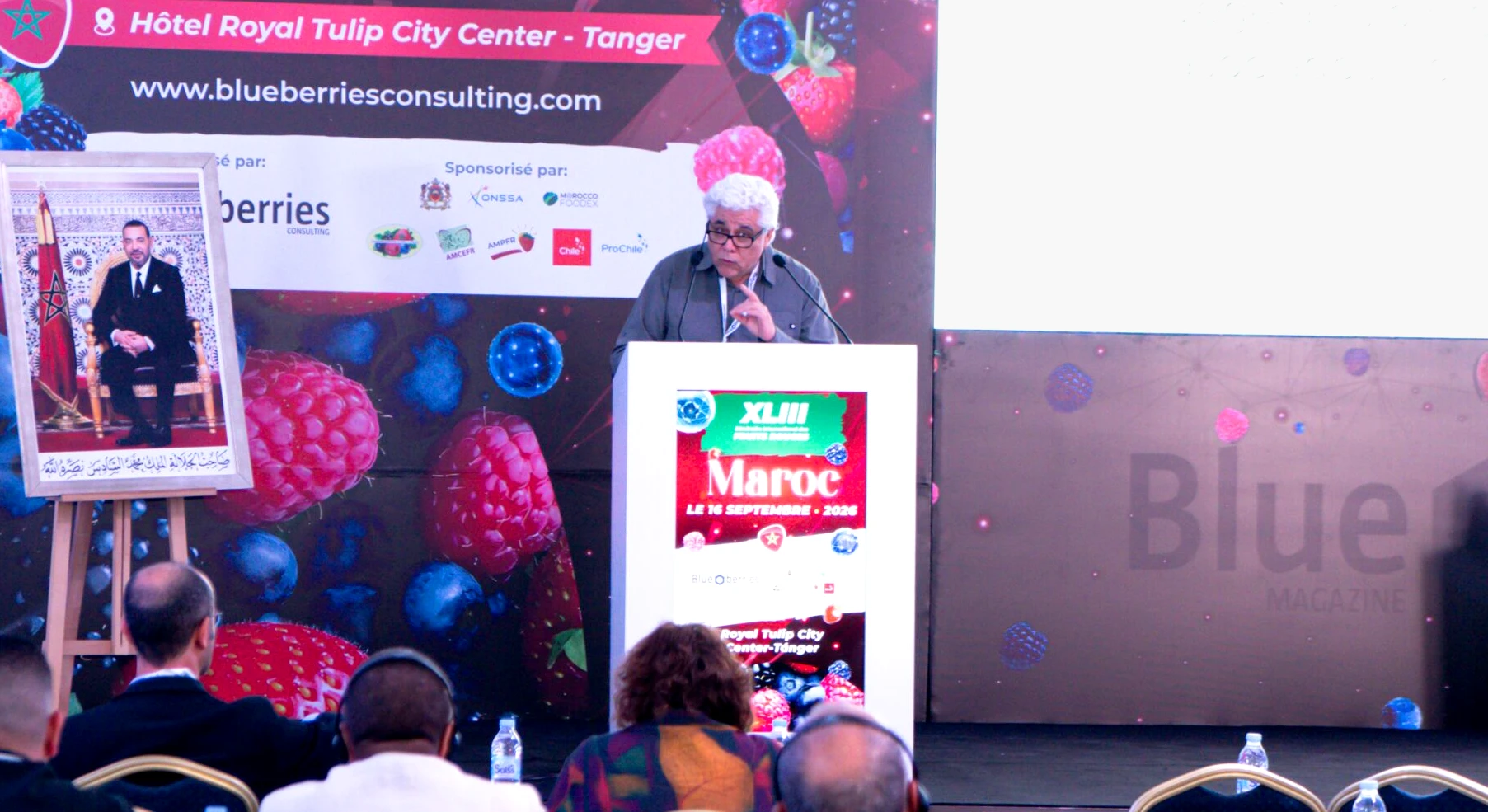
Participate in the International Blueberry Seminars most important, and be part of the World Blueberry Tour!
To participate and learn more details about the XXXVIII Morocco Seminar 2025 enter the following link: XXXVIII International Seminar on Red Fruits
To purchase tickets click HERE
To check available sponsorships click HERE
Previous article
Peru will boost blueberry exports to IndonesiaARTÍCULOS RELACIONADOS