Overview of the 2025/26 Chilean blueberry season: Asian leadership, logistical dynamism and new trends
Through week 47, Chile has exported 3.403 tons of blueberries, 34% more than in the 2024/25 season, representing 3,7% of the total projected volume. This early progress is not only due to an earlier harvest, but also to tactical decisions aimed at capturing better market opportunities and responding to the demands of markets that are currently driving the industry.

Asia is displacing the United States
The most significant change this season is in the destination map. Asia has consolidated its position as the main buyer of Chilean blueberries, with 1.838 tons and 54% of total exports as of week 47. Within this bloc, South Korea has taken a commanding lead, absorbing approximately 1.632 tons, or 48% of the national volume, with growth of 36% compared to 2024/25 and 43% compared to 2023/24. The region is thus establishing itself as the true driving force of the season.
The United States, traditionally the number one destination, is now receiving 653 tons, barely 19% of the total, representing a 14% drop compared to the previous season and 60% less than in 2023/24, confirming a structural adjustment in demand. Continental Europe, on the other hand, is showing a marked recovery, with a 190% increase to 606 tons, while the United Kingdom is growing by 40% to 226 tons; other markets complete the picture with 81 tons and a 12% increase.
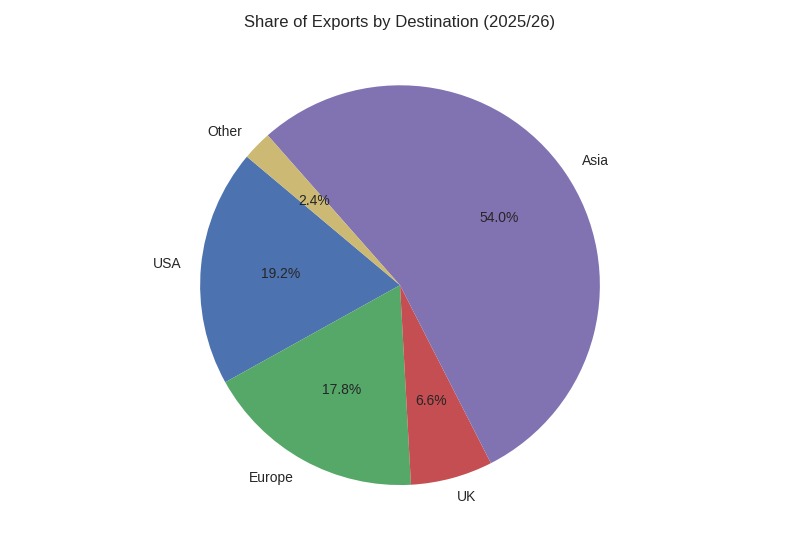
Exports and market share by destination

Stable organic products and faster logistics
Meanwhile, the organic blueberry segment maintains its place within the export basket. As of week 47, shipments total 172 tons, equivalent to 5% of the total, a share that remains in line with previous seasons and confirms the stability of this niche, which is especially relevant for specific programs in North America and Europe.
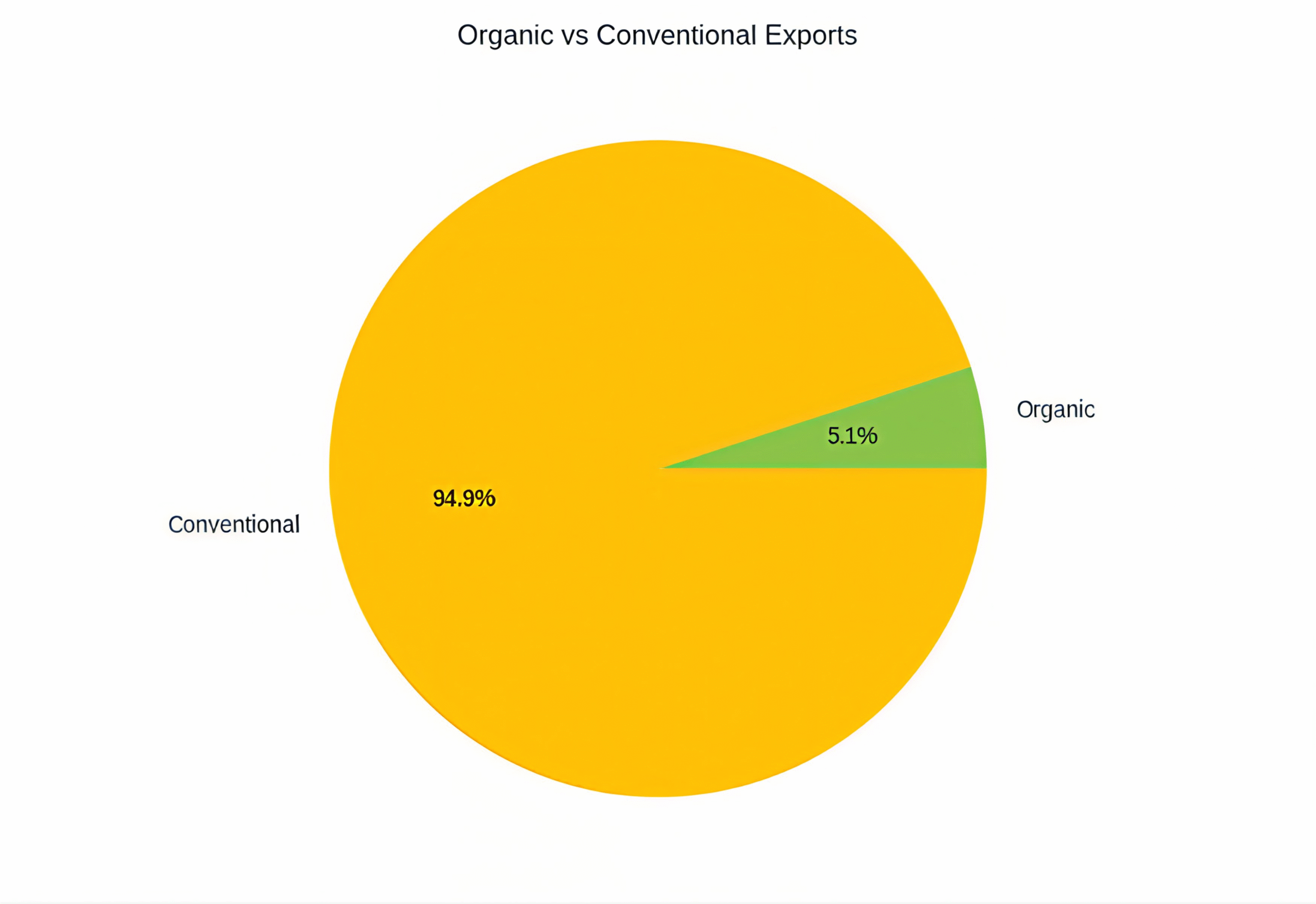
Participation of the organic segment
Logistics has become a key driver for maintaining competitiveness, especially in distant markets. Maritime transport accounts for 1.942 tons, representing a 26% increase, while air transport reaches 1.356 tons, a 41% jump. This greater use of air freight responds to the need to deliver fresh, firm, and high-quality fruit to Asia and the United States during critical sales periods, such as the weeks leading up to Christmas.
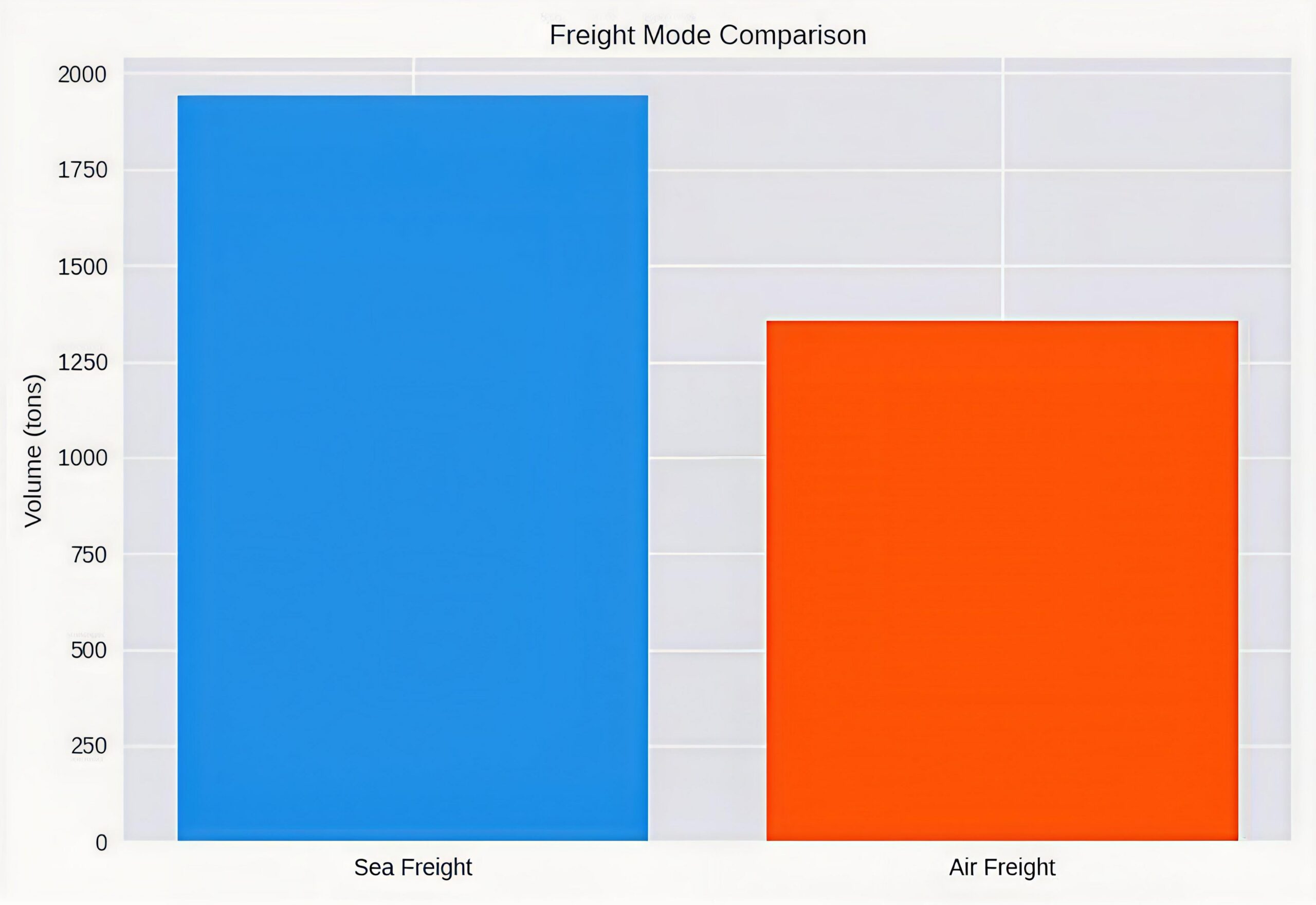
Status of maritime and air transport of blueberries
Varietal replacement and the next stage of the industry
Varietal renewal is another key element of the 2025/26 season. Varieties such as Suzie Blue (33% market share), Magnífica (12%), and Duke (10%) are gaining ground in the Chilean market, with a clear focus on size, firmness, and post-harvest life—essential attributes for long-distance shipments to Asia and Europe. This genetic advancement strengthens the country's ability to meet the consistency and quality demands of the most discerning retail programs.
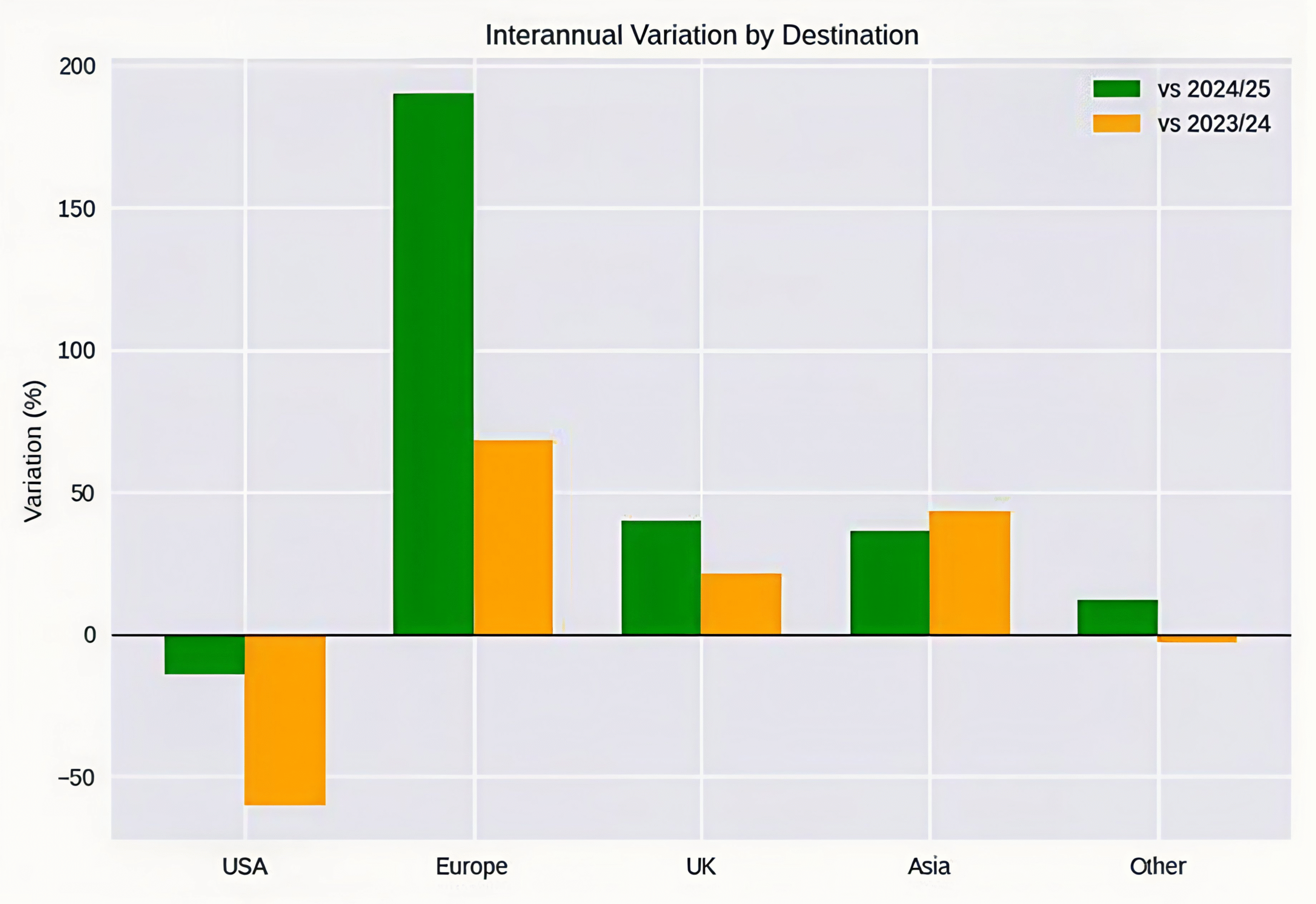 Overall, the campaign showcases an industry adapting to unprecedented demands: earlier phenological development, increased Asian market share, diversification into Europe, and more intensive air freight logistics. With the target of 91.477 tons still on the table, Chilean blueberries are not only consolidating their presence in South Korea and other Asian markets, but also redefining the global map of fruit exports, seeking a balance between volume, profitability, and long-term positioning.
ARTÍCULOS RELACIONADOS