Olmos Project at the gates of its 20 years: An analysis of its impact on agriculture and exports

On July 22, 2004, the concession contract for the transfer component was executed between the Regional Government of Lambayeque and the company Olmos Transfer Concessionary. Therefore, in the following note we tell you about the benefits that this project is achieving almost two decades after its award.
However, it was not until 2014 that the Olmos Special Irrigation and Hydropower Project was inaugurated, which is responsible for transferring the waters of the Huancabamba River from the Atlantic slope to the Pacific slope through a 20-meter trans-Andean tunnel. km for its use in the irrigation of uncultivated lands.
During the construction of the transfer works (2006-2011) US$ 288 million were invested; 2 in the construction of the irrigation project (2012-2014), US$ 221 million; 3 while in the period of operation (2015-2021) US$ 2,505 million were invested.
In the first stage, an average of 621 annual jobs were generated; in the second, 423 jobs; and in the third, 197 annual jobs for concessionaires and 14,531 for land users.

Export companies
The companies that use Tierras Nuevas have generated rapid development of the cultivated fields. At the close of 2021, 19 companies are producing: Gloria, AgrOlmos, Danper Agrícola Olmos, Complejo Agroindustrial Beta, Agrovisión Peru, Agrícola AIB, Plantaciones del Sol, Agrícola Pampa Baja, HEF Berries, Chimú Agropecuaria, Campo Noble, 4 Corporación Agrícola Olmos, AQP Olmos, Agrícola Alaya, Mosqueta, Hefei , Pirona, Lefkada and Inversiones Agrícolas Olmos.
exported products
After seven years since the Olmos Project began, 23,839 hectares of the total 38,000 hectares have been worked. Different types of food are grown in these areas such as blueberries, avocados, asparagus, sugar cane, grapes, yellow corn, lemons, bananas, alfalfa, piquillo peppers, mangoes, watermelons, tomatoes, paprikas, melons, and pomegranates.
During the year 2021, 1.6 million tons of these crops were collected in the Nuevas Tierras de Olmos, which had a total value of S/606.1 million in inflation-adjusted terms (2007 soles).

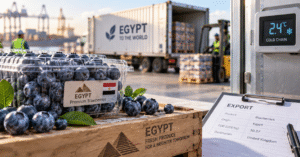
Regarding the economic value of these crops, the ones that stand out the most are blueberries (representing 73.1% of the total value), followed by sugar cane (14.1%), avocados (10.7%), grapes (1.0%) and yellow corn (0.5%).
These data are provided in the "Update Study of the Economic and Social Benefits for the Area of Influence of the Olmos Transfer and Irrigation Project".
Investment
From 2006 to 2021, a total of US$3,005 million has been invested in the Olmos Project. During the construction stage of the transfer (2006-2011), in charge of the concessionary company CTO, investments were made for a value of US$ 289 million.
Then, during the construction phase of the irrigation infrastructure (2012-2014), carried out by the concessionaire H2Olmos, US$ 211 million were disbursed. These funds were mainly used for construction and the acquisition of equipment, since machines and tools were needed to carry out these stages of development.

After completing the construction of the transfer and irrigation infrastructure, the users of the New Lands of Olmos invested a total of US$ 2,505 million in the period from 2015 to 2021. This investment was mainly focused on agricultural and manufacturing activities, contributing to the growth and development of these areas.
Olmos Project projections
If new projects are not implemented, it is expected that between 2022 and 2035, Lambayeque's Gross Value Added (VAB) will reach an annual average of S/15,783 million.
In addition, in the same period, it is estimated that employment and exports of agricultural products could increase an average of 0.3% and 5.2%, respectively. Regarding the poverty rate in the region, it is expected to decrease from 14.1% in 2022 to 8.1% in 2035.

ARTÍCULOS RELACIONADOS