Regulators in blueberries: firmness and quality according to the time of application
By: Natalia Rubio Iversen
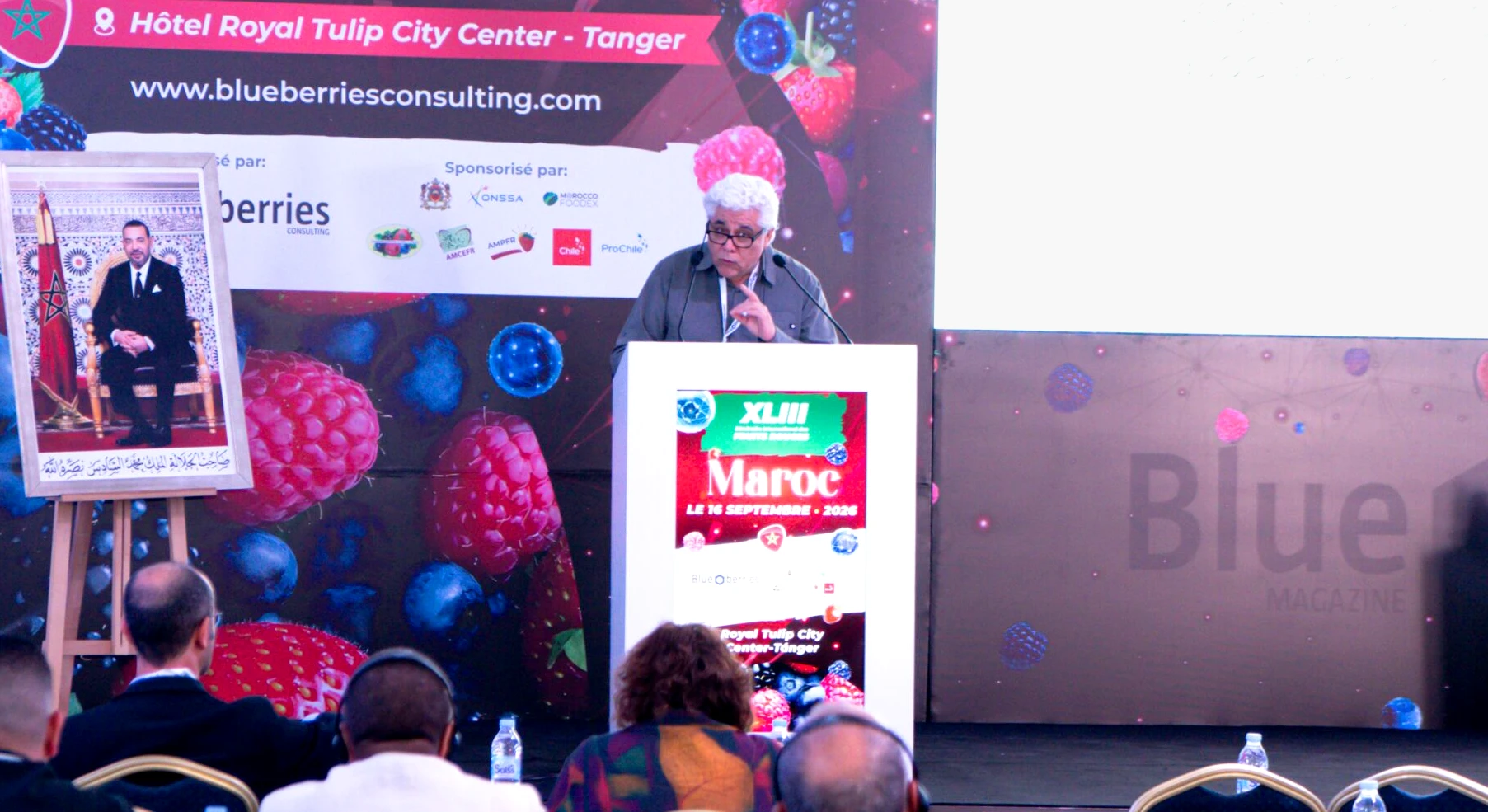
Size was one of the attributes analyzed by Reinaldo Campos when addressing the use of growth regulators in blueberriesTheir presentation showed that the outcome of these applications is also related to the variety, the time at which they are carried out, and the attributes that the fruit retains after harvest.
Campos, director of the Department of Agricultural Production at the Faculty of Agronomic Sciences of the University of Chile, presented the lecture “Use of pre-harvest growth regulators to optimize the quality and post-harvest life of” at the XLIII International Seminar on Red Fruits Morocco 2026. blueberry".

The objective doesn't end with the caliber.
Campos included cytokinins among the reviewed regulators and addressed caliber as one of the attributes associated with this type of management. In the same discussion, he incorporated varietal response as a factor that modifies the outcome.
Fruit size thus emerged within a broader evaluation. The presentation linked the use of regulators to specific management objectives, avoiding separating the desired effect from the characteristics of each variety.
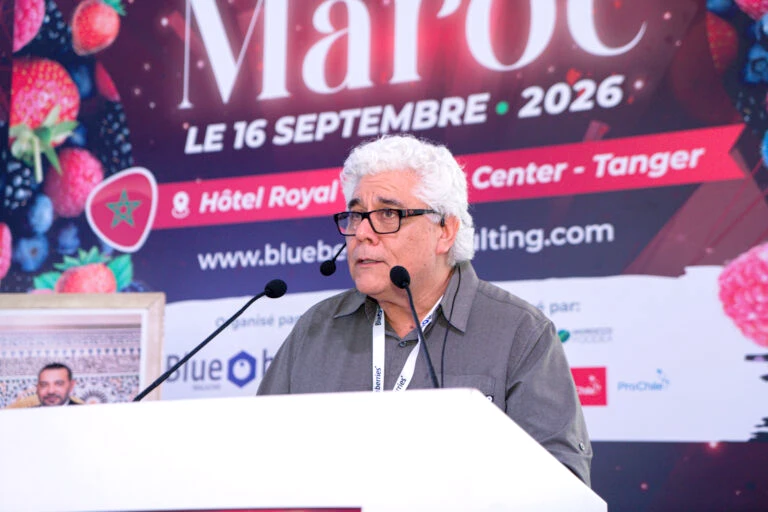
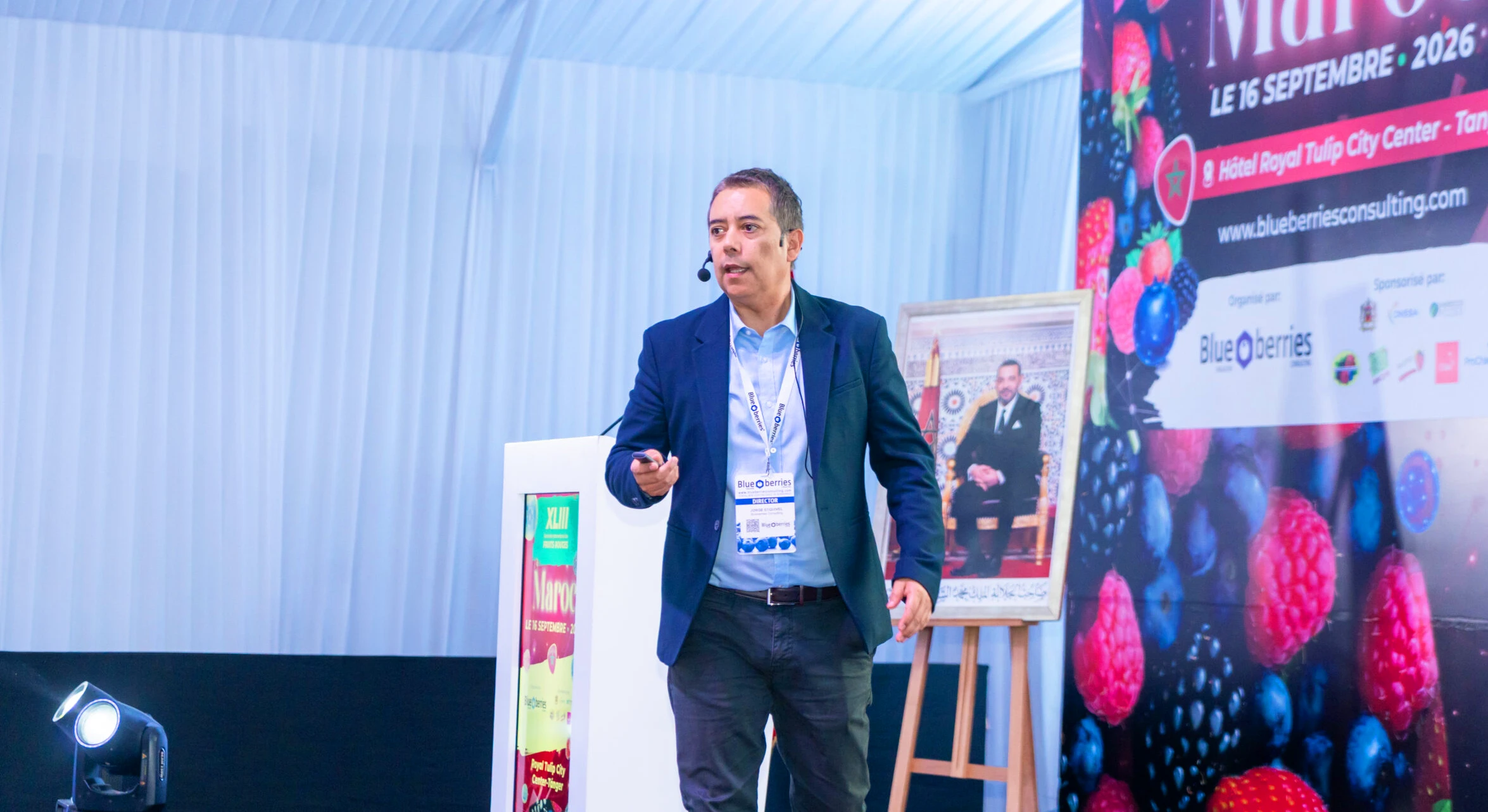
Reinaldo Campos at the XLIII International Seminar on Red Fruits, Morocco 2026. © Blueberries Consulting

The timing of application changes the outcome
One of the central themes of the presentation was when to apply. Campos addressed different phases of crop development and also referred to split applications, showing that the effect can vary depending on the physiological stage at which the intervention takes place.
The variety reappeared in this part of the exhibition. The treatment's behavior changes depending on the plant material and the timing, so both variables are part of the regulator management.
When discussing gibberellic acid, firmness also emerged among the attributes analyzed by Campos. The discussion thus broadened the evaluation from fruit growth to include characteristics that subsequently influence its commercial performance.
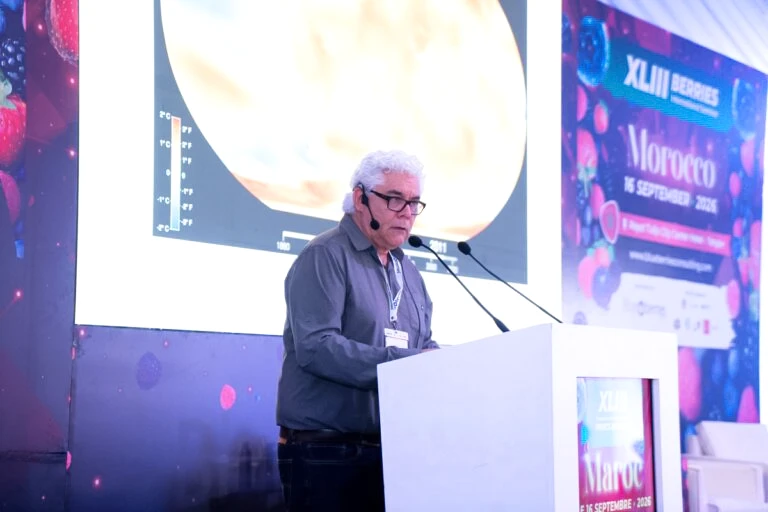
Reinaldo Campos at the XLIII International Seminar on Red Fruits, Morocco 2026. © Blueberries Consulting

From the field to the arrival condition
Campos later linked the condition of the fruit to water loss and temperature during post-harvest. In that part of the presentation, he incorporated vapor pressure deficit and weight loss among the variables involved in fruit preservation.
Distance to market also appeared among the factors considered when defining post-harvest handling, along with available technology and fruit characteristics.
The approach proposed by Campos thus connects a pre-harvest decision with the condition that the blueberry needs to maintain during storage and transport. The agronomic result of an application must be interpreted in conjunction with the quality that the fruit needs to retain until it reaches its destination.
Check out the interview with Reinaldo Campos on our YouTube channel Blueberries TV
Read also:
- Reinaldo Campos: Calcium, magnesium and potassium in blueberries: the balance that defines firmness and fruit quality
- Daniel Díaz: “In blueberries, growth regulators only express their potential if there is good nutrition.”
- “Blueberry bioregulators: an effective tool to combat climate stress”
- Berry by-products: from fiber and polyphenols to new products
- Varieties for different windows: the technical tour visits fields in Morocco
- The quality of berries in Morocco is also defined after the harvest
- Tangier focuses on the blueberry challenge: growing without putting pressure on the market
- Morocco has an advantage in blueberries, but must protect its position
ARTÍCULOS RELACIONADOS