Berry by-products: from fiber and polyphenols to new products
By: Natalia Rubio Iversen
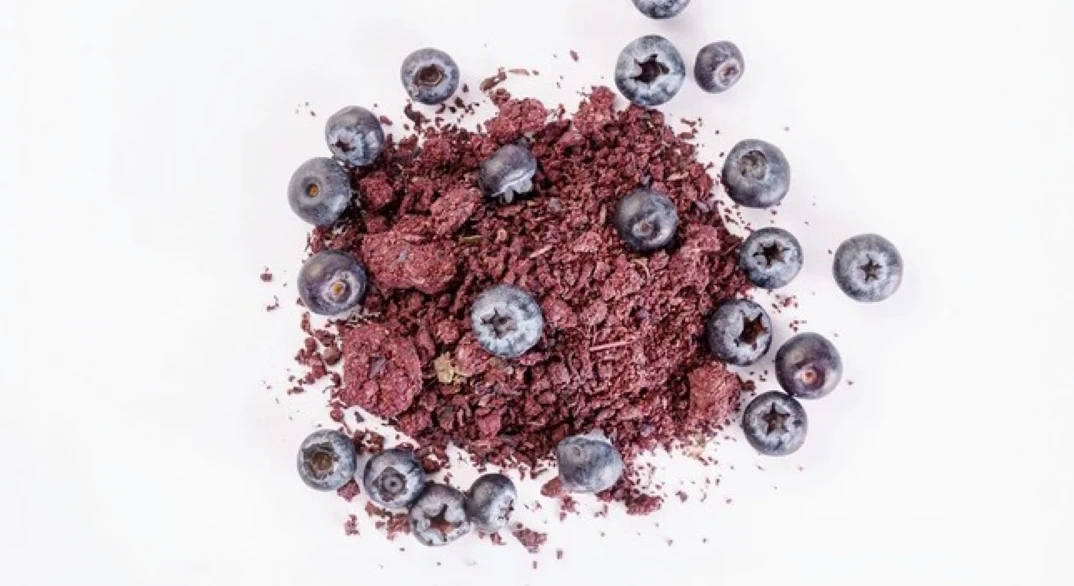
Stabilized powders for food formulations, standardized polyphenol extracts and seed oils for cosmetic applications were some of the alternatives presented during the XLIII International Seminar on Red Fruits Morocco 2026.
The exhibition “Innovation in the Valorization of Red Fruit By-products: Creating Value from Waste” was led by Luis Nunes, CEO of HST – Service Providers, and Mohamed Amouri, president of the Moroccan Federation of Red Fruits, Interproberries. Also participating were Margita Szilágyi-Utczás, from the Hungarian University of Sports Science, and Kawtar Mahrach, from the Hassan II Agronomic and Veterinary Institute, who delved into the analytical and product development aspects.

Material quality and fractions of interest
Szilágyi-Utczás focused part of her presentation on the condition of the material entering the process. For food or supplement applications, she emphasized the need to work with byproducts of known origin and under appropriate safety conditions. Materials with mold, pesticide residues, or microbiological problems may be excluded from certain processing lines.
The fractions mentioned include fiber, pectin, polyphenols, and oils contained in the seeds. The composition of the byproduct indicates which components are worth recovering and which process is most suitable for doing so.
The specialist described a sequence that includes separation and stabilization, followed by milling or extraction, concentration, and standardization. She also addressed controls for pesticides, heavy metals, and microbiological conditions, as well as process variables such as time and temperature.
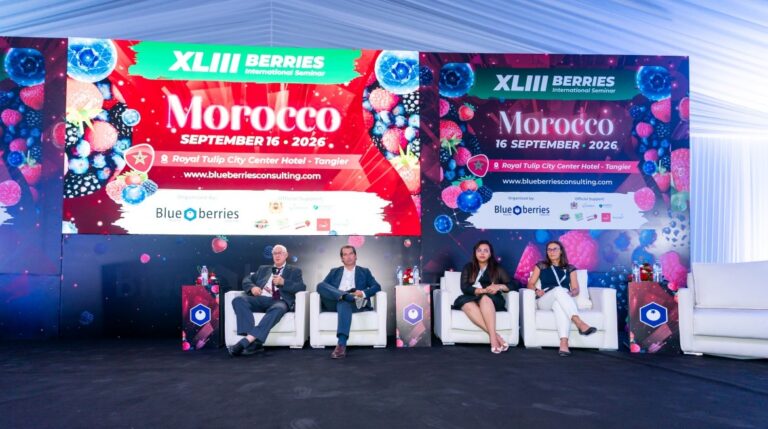
Photo: Luis Nunes, Mohamed Amouri, Margita Szilágyi-Utczás, and Kawtar Mahrach at the XLIII International Seminar on Red Fruits Morocco 2026 © Blueberries Consulting

Powders, extracts and oils
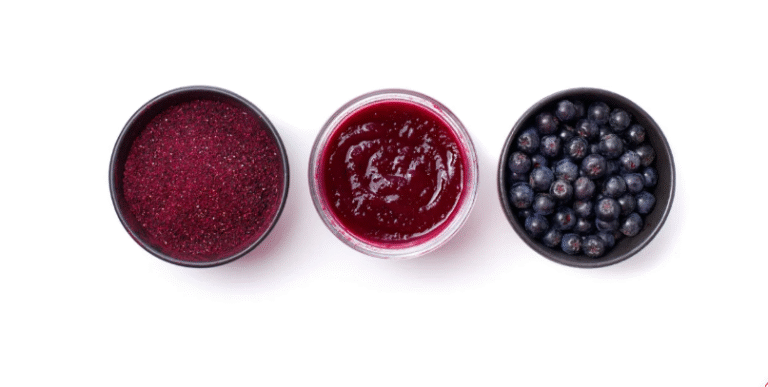
The alternatives presented correspond to different levels of processing. Szilágyi-Utczás mentioned stabilized powders or fiber-rich fractions for food formulations and standardized polyphenol extracts, obtained after the extraction and concentration stages.
The seeds offer another line of research. Their oils were considered for potential cosmetic applications, a development that the specialist envisioned as a longer-term project.
Kawtar Mahrach then demonstrated how these raw materials can be transformed into food formulations and prototypes. His presentation covered stages ranging from ingredient selection to product processing and development.
Examples included flours made from waste materials, snack bars, and fruit drinks. The experience presented allowed the discussion to move from the recovery of a waste fraction to its incorporation into specific products.
©.Journal of integrative nutrition

Volume, performance, and customer
Szilágyi-Utczás also incorporated the variables that condition larger-scale development. Among these, he mentioned the amount of available byproduct, the yield of the compounds to be recovered, process costs, and customer specifications. He also considered the materials that remain after extraction.
The buyer thus becomes involved from an early stage. The concentration, composition, and characteristics of the product must correspond to its intended use, so the degree of processing and standardization varies depending on the application.
This commercial component complements the technical work presented in Tangier. The availability of the material, the extraction yield, and market specifications allow us to select which fractions to develop and which products to target for their use.
Check out the interview with Luis Nunes on our YouTube channel, Blueberries TV
Read also:
- Varieties for different windows: the technical tour visits fields in Morocco
- The quality of berries in Morocco is also defined after the harvest
- Tangier focuses on the blueberry challenge: growing without putting pressure on the market
- From production to packing: the Tangier trade fair area brings together solutions for berries
- Morocco begins the new agricultural season with less moisture and pressure on water reserves
- Morocco could produce nearly 70% more blueberries by 2029
Previous article
United States: Buy, Promote, and Protect Margins by WindowARTÍCULOS RELACIONADOS