The blueberry invades Africa from both ends
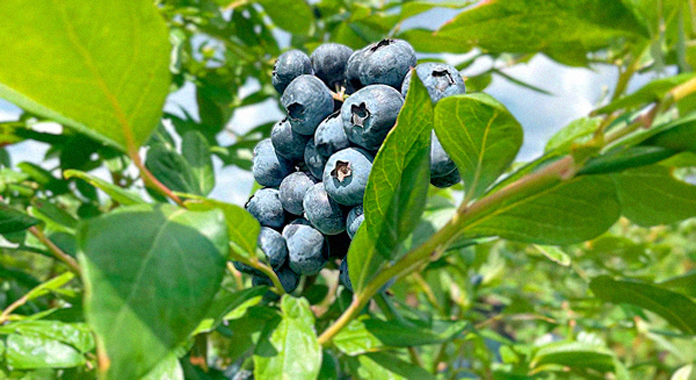
The expansion of the blueberry industry in Africa can be seen primarily in the north—closer to the European continent—with the powerful Moroccan berry industry. However, the expansion of the blueberry industry in southern Africa—primarily in South Africa and Zimbabwe—has captured the attention of the global agri-food trade.
To the north and south
We have reported extensively on the potential of blueberry cultivation in North Africa. In fact, it has been established. September en Tangier as the date and permanent place of the International Seminars on Red Fruits where the international blueberry industry meets, convened by Blueberries Consulting.
Returning to the south, although the region offers natural, climatic, and logistical advantages for berry cultivation and export, its long-term sustainability and competitiveness still depend on the ability to consolidate infrastructure, diversify markets, and overcome structural barriers. In this context, it can be said that southern Africa is on its way to becoming a blueberry exporting powerhouse, but its success will depend on immediate strategic decisions regarding investment, agricultural governance, and trade liberalization.

Competitive advantages
The sector's accelerated growth has been driven by exceptional agroclimatic conditions. Regions such as the Western Cape, Limpopo, and Mpumalanga in South Africa, as well as highland areas of Zimbabwe, offer mild winters and early springs that allow for harvests during less saturated commercial windows (August to November), before the peak seasons in Peru or Chile.
Furthermore, the proximity to export ports such as Cape Town and Durban, along with preferential trade agreements with the EU and the United Kingdom, facilitate access to high-value markets. South Africa, for example, exported nearly 25.000 tons of blueberries in 2024, with projections pointing to more than 50.000 tons in 2025, according to data from Blueberries South Africa.
Emerging prominence
Despite its structural challenges, Zimbabwe has demonstrated rapid growth in planted area and technical performance. In less than five years, it has doubled its production to 8.000 tons per year, positioning itself as the second largest producer in southern Africa. Its goal is to reach 1.500 hectares under cultivation by 2030, which would bring it closer to comparable exports to established markets.
This regional growth suggests that, if subregional infrastructure, logistics, and plant health strategies are coordinated, southern Africa could consolidate its position as the new blueberry export hub in the southern hemisphere.

Obstacles
Despite its potential, the industry faces significant obstacles. In South Africa, high internal transport costs, port congestion, and energy volatility (power outages or load shedding) increase logistics costs by up to 20% to 30% compared to competitors. Furthermore, there are regulatory restrictions for new exporters under the Broad-Based Black Economic Empowerment (B-BBEE) framework, which limits the inclusion of small producers in global supply chains.
In Zimbabwe, the problems are even more profound: legal uncertainty regarding land tenure, very limited access to agricultural financing, and dependence on external investors, which hinders the professionalization of the sector and its ability to scale productively.
international markets
The industry is still heavily dependent on two destinations: the United Kingdom and the European Union, which account for more than 75% of export volumes. However, post-Brexit trade tensions and regulatory changes in phytosanitary and digital traceability could pose significant risks if diversification toward Asia, the Middle East, and North America is not pursued.
Along these lines, South Africa has initiated exploratory agreements with India and China, but open access is not yet available. Expanding the export base will be essential to reduce exposure to geographic concentration and maintain competitive prices in the international market.

Challenges
In conclusion, we can observe that the African blueberry industry is fully consolidated and constantly growing in the north of the continent, specifically in Morocco, which has become a leading player in the global market. At the other extreme, in southern Africa, the blueberry industry is expanding at a remarkable pace, as we are talking about a region that combines advantageous geography, admirable technical growth, and obvious commercial opportunities. However, its consolidation as an exporting powerhouse will require investment in logistics infrastructure, reforms in access to agricultural financing, regional public-private partnerships, and an active market diversification policy.
If governments and industry stakeholders can address current bottlenecks and enhance varietal, logistical, and organizational innovation, southern Africa will not only become a seasonal supplier of blueberries, but also a strategic player in the global berry trade.
Participate in the International Blueberry Seminars most important, and be part of the World Blueberry Tour!
To participate and learn more details about the XXXVIII Morocco Seminar 2025 enter the following link: XXXVIII International Seminar on Red Fruits
To purchase tickets click HERE
To check available sponsorships click HERE
ARTÍCULOS RELACIONADOS