China's blueberry market enters a new stage as prices in Yunnan fall by almost half
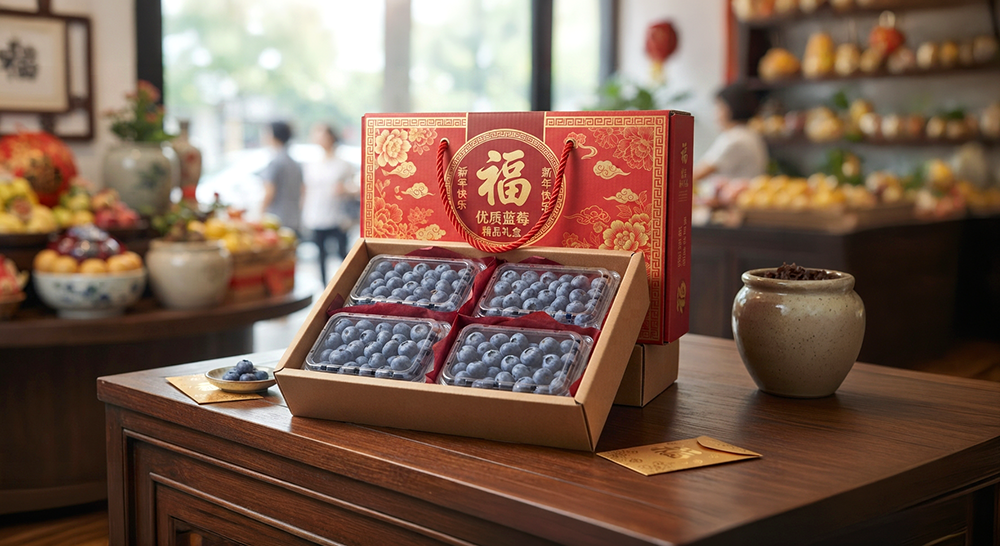
The sharp decline marks a new stage for the Chinese industry. blueberry, which is beginning to leave behind a period of sustained premium prices and is entering a market adjustment phase driven by the expansion of production capacity.
According to data monitoring wholesale agricultural products from Yimutian and 21food.cn, field prices for the L25 variety, one of the main ones in the market and characterized by its floral aroma, are currently between 40 and 60 yuan per kilogram (US$ 6,00–9,00), with an average close to 50 yuan/kg (US$ 7,50).
In the same period of 2025, prices ranged between 100 and 120 yuan/kg (US$15,00–18,00), while in 2024 they reached a high of 180 yuan/kg (US$27,00). This marks the third consecutive year of decline, reflecting a sustained downward trend in the market.
Prices for other important greenhouse-grown varieties, including L32 and F6, have also weakened. At the same time, the price gap based on fruit quality has widened.
The premium blueberriesWell-graded fruit, with sizes exceeding 18 millimeters, intact bloom, and a stable sugar content above 14%, continue to fetch higher prices. In contrast, smaller fruit and ungraded bulk lots are currently trading at prices close to production costs, with some small producers quoting prices below 30 yuan/kg (US$4,50).
At the distribution level, average prices for fresh blueberries in the country's main wholesale markets remain between 52 and 58 yuan/kg (US$ 7,80–8,70).

E-commerce channels, through standardized small-package formats designed to increase sales volume, continue to exert downward pressure on retail prices. At the same time, consumption of blueberries It is gradually shifting from purchases associated with gift-giving occasions to more everyday consumption.
The sustained decline in the market is mainly due to the continued expansion of protected cultivation of blueberries in Yunnan.
The planted area in the province increased from approximately 6.667 hectares in 2021 to 20.000 hectares in 2025, while production went from 45.000 to 349.000 tons during the same period.
In the main producing areas, more technologically advanced cultivation practices have become widespread, including substrate cultivation, integrated irrigation and fertilization management, and the use of rain covers. Average yields have exceeded 30 tons per hectare, considerably higher than those obtained using traditional open-field systems.
In key producing areas such as Mengzi, Jianshui and Mile in Honghe Prefecture, the adoption of greenhouse cultivation systems exceeds 95%, enabling producers to better control production schedules and establish a clearly defined supply window between October and April.
Nationally, the total production of blueberries China's production reached 810.000 tons in 2025, making the country the world's largest producer of blueberries for fresh consumption.
Industry estimates place China's effective annual demand at over 1 million tons, suggesting that the market as a whole has not yet reached a saturation point.
Therefore, the current price drop would be mainly explained by the concentrated influx of large volumes of fresh blueberries relatively homogeneous, rather than due to a situation of generalized oversupply throughout the market.
Blueberries produced in China also face increasing competition from imported fruit.

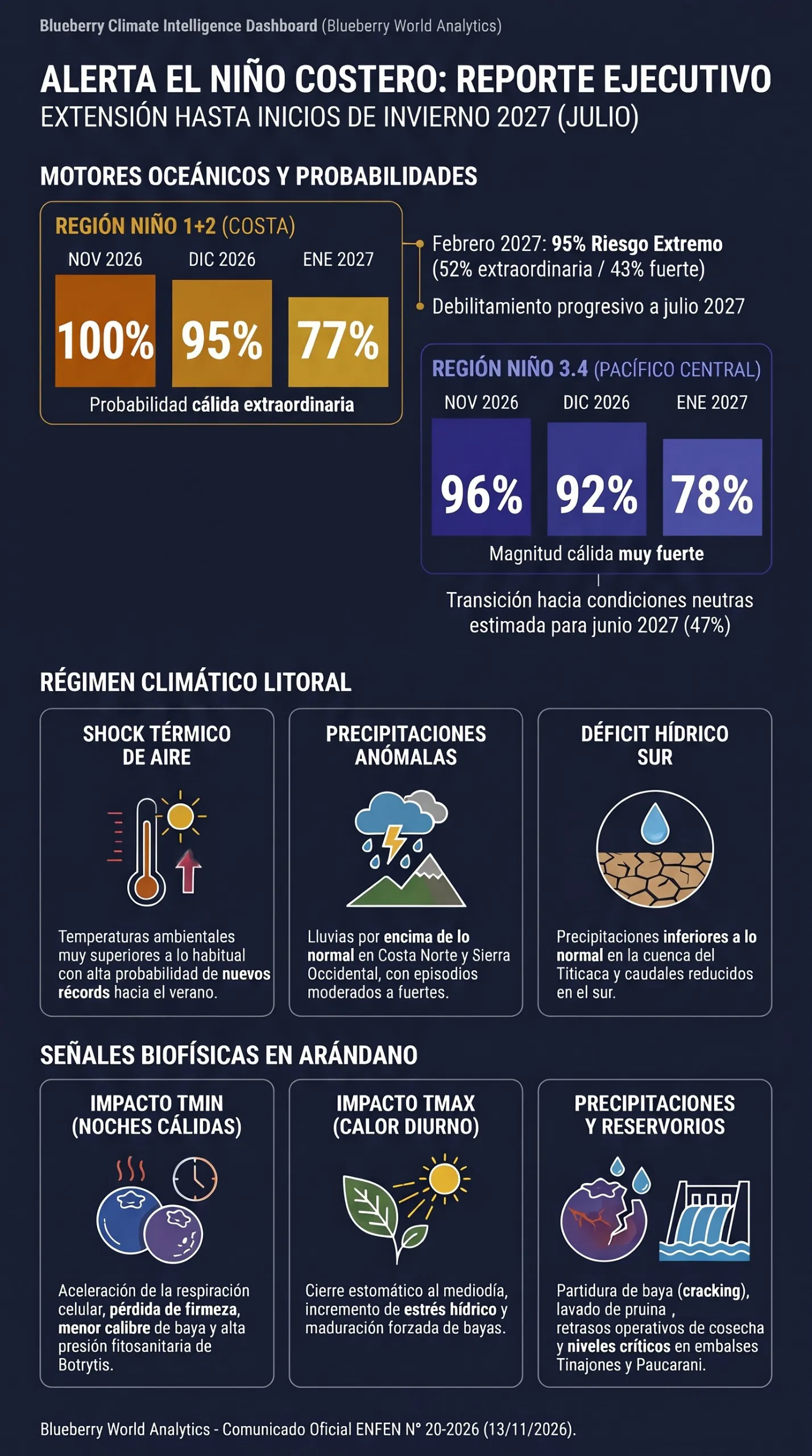
Peru, the world's largest exporter of fresh blueberries, had lowered its export forecast for the 2026/27 season to 304.000 tons, anticipating the impact of El Niño on yields. Furthermore, the first shipments of the season have coincided with the start of the Yunnan season, adding fruit to the market and putting downward pressure on prices.
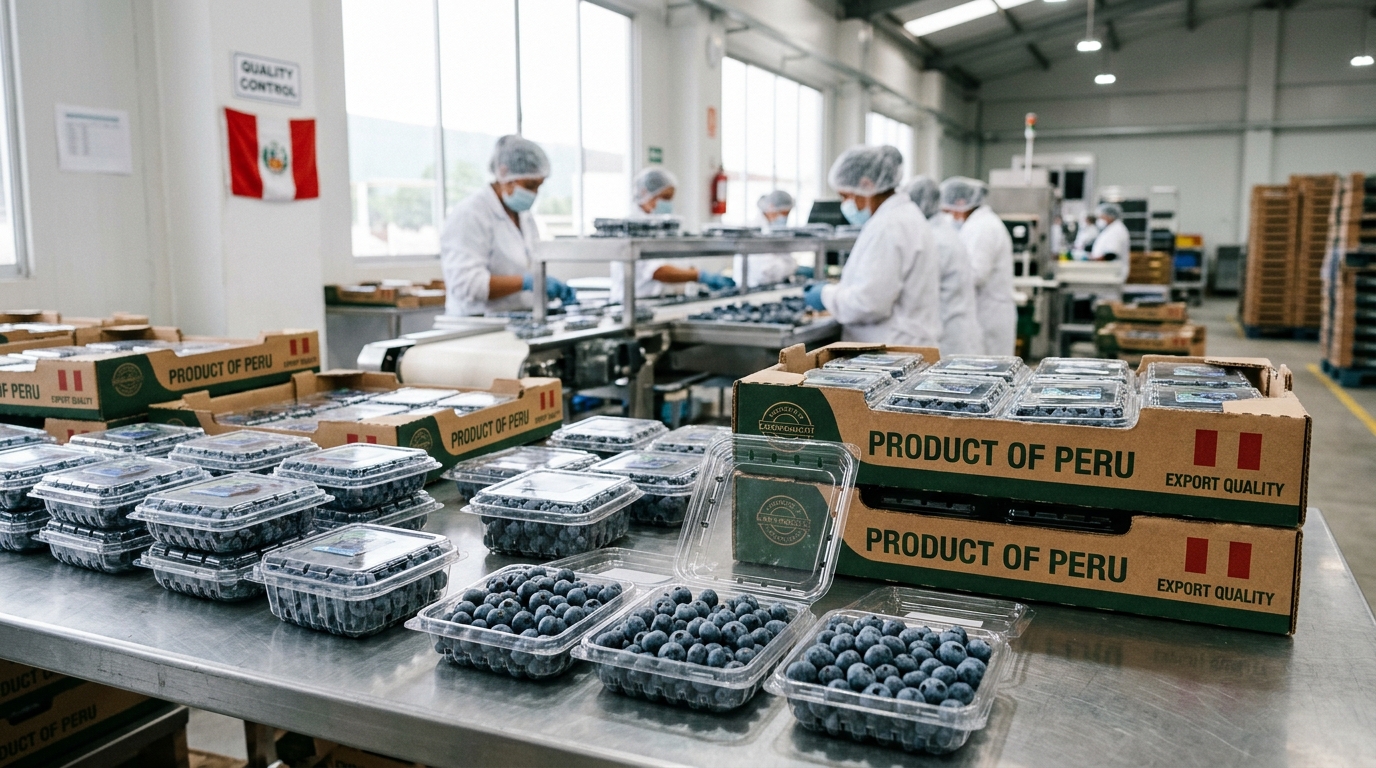
Following the implementation of a pilot program for mutual recognition of temperature probes used in cold treatments between China and Peru, the efficiency of inspections at Chinese ports improved and losses during distribution decreased.
These improvements have increased the reliability of the supply of blueberries Peruvians towards China and, at the same time, have contributed to gradually reducing the price premium of the blueberries locally produced.
Companies with standardized production bases, integrated sorting facilities and consolidated quality control systems continue to be profitable, supported by export demand for premium fruit and orders from high-end supermarkets.
In contrast, small and medium-sized farms that lack classification capacity, work with a limited range of varieties, and depend on highly fragmented production and harvesting schemes among small farmers have a considerably lower capacity to cope with market risks.
The establishment of plantations of blueberries substrate typically requires an investment of between 1,05 and 1,5 million yuan per hectare (US$ 157.500–225.001).
With current price levels, the payback period for these investments has been considerably lengthened, reducing the interest of new investors in continuing to expand the area dedicated to blueberry cultivation.
At the same time, the processing channels—among them frozen blueberryPulp processing and anthocyanin extraction—are absorbing significant volumes of lower-grade fruit.
While this helps to some extent to alleviate inventory pressure on the fresh fruit market, it will hardly reverse the overall downward trend in fresh blueberry prices.
In the longer term, the main structural weaknesses of the Chinese industry of blueberry They focus on genetic improvement and the supply of plant material.
Locally developed varieties still represent a relatively small proportion of the market, while the industry maintains a high dependence on imported plant material for its main commercial varieties.
This dependence continues to limit the ability to control costs and reduces the possibilities of product differentiation and building a unique market positioning.
Read also:
- Noposion brings forward harvests and expands exports in response to pressure on blueberry prices in China
- Driscoll's turns Yunnan into its regional berry platform for Asia
- Chinese blueberries are gaining ground in Southeast Asia thanks to genetics, quality, and business strategy
- China: Sichuan begins early blueberry harvest in Liangshan
- Rabobank forecasts that blueberry exports will exceed one million tons in 2027/28
ARTÍCULOS RELACIONADOS