Morocco's emergence as a world leader in the blueberry industry

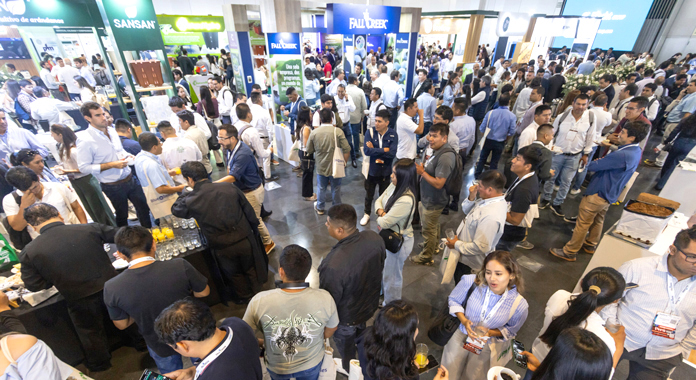
Last week, our team presented at the 33rd International Berry Seminar, organized by Blueberries Consulting in Tangier, Morocco. Alongside key industry figures such as Juan Pablo Bentin of Family Farms Peru, Amine Bennani of the Moroccan Berry Growers Association, Philip Symons of North Bay and Kamal Ouhmad of Driscoll's, we highlight Morocco's impressive rise in the global blueberry market. In 2023, Morocco overtook Spain in terms of export volume, marking a significant achievement in an industry that has seen global exports increase tenfold over the past decade.

The Blueberry Industry in Morocco: A Rising Star
Morocco’s peak blueberry export season runs from January to June, a period in which the country has consolidated its position in the global market. Morocco’s reputation for consistently delivering high-quality fruit has been a key factor in its success. Furthermore, one of its greatest strengths lies in its proximity to the European market, which gives it a logistical advantage over its competitors.
In 2023, Morocco exported 58% of its blueberry production to Spain, where a significant part was re-exported to other European countries. Almost 23% of Moroccan exports went to the United Kingdom, a crucial partner offering favourable prices and a market eager for blueberries. Geographical proximity to Europe allows Morocco to provide fresher products at competitive prices, helping it to establish itself in the region.


Beyond Europe, Moroccan blueberries have begun to make a name for themselves in other regions, including the United Arab Emirates, Russia and Canada. Although export volumes to these markets remain relatively small, the diversification signals Morocco’s strategic intention to reduce its dependence on European markets and expand into North America and high-growth regions such as Asia and the Middle East.

At the beginning of 2024, Morocco saw an improvement in its export prices compared to 2023. For example, blueberries exported to Spain in January reached $6.94 per kilogram, compared to $5.27 the previous year. Similarly, shipments to Germany reached $10.58 per kilogram, compared to $7.42 in 2023.

Particularly impressive were the prices achieved in Hong Kong, where blueberries reached $18.31 per kilogram in December 2023. The United Arab Emirates and Saudi Arabia also offered high returns, with prices above $11 per kilogram.
Competitive Advantage in Key Markets
The United Kingdom remains one of the most important markets for Morocco, where Moroccan blueberries enter the market at the end of the Southern Hemisphere season (Peru, Chile, South Africa) and just before the season starts in Spain.

Presentation Thomas Grandperrin – Agronometrics EMEA Sales Manager

This timing means that around its peak in April, Morocco faces relatively little competition. By extending its growing season—potentially filling export gaps during winter and summer—Morocco could further strengthen its market position.
Strengths, Opportunities and Challenges
One of Morocco’s main strengths lies in the quality of its production, which includes a high proportion of premium varieties. The country also benefits from advanced agronomic practices, favourable growing conditions and an early production window, thanks to greenhouses in regions such as Agadir. These factors allow Morocco to produce blueberries earlier than its European competitors. The experience gained by the presence of some of the world’s major blueberry industry players is also crucial in this development.
There are numerous opportunities for Morocco to further extend its harvest season by expanding production into southern regions such as Dakhla, which could unlock opportunities earlier in the season, or into the Atlas Mountains, which could support later harvests.
However, the industry also faces challenges. Rising production costs, driven by severe drought and reliance on desalinated water, are a significant concern.
Furthermore, the domestic market for blueberries remains limited, increasing dependence on exports. While reliance on Spain and the United Kingdom as key partners may create vulnerabilities in the event of market disruptions, Morocco’s efforts to diversify its export markets—particularly toward Canada, Hong Kong, and the Middle East—will be crucial to reducing its dependence on Europe.
Future perspectives
In the face of increasing global competition, the blueberry industry in Morocco must contend with unpredictable weather conditions and competitive challenges from other major exporters such as Chile and Spain, which are investing in new genetic varieties. Market fluctuations could also impact profitability, so it is critical that Morocco continues to focus on quality and diversify its market reach.
In less than 15 years, Morocco has emerged as a leader in the global blueberry industry. As we move forward, sustaining this growth will depend on a continued emphasis on quality and consumer experience. The best marketing for the future is ensuring that today’s fruit meets the highest standards of taste and quality. Morocco is well positioned to meet the growing global demand for premium blueberries, and by diversifying further into markets such as Southeast Asia, the Middle East and North America, the country can secure its place as a dominant player in the industry.
ARTÍCULOS RELACIONADOS