The Ukrainian berry industry in wartime: what has been the impact?
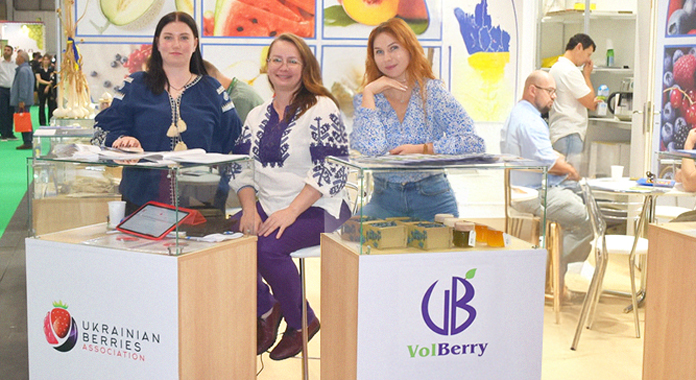
The Ukrainian berry industry has suffered severe impacts, but shows resilience. According to Iryna Kukhtina, President of the Ukrainian Berry AssociationMajor challenges remain for producers and exporters; however, several segments have grown, and the sector's landscape has transformed.
“The last few years have presented unprecedented challenges and forced producers to adapt quickly. Since the start of the war, we have faced the loss of production areas, logistical disruptions, labor shortages, and higher costs. Still, the sector has adapted and continued to thrive. Ukraine has significantly increased exports of cultivated berries and even slightly expanded production. The fresh blueberries continues to grow: alongside large farms, more and more small producers are entering the market with modern technologies.”

Kukhtina explains that logistics have become much more complex. Most exports depend on road transport, which has become more expensive since 2022 due to fleet retirements and a truck shortage. Although there was some stabilization, in 2023 blockades at Polish border crossings paralyzed Ukrainian truck traffic for months. Periodic delays are still being reported today.
“This forced routes to be diversified, often avoiding Poland. The result was unfavorable for everyone: higher costs and times for Ukraine, and loss of flow for Polish carriers. Poland's share of Ukrainian raspberry exports fell from 58% in 2022 to 33% in 2024, while Germany's increased from 12,5% to 28% and France from 3% to 6%.”
The destruction of the energy infrastructure exacerbates the situation. To mitigate risks, several freezing companies have distributed storage units across different regions and even moved part of their refrigeration capacity to Poland, the Czech Republic, and neighboring countries. Even so, power outages force rapid sales, generate price volatility, and limit planning flexibility.

Iryna Kukhtina, President of the Ukrainian Berry Association ©Messe Berlin

The conflict also reduced the labor force: many Ukrainians migrated and the arrival of foreign seasonal workers ceased.Labor shortage is one of the toughest challenges —Kukhtina points out. Internally displaced persons fill part of the gap, and many women have been trained to take on technical and operational roles previously performed predominantly by men.
Kukhtina indicates that the planted area and Total production have remained relatively stable: slight decrease in strawberry and moderate increases in raspberry and blueberriesYields vary by climate, so general conclusions cannot be drawn from a single year. The early strawberry window, lost at the start of the war, was largely covered by supplies from Zakarpattia, Mykolaiv, and Odessa.
En blueberries, the most active expansion occurs in Volyn, Lviv and Zakarpattia, while kyiv and Zhytomyr remain the main hubs for large-scale production. Raspberry production continues to spread throughout the western part of the country, where the climate and logistics are more favorable.

Frozen raspberry (HS 081120) markets have also been reconfigured. The European Union remains the main destination, but Poland—previously more of a transit hub than a final market—has lost ground as more exporters work directly with Western European buyers. The Czech Republic serves as a redistribution point, and shipments to Germany, France, Italy, and Lithuania are growing. Between 2022 and 2024, Poland's share fell from 58% to 33%; Germany's share increased from 12,5% to 28%; and France's share increased from 3% to 6%.
“The Ukrainian berry industry is a story of resilience and adaptation. Despite the war, logistical challenges, and uncertainty, producers continue to work, invest, and expand markets. Today, our berries are still perceived as affordable raw materials, but we are moving toward recognition for quality, reliability, and professionalism.” concludes Kukhtina.
ARTÍCULOS RELACIONADOS