Morocco ranks 4th in the world in the export of berries.
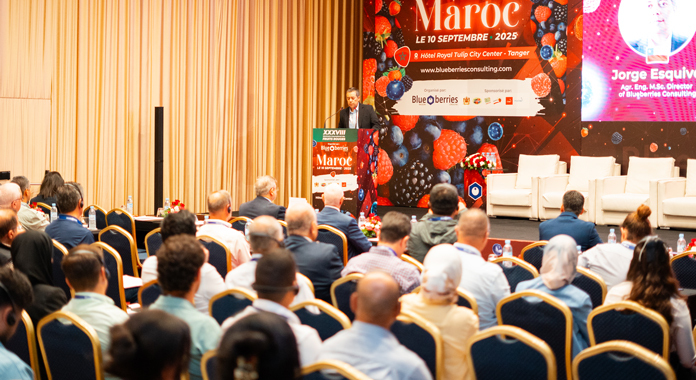
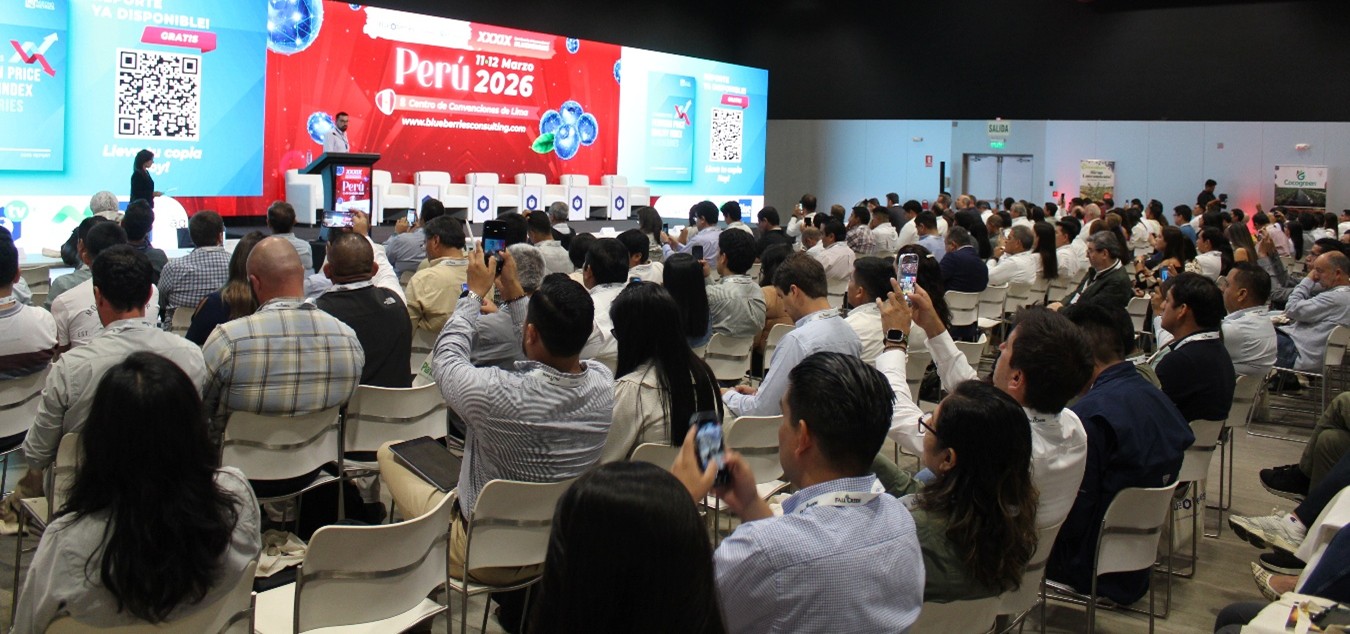
Organized in Tangier on September 10 and 11, the XXXVIII International Seminar Blueberries Morocco 2025, It shed light on the international berry market, showing how Morocco has currently achieved fourth place as a trusted and recognized exporter of berries worldwide.
This annual seminar brings together industry stakeholders, experts, and agricultural researchers to exchange ideas and share a vision for the future, supporting and promoting the positive development of the soft fruit sector.
Morocco, a strategic player in the production and export of berries
Jorge Esquivel, Director of Blueberries Consulting, stated that Morocco is a country that has consolidated its berry sector over the last decade to become a strategic player in the production and export of berries, particularly blueberries, raspberries, and strawberries.
"Thanks to its unique climatic conditions, its privileged geopolitical position, and the innovative capacity of its producers, it is able to serve major international markets quickly and competitively," Esquivel emphasized, highlighting the sustained growth of the local industry as an opportunity to reflect on sustainable water management, the incorporation of new production technologies, the strengthening of scientific research, and adaptation to the demands of increasingly conscious and demanding consumers.
In this context, the global market for blueberries and berries offers encouraging prospects, as consumption continues to expand, driven by the demand for healthy, quality foods, opening up a horizon of opportunities for producing countries like Morocco and for all of us who work in this value chain, he explained. Jorge Esquivel.
The director Blueberries Consulting He urged everyone to take advantage of this international meeting to learn, share, and strengthen ties that will allow us to continue strengthening the international community of producers, exporters, scientists, and professionals in the production and export of berries.
The leading experts, researchers, companies, and organizations participating in the seminar expressed their deep conviction that the fruits of this exchange will be as valuable as those reaped on their farms, building new alliances, applying greater innovation, and developing an increasingly sustainable and competitive industry.

Moroccan products in the international market
For its part, Amine bennani, president of the Moroccan Red Fruit Producers Association, stated that Moroccan produce is safe, good, and of high quality, with an export chain that begins in November and continues until June.
In the 2024-2025 period, Moroccan exports reached 121.000 tons, representing a 5% increase compared to the same period last year.
The growth is due, according to the data presented by Bennani, to the blueberry with a production that has multiplied by eight in the last ten years, and to the raspberry whose production has multiplied by ten since 2015.
Morocco's main clients are England, Spain, Germany, and France, and the market is also increasingly developing, with a growing presence of Moroccan products in the United States, Canada, the Middle East, Libya, and Qatar.
“Europe remains our main customer, but we also reach other African and American countries. It's important to keep in mind that the Netherlands and Spain are re-export destinations, not consumer destinations. These are products that are shipped and then re-exported to other destinations,” Bennani clarified.
In the case of raspberries, America represents the main consumer of Moroccan products, exceeding nearly 4000 tons between the United States and Canada, a figure that was nonexistent just a year or two ago. This reflects the success of the quality and good marketing of Moroccan products abroad.
Enormous dynamism of a growing sector
After surpassing Spain, positioning itself behind Peru and ahead of the United States, the berry sector in Morocco has experienced considerable growth since its launch in 2015.
According to the first panel of the XXXVIII International Blueberry Seminar which made a diagnosis of the Moroccan market, this growth has been favored by the geographical proximity to Europe, favorable climatic conditions, availability of water resources, skilled labor, mastery of production, packaging and processing techniques, and by the relocation of production by companies to the north and state incentives to encourage investors in the south of the country.
On the socioeconomic level, the berry sector generates an estimated turnover of over $500 million. In the 2024-2025 season, berry crops cover an area of nearly 14 hectares, of which almost half is occupied by acerola, an area equivalent to 000 hectares, and which continues to increase year after year. During the same period, the Kingdom exported over 7000 tons, ranking fourth in the world.
In this sense, the event reflects the enormous dynamism and projection of a sector that has become an economic and social driving force, not only in Morocco but in multiple regions around the world.

The seven challenges of the sector in Morocco
The president of the Moroccan Red Fruit Producers Association listed the challenges facing the Kingdom of Morocco in developing the sector, explaining the seven most significant challenges for red fruit producers operating in the North African country:
- The climate challenge (temperatures of 51 degrees, winds of over 100 km/h, storms, etc.) requires compliance with all regulations intended to minimize the industry's impact on the environment and limit CO2 emissions.
- Water stress, knowing that red fruit plants are the crops that make the best use of each cubic meter of water.
- Human resources are the biggest problem, with a lack of motivation and training. Local labor is no longer sufficient, forcing producers to recruit people from other parts of Morocco or neighboring African countries. Furthermore, young people must be encouraged to work part-time.
- The health risk associated with importing plants for berry cultivation increases the demand for local production, pushing producers to develop and improve their techniques to ensure healthy and safe plants in their production. With an increasingly restricted list of pharmaceutical products for treating insect pests, European regulations leave producers in a disadvantaged position. Producers must be more vigilant and take preventative measures to avoid these types of problems.
- Inflation is a big problem because it doesn't go both ways. There is inflation in inputs, but at the point of sale, prices are stagnating, if not actually falling. Diesel is rising, as are fertilizer prices; and pharmaceuticals have seen increases of between 20% and 30% in recent years.
- The challenge of renting, whose prices have increased fivefold in less than ten years, especially in northern Morocco.
- The very delicate aspect of transport, especially for raspberries.
Considering the European Union's environmental criteria and despite these challenges, Morocco already has its national leaders in the production and export of berries, who have become major international players in the berry sector.
Vision and expectations to improve Made in Morocco
Mohamed Amouri, President of the Moroccan Interprofessional Federation of Red Fruits and Berries, he emphasized the importance of highlighting Moroccan expertise in the sector; he also urged its export, "because today, Moroccan know-how is known and recognized internationally."
"You should know that in 2015, there were only a few hectares of berry crops, yielding a maximum of 12 tons per hectare. Today, some farmers manage to exceed 30 tons per hectare. We now have more than 5000 hectares of berries," Amouri added.
Given Morocco's expertise in water conservation and innovation, Amouri called for a Moroccan name for the varieties he had developed, which are recognized internationally.
Growing from 5000 hectares in 2015 to 14000 hectares in 2025, with a future vision of reaching 17.000 hectares, Amine Bennani shed light on Morocco's prospects in the field of soft fruits to further improve its international position:
- The opening of the Chinese market this year will allow Morocco to diversify its clientele and position itself in another increasingly important market, especially in the Americas.
- Avoiding climatic incidents that affect the production of berries include water stress and extreme temperatures (both cold and hot), which impede plant growth.
- Guaranteeing production consistency, on the one hand, through adequate and consistent irrigation and the implementation of cultivation techniques that improve sunlight exposure and photosynthesis efficiency. On the other hand, respecting production volumes to ensure consistent prices.
- Reaching a fair price for the product—a fair price; when comparing what countries earn and what the producer receives at full capacity, there's a big difference.
- Develop Moroccan research ecosystems to foster Moroccan cultural techniques.
Multilateralism is the key
The Ambassador of Chile, Alberto Alejandro Rodriguez Aspillaga, recalled that the world is experiencing complex times, with trade wars and often unilateral decisions that affect our emerging economies in different ways.
"My country is committed to defending and strengthening multilateralism so that our markets can be governed by clear, predictable, and well-known rules." Rodríguez stated, clarifying that multilateralism and international law represent the best response to the complexity of our times.
Both Chile and Morocco enjoy a very important emerging market for berries, with a diversified export offering and a broad network of trade agreements. In this regard, both countries are encouraged to take initiatives to advance a fruitful strategic partnership in this mutually promising sector.
Rodríguez reported that Chile's trade this year has increased by 8,3% compared to the same period last year, a boost supported by the dynamism of its exports, including fruit exports, which reached a record of more than $5.614 billion at the end of the first half of the year.
The growth is driven by the strong performance of cherries and blueberries, market development, and research into the berry industry, which is the sector that generates the most foreign currency in fruit and vegetable production, more than tomatoes and citrus fruits.
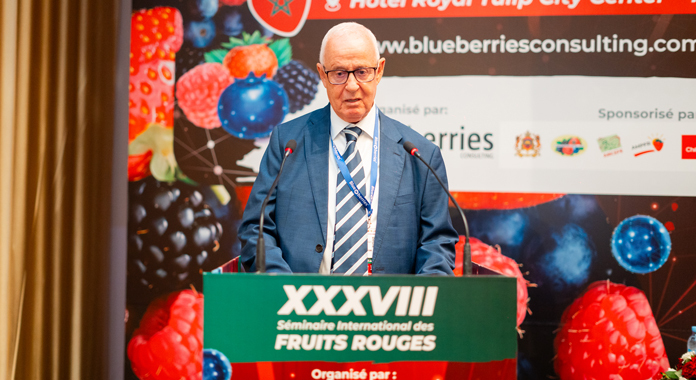
Mohamed Amouri - President of the Moroccan Federation of Red Fruits, Interproberries - Photography: Blueberries Consulting
Previous article
Morocco, a privileged partner of the EUARTÍCULOS RELACIONADOS