Miguel Bentín places the Peruvian blueberry in a more demanding stage
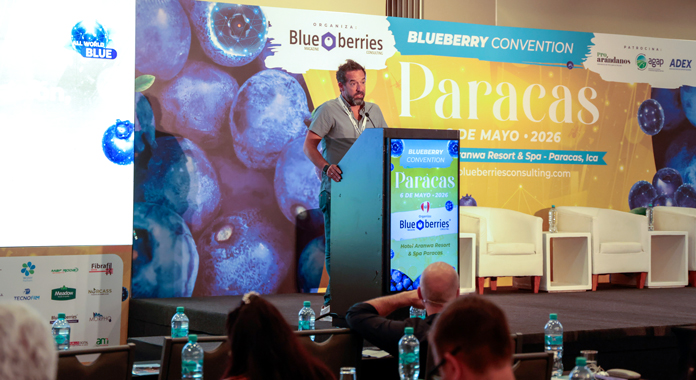
During the inauguration of the Blueberry Convention Paracas 2026, Miguel Bentín, president of Proarándanos, proposed a historical reading on the development of the blueberry in Peru and placed Ica in a particularly significant position within that process. His intervention focused not only on the present state of the crop, but also on the years when it began to gain ground on the Peruvian coast amidst technical and commercial uncertainties.
Bentín put forward an idea that gave his presentation a regional flavor: “It’s possible, it’s not 100% confirmed, but it’s very likely that the first commercial hectares on the Peruvian coast originated here.” With that statement, Ica emerged not only as a growing area within the current business, but also as a territory that may have been linked to the first steps of Peruvian blueberry cultivation on the coast.

The early years of an industry without certainties
Bentín recalled that the initial development of blueberry In Peru, the situation was marked by a high level of uncertainty. In his words, the outlook was "absolutely uncertain," and although some maintained a more optimistic view, no one projected that the industry would reach the scale it has today.
That memory didn't appear as an isolated anecdote, but as a way of reinterpreting the present. The current expansion of blueberry He suggested that it was not the result of an obvious path, but of a process in which it was necessary to move forward without certainties, adjust decisions on the ground and build responses to a new productive reality.
The history of asparagus and grapes
During his speech, Bentín linked the history of blueberry Drawing on the experience of other emblematic Peruvian agricultural crops, he recalled that asparagus faced the same skepticism at the time, as did table grapes, which were once considered unviable in an environment marked by water and climate restrictions.
The comparison sought to show a development logic that has been repeated in Peruvian agricultural exports: crops that began under doubt, but ended up consolidating themselves through adaptation, learning and the ability to respond to complex conditions.
“I am very proud to be part of this sector, which demonstrates who we are: how we overcome seemingly insurmountable challenges and how we have been able to build our own knowledge,” he noted. With this, Bentín reinforced one of the central ideas of his presentation: the growth of Peruvian blueberries is not explained solely by favorable conditions, but also by accumulated knowledge and locally developed technical expertise.
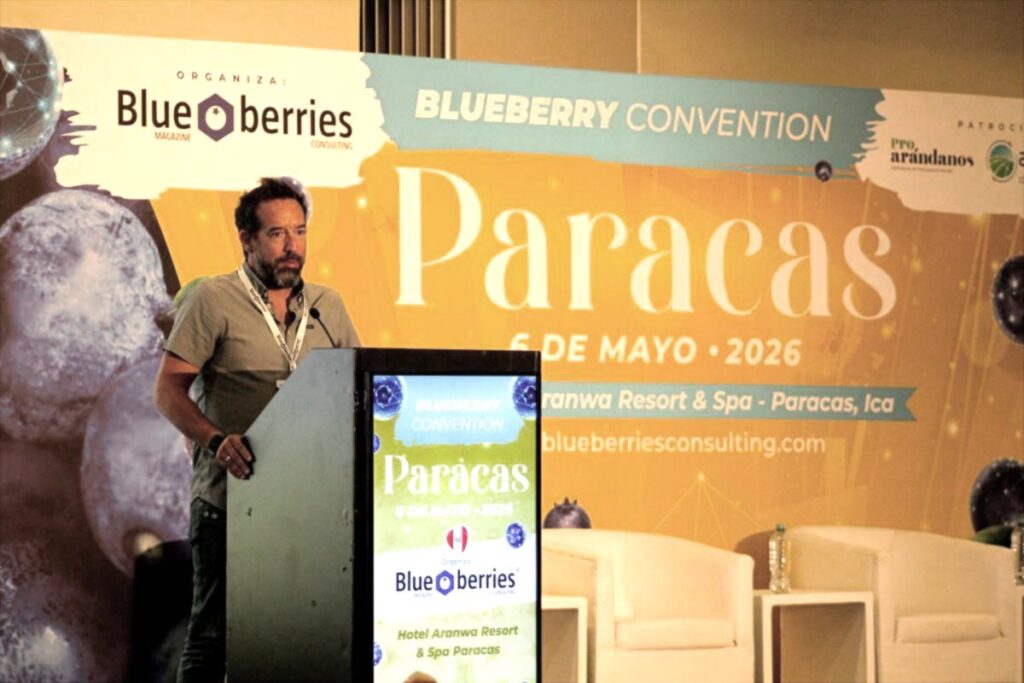
Miguel Bentin, president of Proarándanos, at the Blueberry Convention Paracas 2026

Building knowledge in the desert
One of the most interesting points of his presentation was the way he described the adaptation process of blueberry to the Peruvian coast. Bentín recalled that, in the early years, the industry lacked a clear guide and that much of the knowledge available from other countries proved insufficient given the diversity of production realities along the Peruvian coast.
“We don’t have the information. We have to write our own manuals,” he said, alluding to a period when producers had to move forward without stable benchmarks and with very marked differences even between neighboring areas. He explained that farms located just 50 kilometers apart could face completely different problems, making it difficult to establish general rules.
That part of the presentation emphasized a less visible dimension of the crop's growth: the need to generate knowledge from the production experience itself. Rather than applying imported formulas, the development of blueberry On the Peruvian coast, it forced adjustments to management, observation, and innovation on the fly.
An industry entering a more demanding stage
While the first part of his speech looked back to the origins, the second focused on the present. Bentín pointed out that the scenario in 2026 is very different from that of fifteen years ago, when the limited availability of fruit at certain times of the year facilitated commercial success without significant differentiation.
Today, he explained, the context has changed. “The fruit market is becoming more segmented. It has to be competitive both in terms of production and sales. Markets are more knowledgeable and know what they want.” With that in mind, he steered the conversation toward one of the most relevant points for the industry today: it is no longer enough to simply produce; it is necessary to respond more precisely to more informed and demanding markets.
That perspective directly reflects the meaning of the meeting in Paracas. More than a discussion about expansion, what emerged was a concern about how to continue growing under different rules, where science, management, and specialization carry much more weight than in the initial years of cultivation.
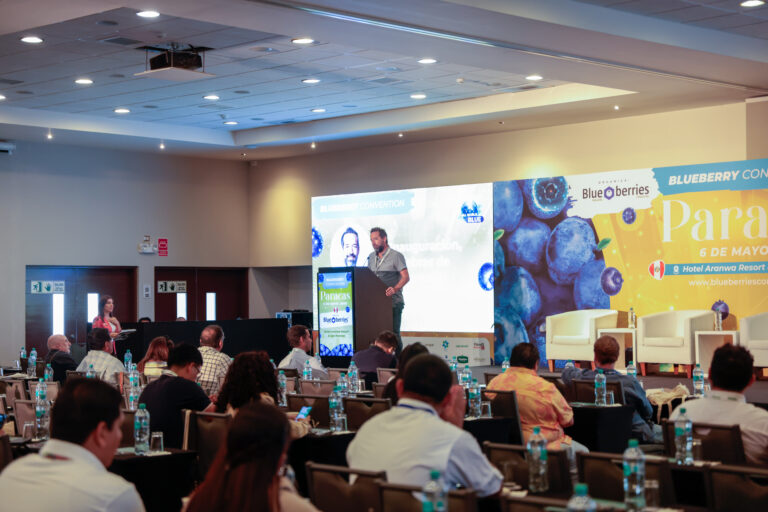
Miguel Bentin, president of Proarándanos, at the Blueberry Convention Paracas 2026

Ica and its place in this new stage
Towards the end of his speech, Bentín returned to Ica and highlighted the 3.600 hectares of blueberries that the region has today. Although it is not the largest area within the country, surpassed by northern regions such as La Libertad and Lambayeque, its role in the development of the crop remains relevant both for its history and its projection.
“We’re not the biggest, but we expect to continue growing competitively and sustainably,” he said. The statement perfectly encapsulated the final tone of his presentation: pride in the progress made, but also an awareness that this stage demands more knowledge, greater precision, and a higher capacity for adaptation than in the early years.
Bentín's intervention thus left a double interpretation of Ica: as part of the early history of blueberry commercial activity on the Peruvian coast and as a region that still has room to continue growing, although under much more demanding conditions than those of its beginnings.
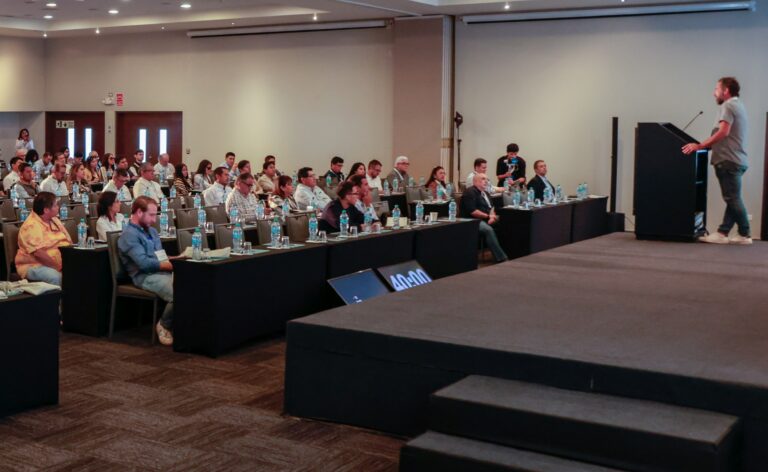
Miguel Bentin, president of Proarándanos, at the Blueberry Convention Paracas 2026
Check out the video of Miguel Bentín on our YouTube channel Blueberries TVwhere he explains that sustainable blueberry growth requires better management of production curves, ensuring consistent quality, and reacting promptly to market changes.
Read also:
The new commercial phase for blueberries in Ica demands greater precision and better coordination.
Ica's remarkable growth redefines the blueberry business in Peru
From Chile to Paracas 2026: Rodrigo Ferreyra: in substrate, water management requires more control
ARTÍCULOS RELACIONADOS