A shared basket: Miguel Ángel Curiel, Vice President of Driscoll's Mexico

North American agri-food integration has turned Mexico, the United States (US) and Canada into complementary pieces of the same supply chain, especially in perishable products such as berries.
For Miguel Ángel Curiel, vice president of Driscoll's Mexico, this relationship sustains a multi-billion dollar market and is key to ensuring year-round availability, diversifying climate risks, and maintaining regional competitiveness.
Why is integration between Mexico, the US, and Canada so important for the sector?
We are talking about a market of around 10 billion dollars (USD) between production and consumption.
To guarantee the availability of these fruits year-round, it is not possible to rely on a single geographic area. Canada produces mainly in summer; the US, in autumn and spring; and Mexico, from autumn to spring, with particularly significant production in winter.
This speaks to the importance of food security in guaranteeing supply…
Yes. The food security factor is becoming increasingly important because it is riskier to depend on a single region to guarantee the continuity of production.
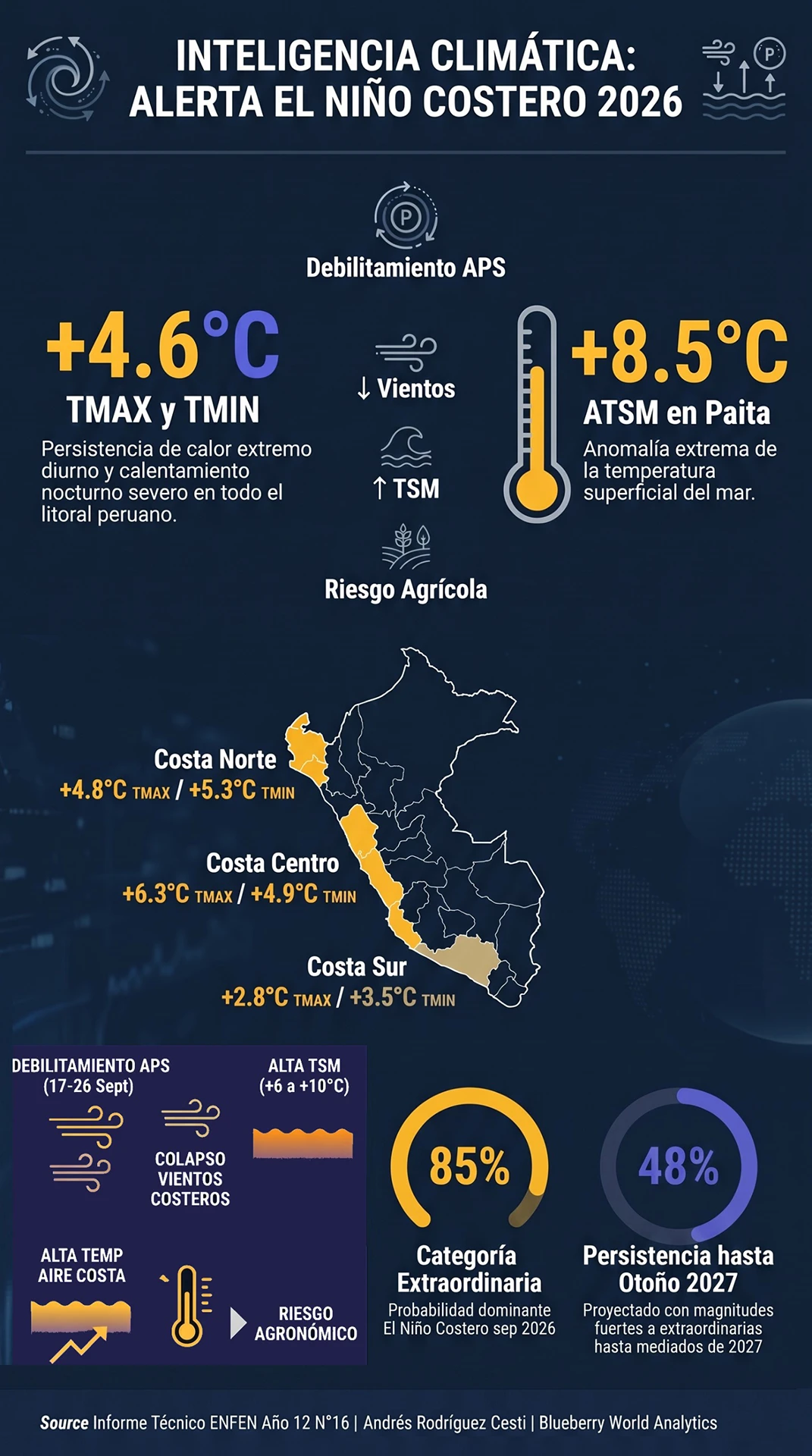
Given the reality of climate change and phenomena like El Niño, which modify the climatic patterns of different areas, it is necessary to diversify the producing regions.
In this way, if a climatic impact occurs in an area tomorrow, the supply of the product is not significantly altered and the supply to consumers can be maintained throughout the year.

How important is the United States to the berry industry?
The US consumes around $8 billion worth of these fruits, out of a total market of nearly $10 billion. Canada accounts for approximately $500 billion and Mexico around $500 million.
The United States is the most important market. Approximately two-thirds of consumption is concentrated on the East Coast and one-third on the West Coast.
Does production among the three countries only strengthen the region, or is it also exported to other markets?
Production primarily benefits North America, although a small proportion is exported to Europe, Asia, and the Middle East. In the case of berries, the product's characteristics limit these possibilities.
We're talking about strawberries, raspberries, blackberries, and blueberries. Three of them are highly perishable: there's a window of eight to ten days between harvest and consumption.
That limits the distances. Air transport is expensive and has a significant environmental impact, while sea transport takes too long. Reaching Europe can take between 15 and 20 days, and Asia around 18 to 35 days. By then, we'd hardly still be talking about a fresh berry.
That's why we should focus on Mexico, the United States, and Canada, where the product can reach virtually any destination in three to five days.
More than 90 percent of Mexican agricultural production remains in North America, and in some sectors, it exceeds 95 percent. For berries, between 98 and 98.5 percent stays in the region. The remainder may be exported to Japan, the Middle East, or Europe, especially during the winter months.
Europe meets part of its winter demand with products from North Africa due to its proximity and lower transport costs. This is a similar logic to that of North America, with Mexico complementing US food production.
Therefore, the priority must be to continue strengthening the North American relationship. Yes, we are practically putting all our eggs in that basket, but precisely for that reason we have to take very good care of it.

How has the berry market evolved since the USMCA?
There has been a significant evolution. I don't know if it can be attributed solely to the trade agreement, because it also coincides with greater consumer awareness of health and nutrition.
The North American Free Trade Agreement (NAFTA), which began in 1994, created conditions and an attitude of openness and integration. It did not solve all the problems, but it did establish that principle.
Previously, strawberries were virtually unavailable in the US during the winter, except for those grown in certain areas of Florida. Today, between November and February, consumers can find strawberries from Mexico. This integration has made them available year-round.
What do you consider to be the main areas of opportunity for the agri-food sector?
Each region would have to do two things. The first is to identify, develop, and maximize its strengths.
From a food security perspective, each country should focus on the products and seasons in which it has the greatest advantages.
Mexico has enormous strengths due to its climatic diversity. It can consolidate its position as a supplier of fruits and vegetables during the winter, but also produce in autumn and spring.
The second task is to address sectors that have not yet been fully integrated.
We can think about small-scale producers of corn, grains, or beans who don't necessarily want to change their line of work. These sectors also need support. We have some outstanding structural work to do there.

What issues should be on the table in the review of the USMCA?
A periodic review is not necessarily negative, nor does it imply a thorough review of the agreement every year. It can serve to verify progress, compliance with commitments, and identify obstacles that need to be resolved.
There is an agreement and communication between the three governments that, particularly in food matters, it is necessary to maintain the fluidity of trade channels.
There are also positions from Canada, the US, and Mexico regarding productive sectors or groups of farmers that they consider necessary to protect or safeguard. This generates discussion.
We're not necessarily in the ideal scenario, but we are in a situation where we can work together. This framework requires us to maintain dialogue and honor our agreements.
next article
ARTÍCULOS RELACIONADOS