Germany: “Slight blueberry shortage and a difficult season for cranberries”

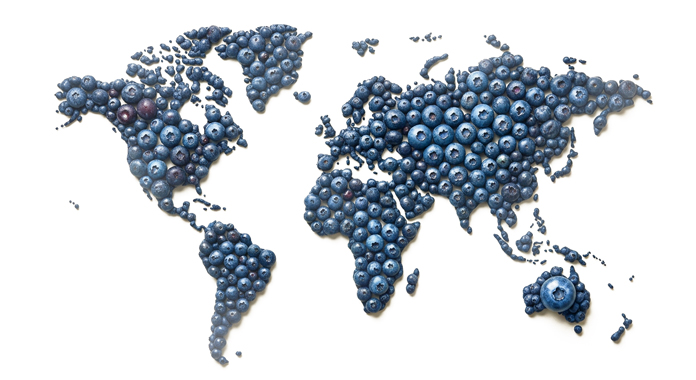
The market of blueberry The industry is going through its usual seasonal transition phase. The Northern Hemisphere campaign is nearing its end, with the last shipments coming from Poland and Romania, while the packing of overseas blueberries from South Africa, Namibia, and Peru is already in full swing.
At the same time, the market is experiencing a general shortage of supply and, consequently, high prices. This is according to Christiaan Koellreuter, CEO of Nordgemüse GmbH.
Overall, this year's European season will be remembered as a challenging one. “It was an unusually warm and dry period, especially in Germany and Romania. As a result, yields were generally below average. In Poland, however, there was heavy rainfall right during the peak harvest in July. Despite this, quality remained at good levels in all producing countries,” explains Koellreuter.

Lower supply and higher prices
The overseas season also presents some challenges. Since the end of the Northern Hemisphere summer, the modern packing plant in Buchholz/Aller, Lower Saxony, has been packing additional volumes of blueberries from Namibia, South Africa, and Peru.
The Namibia campaign usually extends until the first half of November, while shipments from South Africa normally continue until the end of the year.
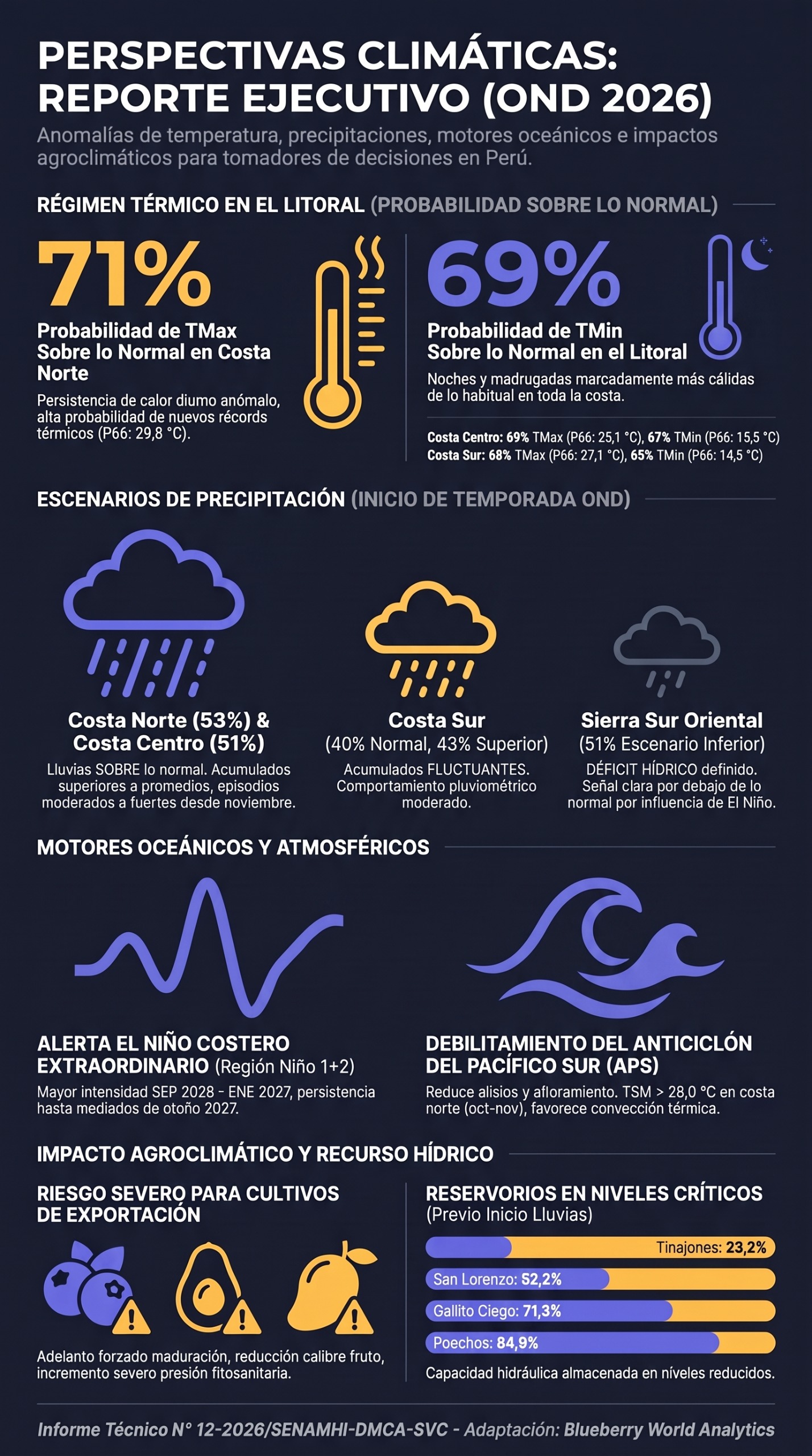
Koellreuter points out: “In this case, our advantage is having our own production in both countries. Although we expect good yields, these will not fully compensate for the losses recorded in Peru due to the El Niño effect.”
The first shipments of Chilean fruit are expected in early January. As a result, a slight shortage of product is anticipated in the coming weeks.
“The available fruit supply will be sufficient to maintain the usual assortments. However, at the moment, no particularly aggressive promotional campaigns with large formats at very low prices are planned. In fact, it is already being observed that 300-gram and even 125-gram packages are being offered at points of sale, instead of 500-gram trays.”

During the third quarter, prices registered a gradual increase and, according to Koellreuter, further increases in the coming weeks cannot be ruled out.
German-grown cranberries: prices are currently just above last year's levels and, unlike blueberries, remain relatively stable.
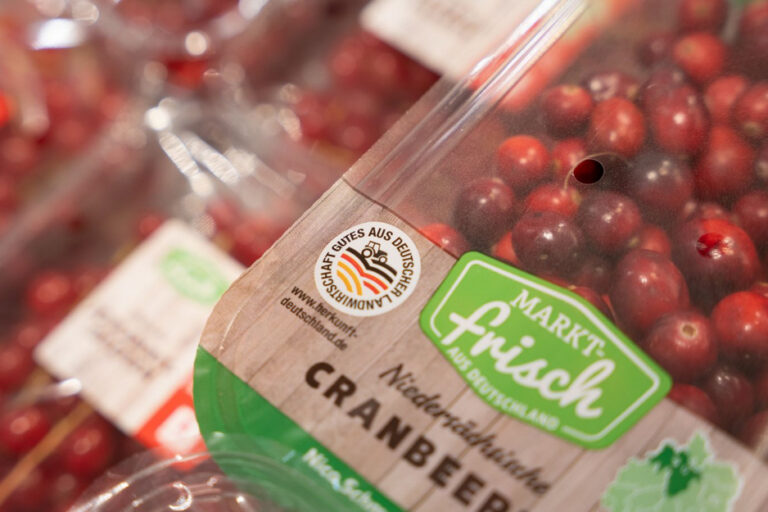
German-grown cranberries © Kaufland/Nordgemüse Krogmann
A challenging season for cranberries
In addition to marketing blueberries Throughout the year, Nordgemüse GmbH specializes in the sorting, packaging and distribution of seasonal products, including cranberries.
Currently, the company offers cranberries sourced from both a partner producer in the Lüneburger Heide region of Germany and from Poland.
“Unfortunately, due to the heat, this year’s German cranberry harvest is very small: it’s not even half of last year’s volume. Furthermore, a larger proportion of the harvest is being used for industrial processing. In Poland, the situation is somewhat better,” Koellreuter notes.
The harvest situation is also impacting sales in the German domestic market. “Some retail customers started marketing later than usual and are now offering 200-gram trays instead of 400-gram trays. Promotions have also been suspended for the time being until November, i.e., until the start of the overseas season.”
Koellreuter adds that they also expect a later start to the season in Canada, the company's main source of cranberries. "We also anticipate that this year the season will start later in Canada as well, our main source of supply," he concludes.
Read also:
- Western and Central Europe surpasses North America in imports of fresh blueberries
- Europe maintains high demand for blueberries, but quality defines the market.
- Blueberry season in South Africa: good start in the north and uncertainty in the Western Cape
- The windows are moving: how the Latin American blueberry calendar is changing
- Peruvian frozen blueberries grow 14% with strong progress in Germany and Poland
next article
ARTÍCULOS RELACIONADOS