Long-distance blueberries: quality doesn't end at harvest
By: Natalia Rubio Iversen

Un blueberry The fruit may leave the field with good size, bloom, firmness, and flavor, but in long-distance transport programs, that evaluation is still incomplete. The fruit must retain its attributes for several weeks before reaching the buyer and, ultimately, the consumer.
During Fruit Attraction 2026, César Elías and Ruy Barbosa, from North Bay Produce; Ernesto Pino, from Fall Creek; and Enrique Harten, from Agualima, spoke with Blueberries Consulting about that journey from different positions: genetics, production, post-harvest, logistics and marketing.
From any of those points, the question ends up being the same: how to ensure that a good fruit at harvest also arrives in good condition at the market.

If it doesn't arrive in good condition, the attributes lose value.
César Elías prioritizes shelf life over more visible attributes when fruit has to travel for weeks. “The attribute that is least talked about, but ends up being the most important, is shelf life,” he points out. And he adds: “A blueberry It can be large, it has to be bloomy, it has to taste good, but if it doesn't have a shelf life, it won't reach the markets.”
From Agualima, Enrique Harten translates that demand into commercial terms. When discussing the post-harvest performance the company seeks, he uses a shelf life of 45 to 50 days as a benchmark. “Shelf life is very important. If it lasts 45 or 50 days, the fruit is already of good quality.”
According to Harten, this margin gives retailers more time to market the fruit while maintaining its quality. The 45–50 days figure is based on his experience and not a general industry standard.
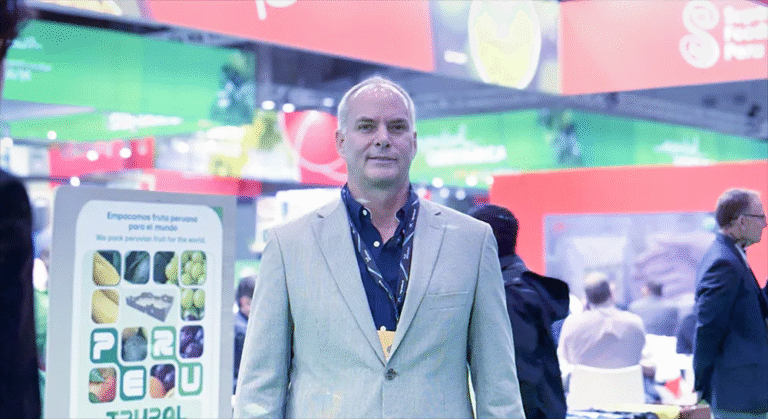
Enrique Harten, Commercial Manager of Agualima, during his participation in Fruit Attraction 2026 © Blueberries Consulting
The ability to travel begins to be defined in the field
This multi-week process also begins to take its toll when choosing a variety. At Fall Creek, Ernesto Pino has indicated that one of the program's current objectives is to maintain attractive firmness even after 60 days. This figure corresponds to the parameters used to describe varietal evaluation and not to a universal market requirement.
Therefore, a variety is no longer evaluated solely on productivity, size, or flavor at harvest. It also matters how well it retains its flavor after several weeks.
The IBO Global Blueberry Report 2026 shows that this quest is already part of varietal renewal. Among the objectives it identifies for breeding programs are larger size, firmer fruit, better flavor, texture, and appearance, as well as a longer shelf life. The report also points out that firmness depends on both genetics and post-harvest practices. But there's a clear limitation: a good variety doesn't succeed on its own.
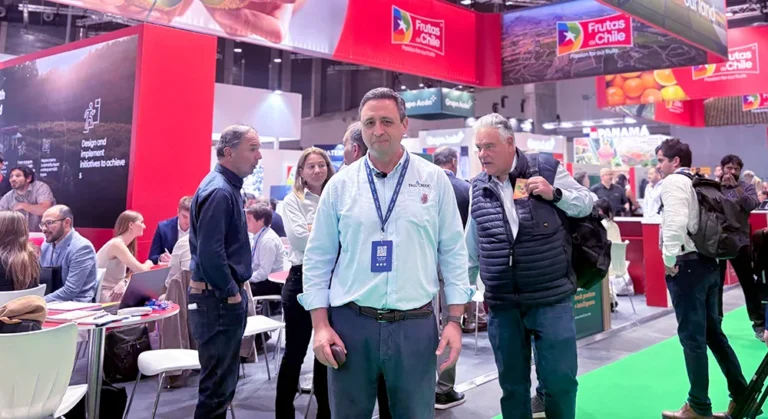
Ernesto Pino, from Fall Creek, addressed the new challenges of genetics, productivity, and post-harvest handling in Chilean blueberries at Fruit Attraction 2026. © Blueberries Consulting

A good variety doesn't travel alone either.
Barbosa expands the problem beyond genetics. According to the North Bay Produce executive, the condition of the fruit upon reaching the market also depends on field management, timely and careful harvesting, the cold chain, and logistical execution. In his view, shipping companies are part of this process because the fruit must reach the market at the right time and in the right condition.
The journey, in reality, begins before the container. The fruit enters the cold chain in the condition it arrives from the orchard and the harvest; from there, cooling, handling, and transport must help preserve it until it reaches its destination.
Firmness, shelf life, and arrival condition are not the same. Firmness is an attribute of the fruit; shelf life expresses how long it maintains an acceptable commercial condition under specific storage conditions; and arrival condition reflects the outcome of what has occurred throughout the entire supply chain.
It is also not advisable to directly compare the 45–50 days mentioned by Harten with the 60 days used by Pino: they correspond to different references and conditions.
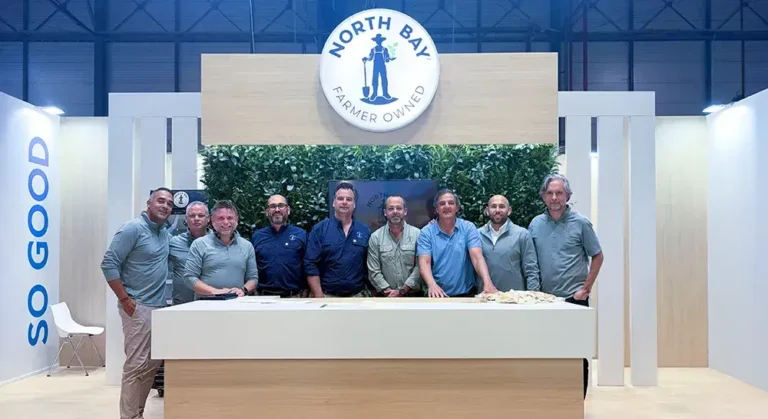
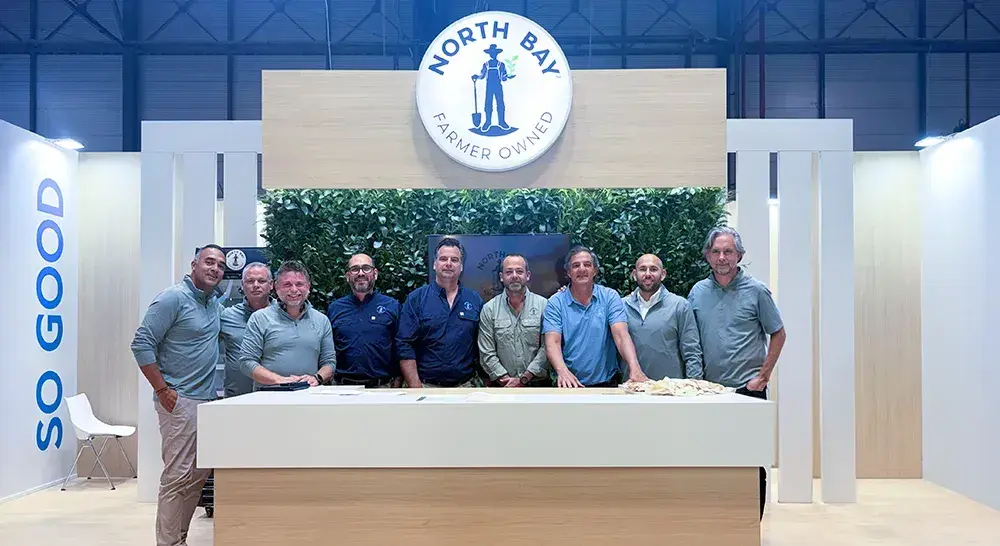
North Bay Produces at Fruit Attraction 2026 © Blueberries Consulting
The real test takes place at the destination.
And it's in the market where all that journey becomes visible. At Agualima, the pursuit of a longer shelf life translates into more time available for the retail customer. At Fall Creek, the same pressure arises earlier, when evaluating how much firmness a variety can maintain after extended periods. And at North Bay Produce, the focus expands to include harvesting, refrigeration, and the logistics required to sustain the fruit until the end of its journey.
From the market perspective, the IBO Global Blueberry Report 2026 also warns that quality standards are rising rapidly. The report indicates that varieties considered exceptional a few years ago are beginning to approach the standard that certain markets expect, and mentions quality, shelf life, cost, and supply reliability as key factors that are starting to differentiate suppliers.
Genetics, harvesting, refrigeration, and logistics all converge at the same point: the fruit that reaches the market. For a blueberry The quality of the fruit, which spends weeks between the field and its destination, doesn't end at harvest. It's confirmed when the fruit arrives and still meets the expectations of both buyer and consumer.
Read also:
- North Bay Produce: Genetics, productivity, and condition raise the bar in the blueberry business
- Blueberries in retail: price matters, but it's not enough to generate repeat purchases
- More supply, less margin for error: blueberries are changing scale at Fruit Attraction 2026
- Málaga Fruit Day: more blueberries and better genetics raise the logistical demands
- Fruit Attraction 2026: Agualima and Euroandes chart new opportunities for Peruvian blueberries
- Fruit Attraction 2026: Chilean blueberries redefine their competitiveness through genetics, condition, and new markets
Previous article
Does photoselective netting influence ripening, maturity parameters and chemical composition of highbush blueberry (Vaccinium corymbosum L.) fruit?next article
ARTÍCULOS RELACIONADOS