Callao and Chancay reorganize the routes of Peruvian blueberries
By: Alejandro Yoshioka
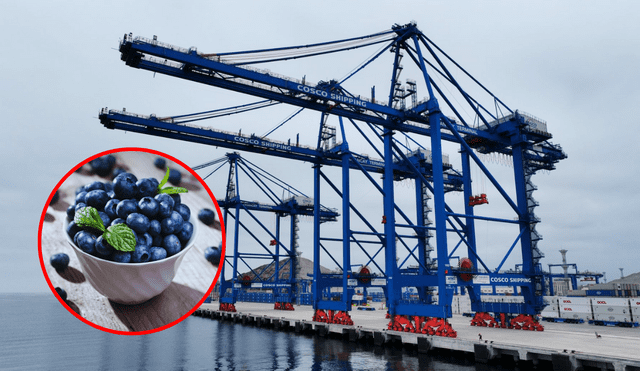
The opening of the Chancay terminal opened a new alternative for Peruvian agricultural exports to Asia. Its direct services and shorter transit times to China altered a logistics landscape historically concentrated in Callao and Paita, and raised a particularly relevant question for the blueberryIs the new port attracting cargo that previously used other routes, or is it joining a network where each terminal serves different destinations and business programs?
For now, the data shows a much more pronounced Asian specialization in Chancay, while Callao maintains a significant share of blueberry shipments. What cannot yet be determined is how much volume of this fruit has actually shifted between ports.
Callao maintains scale
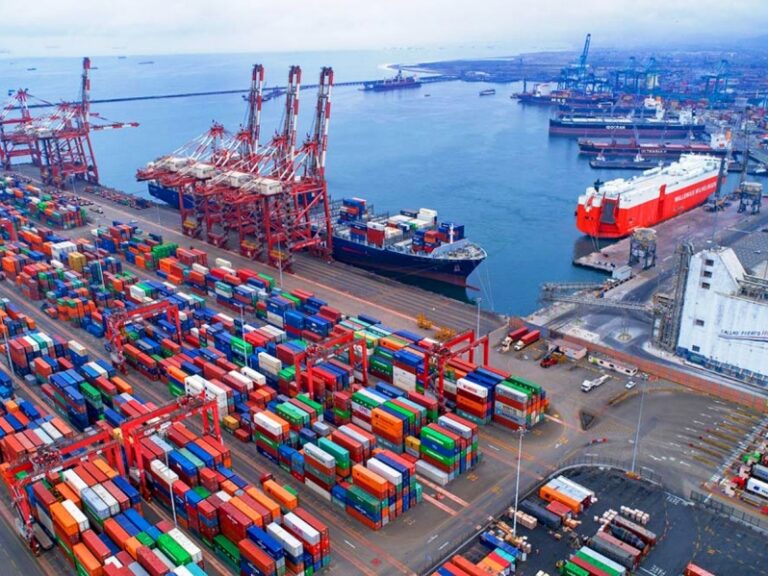
During the 2025/26 season, 10.508 containers of blueberries were shipped from the Port of Callao. Of these, 7.362 were handled through the South Pier operated by DP World, representing approximately 70% of the fruit exported from that port.
North America also accounted for 54% of shipments blueberries These figures were mobilized from Callao during the campaign, according to information released by the port operator. This data is consistent with the significant role the United States plays in Peruvian exports and helps to illustrate Callao's continued function beyond its growing connection with Asia.
The port also offers services to various markets and an infrastructure widely used by the agricultural export sector. Paita, meanwhile, remains a significant alternative for fruit produced in the north of the country.
Port of Callao, Peru © Maritime World

Chancay is building its space towards Asia
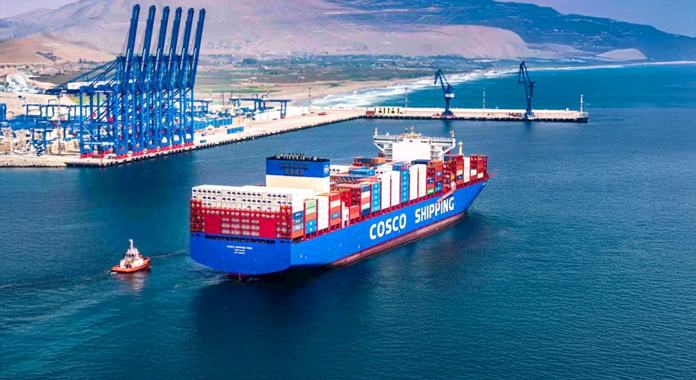
Chancay has a much stronger focus on Asian markets. During the first half of 2026, it handled approximately 17% of Peru's maritime agricultural exports to Asia, with China as its main destination in the region.
The percentage corresponds to all maritime agricultural exports and not exclusively to blueberriesTherefore, it cannot be directly compared to the participation of the South Pier in shipments of this fruit in Callao. However, it does allow us to observe the specialization that Chancay is developing towards Asia.
El blueberry It is already part of that dynamic. During the 2025/26 season, shipments were made to Shanghai using the direct connection from Chancay, with a transit time approximately ten days shorter than that recorded by the routes previously used to reach that market.
The reduction takes on particular significance as China increases its share as a destination for blueberry Peruvian. The United States continues to lead shipments and Europe maintains an important weight, but Asian growth expands the strategic value of having direct routes to that market.
That doesn't mean, however, that all fruit destined for China should automatically be shipped to Chancay. The choice of port is based on a broader set of factors.
Port of Chancay © Maritime World

The decision begins before reaching the port
An important part of blueberry Peruvian production occurs on the northern coast, particularly in regions like La Libertad and Lambayeque. Therefore, comparing only the sailing time to China provides an incomplete picture of the operation.
For the exporter, the route begins in the field and the processing plant. Overland distance, costs, availability of refrigerated containers, service frequency, and schedule adherence are all part of the same decision.
The condition of the fruit also plays a role. A shorter sea transit can facilitate its arrival, but this advantage also depends on the variety, its initial condition, and the management of the cold chain.
The most convenient port option may therefore vary depending on the origin of the fruit, the commercial program, and the destination market.
Callao is also expanding its options towards Asia.
Chancay's entry into the market coincided with an expansion of services available between Callao and Asia. Shipping companies added new direct connections, increasing the options for exporters seeking to reach those markets.
This scenario makes comparing the two ports less straightforward. When there are different connection options to Asia, the decision no longer depends solely on sailing time and begins to incorporate variables such as frequency, regularity, costs, and space availability more significantly.
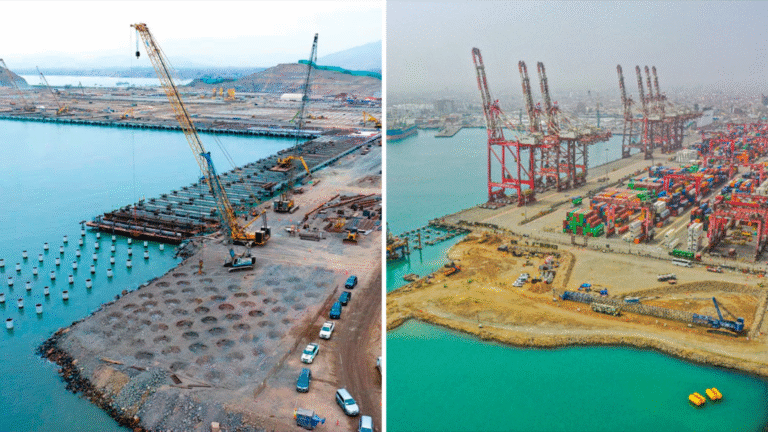
The movement of agricultural cargo to Shanghai shows that after the Chancay port began operations, a redistribution of routes began. However, this data only applies to the agricultural export sector as a whole and does not yet allow us to determine the extent of the shift. blueberry He made the same displacement.
© Peru Retail.
More specialization, but still no winning port
The available data shows a greater specialization of Chancay towards Asia, but it still does not allow us to calculate how much blueberry that previously used Callao or other ports has effectively changed its point of departure.
To answer that question, it will be necessary to have disaggregated data by product, port, and destination. Meanwhile, the map shows increasingly differentiated functions: Callao maintains its scale and extensive network of connections, Chancay strengthens its position toward China and other Asian markets, and Paita remains relevant for northern production.
Rather than defining a winning port, the upcoming campaigns will show how exporters combine these alternatives according to destination, costs, frequency, and logistical requirements.
Read also:
- The Port of Malaga boosts its international connectivity with companies from Chile and Peru
- Port of Hamburg strengthens its strategic alliance with India after historic free trade agreement
- South Pacific ports: Peru accelerates and Chile consolidates records in 2025
- The Port of Chancay has served 289 ships and moved more than 270.000 containers in one year
- Nador West Med, the Moroccan megaport redefining Mediterranean trade
ARTÍCULOS RELACIONADOS