Peruvian blueberry exports exceed US$2.500 billion
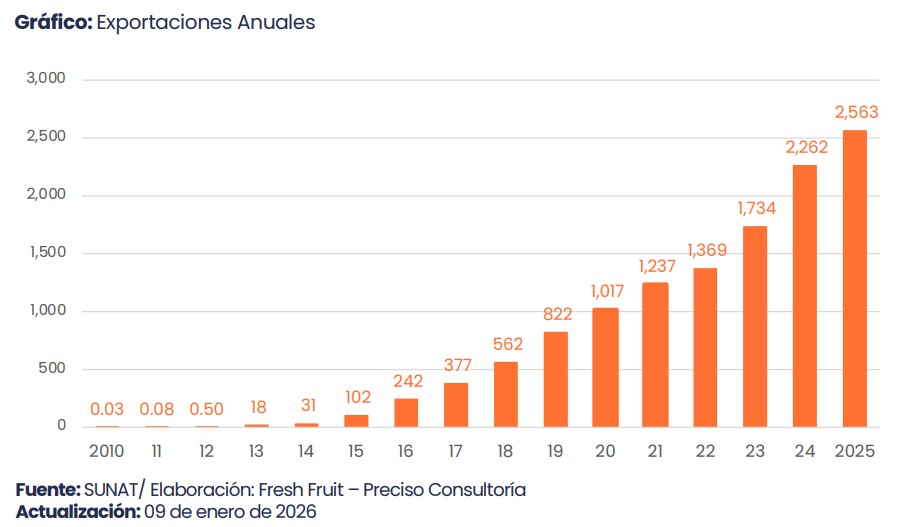
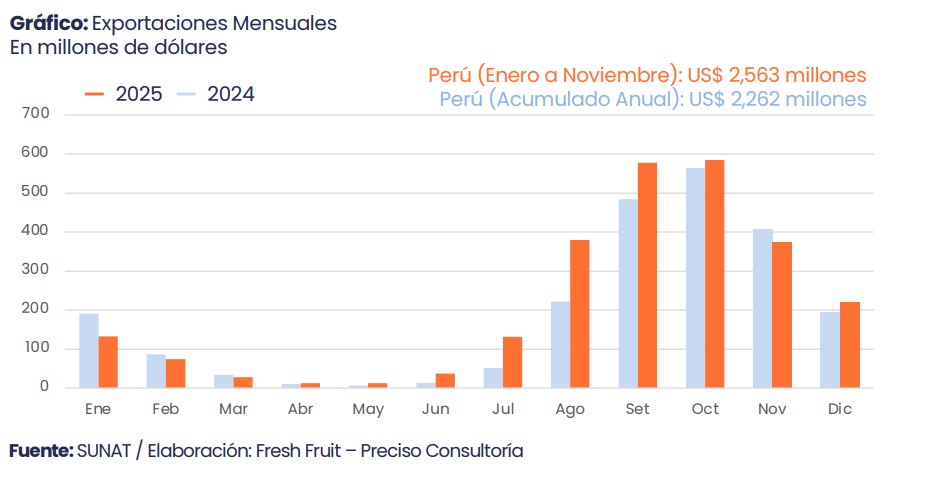
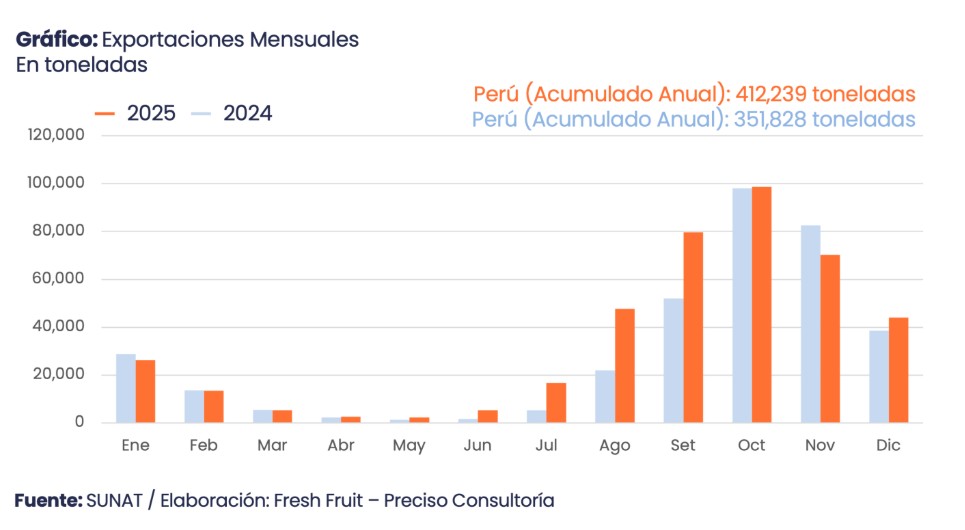
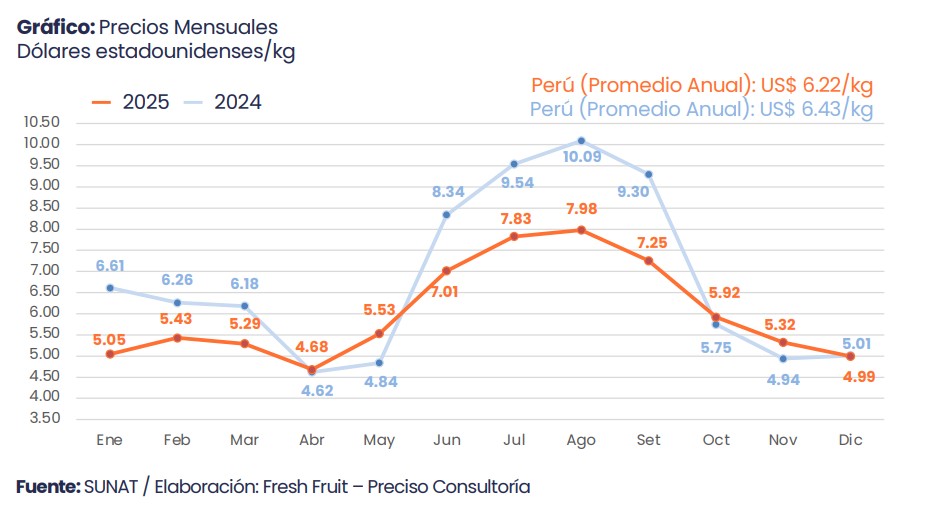
According to data published by FreshFruit, in 2025 Peru exported around 412 tons of fresh blueberries, for a value close to US$ 2.560 billion. This represents a double-digit increase in both volume and value compared to 2024, with an average annual price of around US$ 6,2/kg, slightly lower than the previous year.
The core of the business remained concentrated in the second half of the year: September and October accounted for a substantial portion of the annual value, with monthly sales levels significantly higher than the rest of the year. The decisive contribution came from the increased flow of fruit in August and September, which boosted the total volume for the season, but also made the market more vulnerable to supply pressure during the weeks with the greatest overlap of origins.

Seasonality: the year is defined in a few weeks
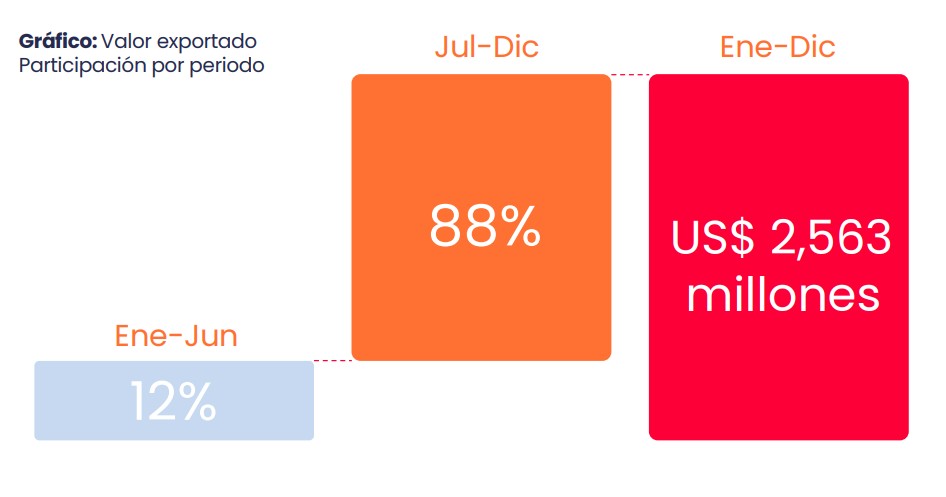
The calendar confirms the high concentration of Peruvian blueberryBetween August and November, most of the exported value was settled, while the second half of the year as a whole accounted for almost all of the business, according to FreshFruit.
 Within that window, October was again the month with the highest revenue, although with a different dynamic than September: September showed a higher price with lower volume, while October maintained similar volumes to the previous year with a slight increase in unit value. The operational interpretation is clear: every decision about when to harvest and ship has a direct impact on the return per kilo.
 Price: the market responded by adjusting the value
The annual decline in the average price is mainly explained by what happened at the peak of the season. In August and September, Peru exported significantly more fruit than in 2024, and the market absorbed this increase primarily by reducing the price per kilogram.
In August, volume nearly doubled compared to the previous year, while the price fell noticeably. A similar pattern emerged in September: more tons, higher total value, but with a significant adjustment in the unit price. October, however, showed a more balanced performance, with volumes similar to those of 2024 and a slightly better price.

Destinations: more diversification, new weight of Europe and China
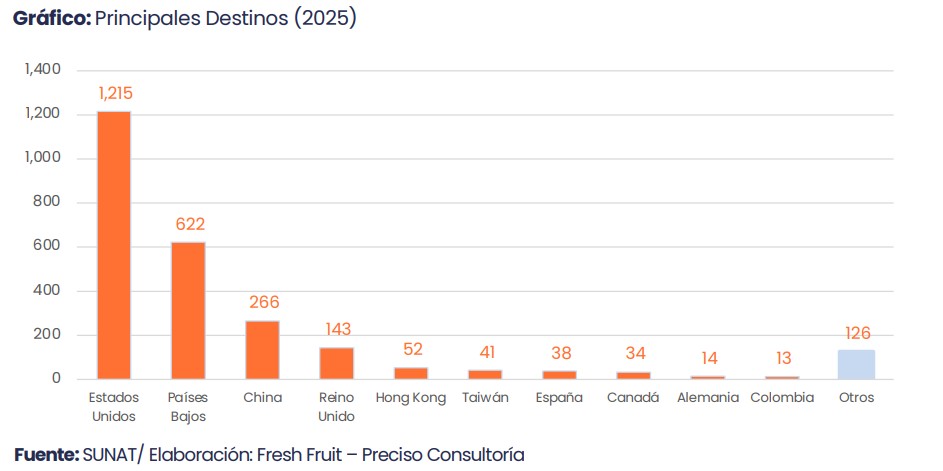
FreshFruit reports that by 2025 the Peruvian blueberry It reached more than 60 markets, with a slight diversification of the product mix: the top five destinations reduced their relative share, although they still account for most of the business.
The United States remained the main buyer, with a slight decrease in its share, but still as an anchor market.
The Netherlands strengthened its role as a redistribution hub for Europe.
China registered the most notable growth in share, supported by increasing demand for high-quality fruit and more efficient logistics routes.
In parallel, Hong Kong lost relevance as a re-export platform to the Asian continent.
This redistribution suggests a more refined commercial strategy: with more volume available, the key is to direct the fruit towards destinations with better absorption capacity and more stable returns.
Business structure: more players, concentrated leadership
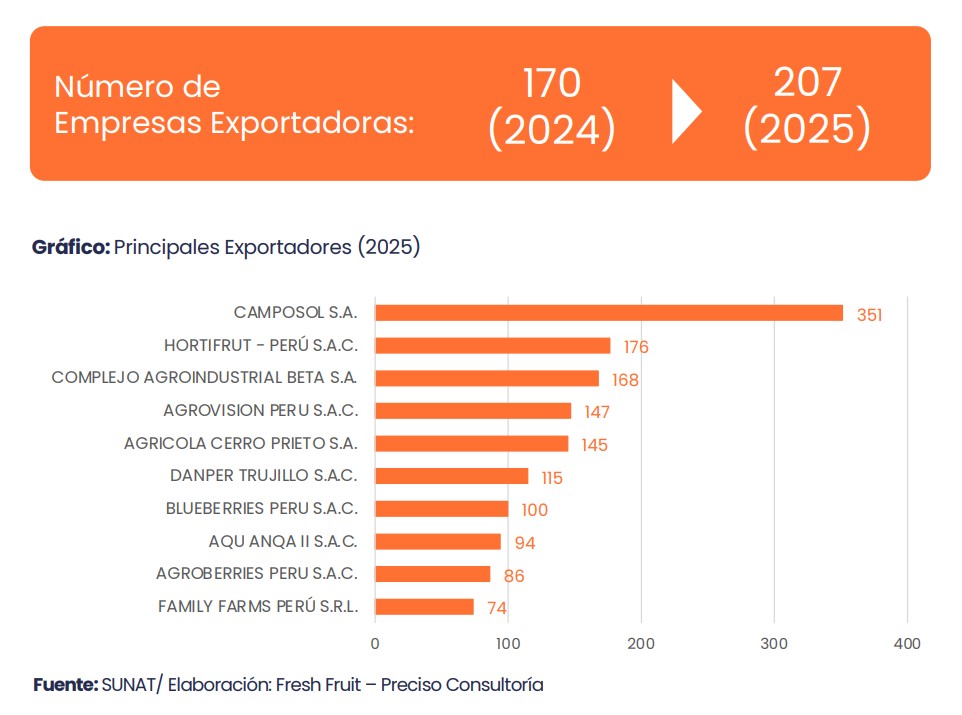
The number of companies participating in the export of blueberries It also increased, according to the same report. New players are entering the market, but the scale of the business remains concentrated: the group of leading companies continues to account for a significant portion of the total value, combining owned land, long-term programs, and strong integration with target markets.
The entry of more exporters brings dynamism and competition, but also reinforces the need for coordination between production, logistics and distribution to avoid additional pressure on prices.
 A record with a message for 2026
2025 will be recorded as a historic record year for the Peruvian blueberryMore volume, more value, and a somewhat more diversified basket of destinations, according to data from Fresh fruitBut it also comes with a warning: when the country significantly increases its shipments during peak global supply weeks, the market tends to respond by adjusting the price.
Looking ahead to 2026, the challenge is not only to produce more, but to place it better: ensuring the condition of the product upon arrival, maintaining the consistency of the programs, and continuing to work on accessing and deepening new markets that will allow for the distribution of the flow of fruit and reduce the pressure on traditional destinations.
Turning this record into a sustainable foundation will require a delicate balance between scale, quality, and business strategy. Peruvian blueberry It has already demonstrated that it can lead in volume; the next step is to consolidate that leadership in value.
Previous article
The global blueberry industry is heading towards 3,5 million tonsARTÍCULOS RELACIONADOS