The Polish blueberry market changes its supplier map
By: Alejandro Yoshioka
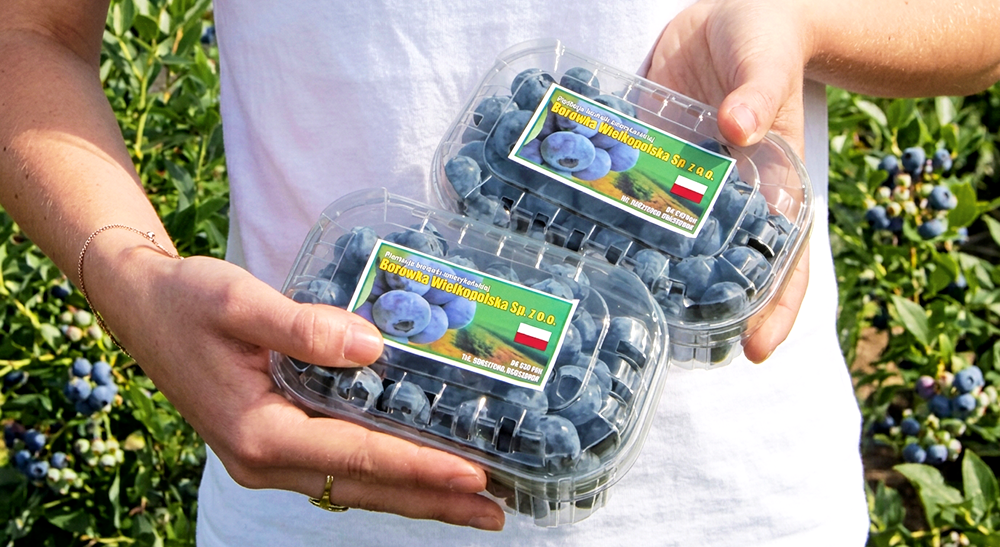
The Polish market of blueberry Poland is experiencing changes in its supplier landscape. Morocco more than doubled its direct exports to Poland during the 2025/26 season and reached fourth place among supplier countries, ranking ahead of Peru and Chile.
According to information published by EastFruit, Moroccan shipments exceeded 3.800 tons between 2025 and 2026, compared to approximately 1.800 tons in the previous season. This represents an increase of over 111%.
With this result, Morocco finished behind Spain, the Netherlands, and Germany. Peru had finished fourth in the previous campaign, and Chile fifth.
Morocco's advance marks a change in the relative position of suppliers, but it occurs at the same time as Poland expands its imports of blueberriesThis market growth helps explain why the new ranking cannot be interpreted solely as a decline in South American supply.

An expanding import market
Poland has established itself as a relevant market for European trade blueberriesDuring 2025, its imports of this fruit reached approximately US$285 million and registered an average annual growth of 21% between 2021 and 2025.
At the same time, the country maintains a significant domestic production base. Poland has 13.356 hectares of blueberries, within a structure in which the fresh market is gaining weight and where protected cultivation systems are also advancing.
WITS records, based on UN Comtrade data, also show an expansion in volume. During calendar year 2025, Polish imports—which include blueberries and other fresh fruits of the genus Vaccinium— reached 37.745,9 tons, compared to 33.035,4 tons in 2024, an increase of approximately 14,3%.
The coexistence of significant local production and increased imports is also part of a broader seasonal dynamic in the European market. The greater growth in imports of blueberries Imports from the European Union over the last decade have been concentrated between September and May. Morocco and Spain play a more prominent role between March and May, while July and August—months that coincide with the peak of the Polish harvest—show considerably lower import growth.
This overall market growth and the complementarity of different supply windows allow us to observe the progress of Morocco along with the evolution of the main South American suppliers.

Peru and Chile also increased their shipments
During 2025, Polish imports from Peru reached 3.583,6 tons, compared to 3.167,3 tons the previous year, representing a 13,1% increase. Imports from Chile rose from 2.261 to 3.115,5 tons, a 37,8% increase, while imports from Morocco increased from 1.562,6 to 1.814,6 tons, equivalent to a 16,1% increase.
All three origins, therefore, increased their recorded volumes during 2025. Morocco's change in position in the 2025/26 campaign occurs on that basis of growth and not on a generalized drop in Polish purchases from Peru and Chile.
Trade values also increased
The evolution of unit values adds another dimension to the competition between the three origins.
In 2025, the unit value of imports from Peru reached US$7,73 per kilogram, while Morocco registered US$7,69 and Chile US$5,50.
The Moroccan benchmark remained practically in line with the Peruvian benchmark and ahead of the Chilean benchmark. In other words, its progress in Poland does not coincide with a lower unit value position compared to the two South American suppliers.
The scope of the Moroccan offer
The expansion in Poland is also part of a Moroccan industry with a significant production base and export scale. Sector data compiled by Blueberries Consulting indicates that the cultivated area is approximately 6.800 hectares, of which about 5.800 are productive.
On the other hand, exports of fresh blueberries The amount of Moroccan exports during the 2025/26 season was around 89.000 tons, approximately 6% more than in the previous season.
These references allow us to assess, on the one hand, the productive base of Moroccan industry and, on the other hand, the scale that its export activity has reached.
Morocco has gained ground in Poland at a time when the market itself is also growing. The upcoming season will reveal whether this progress consolidates and how the balance among the main suppliers evolves.
Read also:
- Poland has 116.674 hectares of berries, with blueberries accounting for 13.356 hectares.
- Morocco strengthens its position in Finland as blueberry imports grow 62%
- Morocco is approaching 90 tons of blueberries and is gaining ground in Europe
- Morocco could produce nearly 70% more blueberries by 2029
- Western and Central Europe surpasses North America in imports of fresh blueberries
- In Morocco, they are looking for alternatives to the Tangier-Algeciras route for the export of berries.
Previous article
Early blueberry exports from Mexico fall 38% as the price of Peruvian fruit rises in the US.next article
ARTÍCULOS RELACIONADOS