El Niño is evolving and could alter weather patterns worldwide.
Every two to seven years, an El Niño phenomenon occurs, associated with warmer-than-usual water temperatures in the eastern equatorial Pacific. Its effects are usually felt globally, and new signs of its evolution are already beginning to emerge.
“El Niño is developing now and will likely be officially announced in the coming weeks,” said Drew Lerner of World Weather, Inc. He explained that its influence will begin in Southeast Asia and parts of northern South America, as well as Central America. It will then spread to India, Central Africa, and northeastern Australia.
“South America typically feels the impact during its spring and summer seasons,” Lerner said. In those regions, the most intense effects could be concentrated toward the end of the third quarter of 2026, during the fourth quarter, and at the beginning of 2027.
Extreme weather in South America
The impact of El Niño could be strongly felt throughout the fruit and vegetable supply chain, starting with the production side.
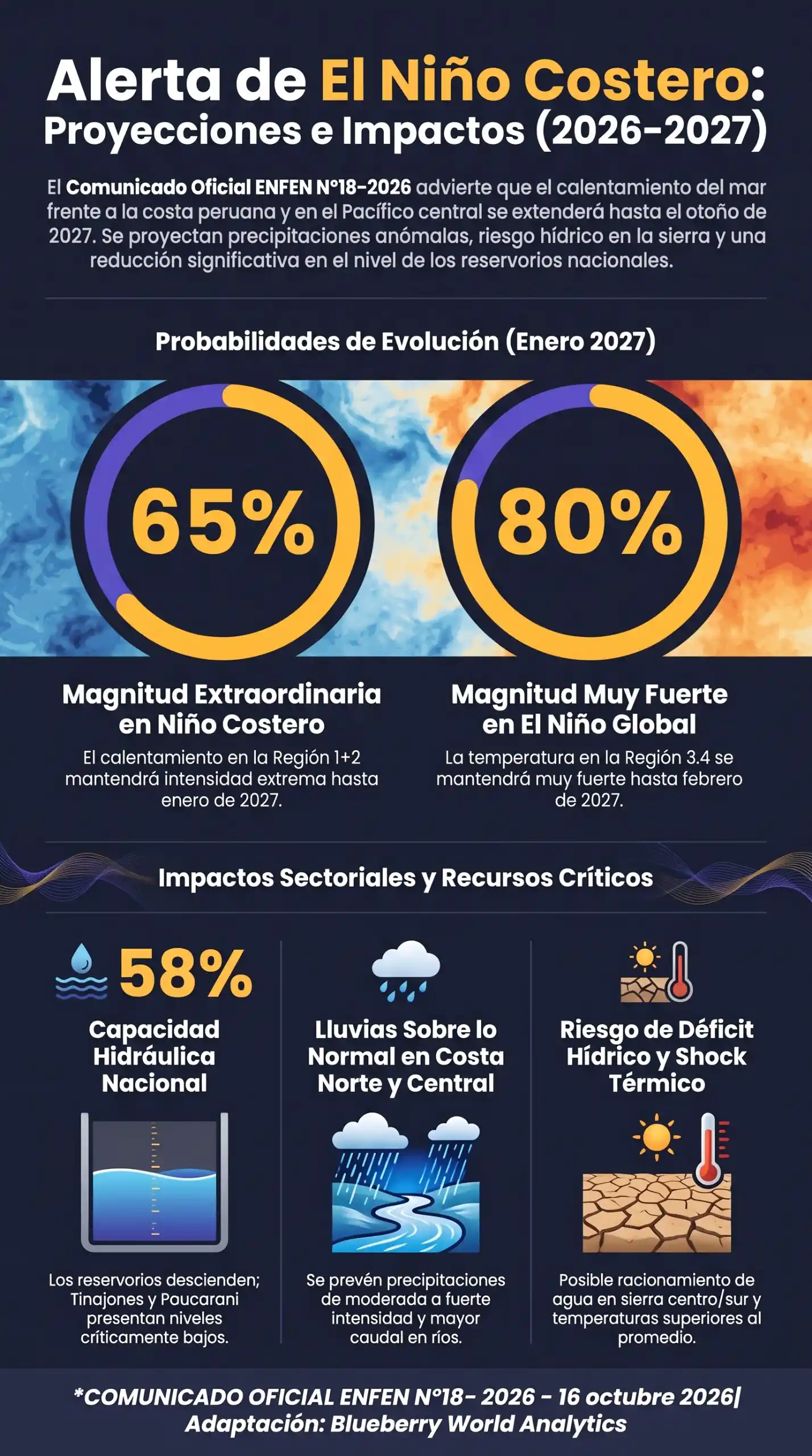
In South America, the phenomenon can cause flooding in northern Chile, Peru, and Ecuador. “Weather patterns in these countries tend to become much wetter during El Niño,” Lerner said. In some years, even the desert regions of Chile receive unusual rainfall, with a risk of flooding, while summer temperatures in the country can rise above normal.

Drought conditions are possible in Colombia, Venezuela, and parts of central Mexico. Below-normal rainfall is also possible in southern and eastern Mexico during the summer.
In contrast, southern Brazil, eastern Argentina, and Uruguay typically experience wetter-than-usual conditions for several months, from winter through summer. In northeastern Brazil—from the Amazon basin to Pernambuco, Piauí, Maranhão, Tocantins, and Bahia—the weather can become unusually warm and dry toward the end of spring and throughout the summer.
In many Latin American countries, El Niño tends to intensify extreme weather events, which often impacts fruit and vegetable production. “The increased humidity can affect flowering, and it’s known that bee pollination decreases under adverse weather conditions,” explained Lerner. This is compounded by greater pressure from diseases and fungi in humid environments.
The production of fruits such as blueberriesMango and avocado production in Peru, Colombia, and Ecuador could be affected. Argentina and Chile also typically experience drops in fruit production associated with high humidity levels, especially during the Southern Hemisphere winter.
Although the effects on the supply of fresh produce may be significant, Lerner warned that one of the most significant losses will likely be due to the decline in anchovy production off the coast of Peru.
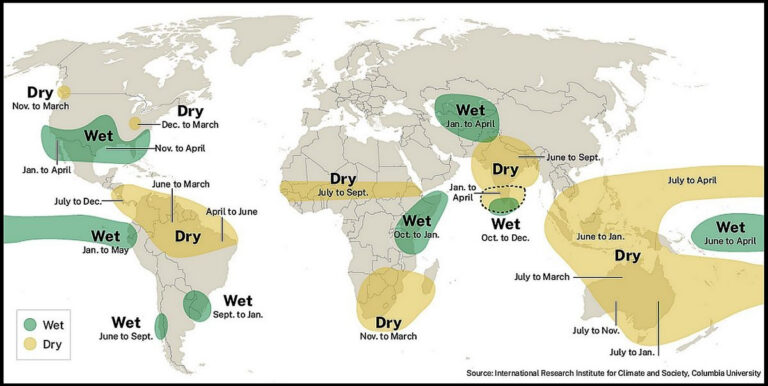
© International Research Institute on Climate and Society, Columbia University.
Impact on North American importers
Given that North America relies heavily on imports of products from South America, Lerner recommended that importers pay attention to several factors before and during the development of El Niño.
“Severe flooding could cause transportation problems in producing countries. Furthermore, El Niño can favor the emergence of diseases associated with wet conditions, which could lead to quality issues,” he noted.
In that scenario, he recommended strengthening inspections of purchased fruit. He also warned that extreme weather events could reduce available volumes and, consequently, put upward pressure on prices.
North American importers are also increasingly sourcing from Southeast Asia and India. “They should be aware that drought in those regions can have a major impact during intense El Niño events, putting further pressure on fruit and vegetable prices as global supplies tighten,” Lerner added.

More rainfall in North America
Although North America relies on imports of fresh produce, a significant portion of its agricultural supply also comes from local production at certain times of the year.
In this region, the effects of El Niño are typically felt primarily during the winter months, specifically the first and fourth quarters of the year. In California, a key state for agricultural production, the rains and flooding associated with the phenomenon can negatively impact winter crops.
During that season, the largest domestic agricultural production is concentrated in California, Florida, and South Texas. However, Georgia, the Carolinas, and areas west of the central Gulf Coast can also experience winter flooding.
Conversely, El Niño winters typically reduce the risk of severe cold waves and damaging frosts in southern states due to increased humidity and more frequent rainfall. Furthermore, irrigation demand tends to decrease in California and the southwestern desert.
What's behind El Niño
Although science cannot yet fully explain or anticipate when El Niño and La Niña will occur, nor what the magnitude of their effects will be in each episode, there is a consensus that these phenomena are associated with changes in ocean water temperature.
When the waters of the central Pacific begin to warm or cool below the surface, it is usually only a matter of time before that signal reaches the surface in the eastern equatorial region of the Pacific Ocean. When the surface temperature becomes noticeably warmer than normal, changes in atmospheric pressure begin to occur.
Warmer waters are often associated with a broad low-pressure system over the eastern Pacific, near the equator. This combination favors greater evaporation, more moisture in the atmosphere, and faster rising air, ultimately leading to increased rainfall.
“A massive low-pressure system over the eastern equatorial Pacific triggers a chain reaction in weather patterns around the world, generating temperature and precipitation anomalies closely linked to the El Niño event,” Lerner concluded.
Read also:
El Niño could affect the upcoming Chilean cherry and blueberry season
El Niño creates uncertainty in the global blueberry market
The 2026 Coastal El Niño: a test of maturity for the Peruvian blueberry
Consistency, firmness and value: nutrition as the core of premium blueberries
ARTÍCULOS RELACIONADOS