The Peruvian blueberry industry faces climate uncertainty as El Niño advances

The Peruvian industry of blueberry The 2026/27 season begins with a combination of greater production potential and increasing climate uncertainty. Although initial export projections point to a good start for the world's leading exporter of blueberriesIn the sector, caution is growing regarding the volatility of the climate and the possible return of El Niño, a phenomenon that could alter the development of the campaign in the coming months.
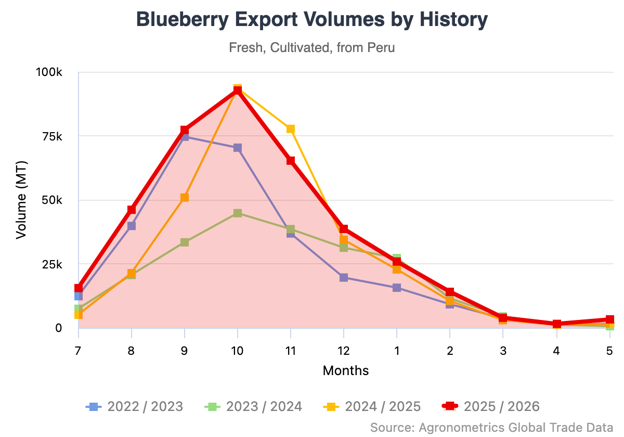
In its first forecast for the 2026/27 season, Proarándanos projected exports of blueberry Fresh shipments reached 56.000 metric tons through week 33, exceeding the volumes shipped during the same period last year. The association attributed this increase to the addition of approximately 3.000 hectares to production, bringing the total blueberry acreage in Peru to nearly 27.000 hectares.

Added to this is the progressive maturation of younger plantations and the expansion of early varieties such as Sekoya Pop and Ventura, factors that should also boost production volume in the first part of the season.
Despite this promising start, Proarándanos warned that the level of uncertainty remains unusually high. The recent rise in temperatures led the association to limit its forecasts to the short term, rather than issuing a projection for the entire season. They explained that above-normal temperatures could affect flowering and fruit development mid-season, with potential impacts on productivity and the harvest schedule.
© Agronometrics
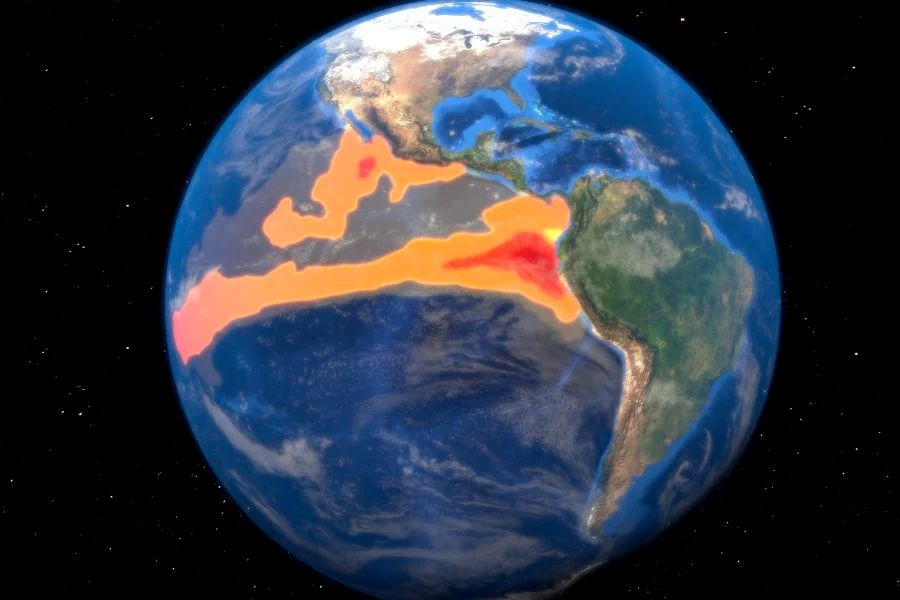
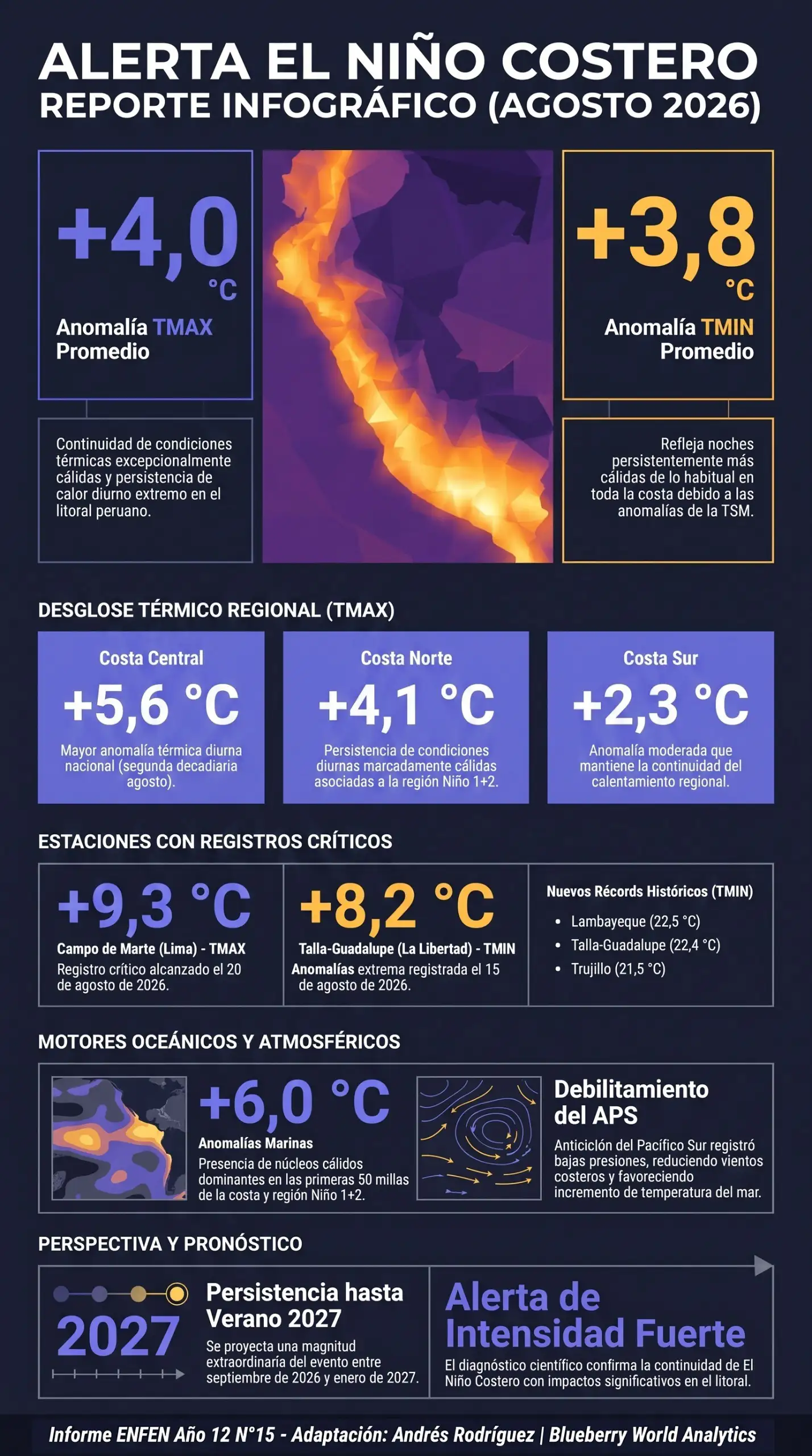
Concern is growing within the industry as international climate agencies warn of the rapid development of El Niño conditions in the Pacific Ocean. The World Meteorological Organization (WMO) recently reported an 80% probability of these conditions developing between June and August, a percentage that would rise to over 90% at least until November. Forecast models also suggest that the event could reach moderate or even strong intensity.

The El Niño phenomenon is characterized by above-average ocean temperatures in the central and eastern Pacific and is among the most influential climate patterns globally. Although each episode has its own nuances, it is usually associated with increased climate volatility, including heat waves, changes in rainfall patterns, flooding in some areas, and droughts in others.
In the case of blueberry In Peru, the concern is not limited to the eventual arrival of the phenomenon, but extends to the degree of uncertainty it introduces during key stages of cultivation. High temperatures can accelerate plant growth, disrupt flowering, and impact both fruit quality and yield. This sensitivity is heightened by the scale of Peruvian production and its role as a near-constant supplier to international markets.
The memory of El Niño 2023 remains very fresh among producers. During that season, climatic disruptions affected production curves, harvest times, and export schedules, forcing the sector to adapt quickly. Although production levels remain stable today, the possibility of another El Niño event has led producers to adopt a more cautious approach.

As the season progresses, weather conditions could become one of the most decisive factors for Peru's export performance. Proarándanos expects to update its forecast in the coming weeks as more weather information becomes available. Until then, the scenario combines increased production capacity with a growing influence of weather risk on the global berry supply.
For the international blueberry market, what happens in Peru once again demonstrates that production growth alone is no longer enough to predict supply. Climate variability is increasingly impacting yields, harvest timing, and the level of certainty with which producers and exporters can project a season.
Read also:
El Niño could affect the upcoming Chilean cherry and blueberry season
El Niño creates uncertainty in the global blueberry market
The 2026 Coastal El Niño: a test of maturity for the Peruvian blueberry
Previous article
California Giant anticipates a strong supply of blueberries for JulyARTÍCULOS RELACIONADOS