Who is Hajar Alafifi? The Moroccan global leader now heads OCP Africa
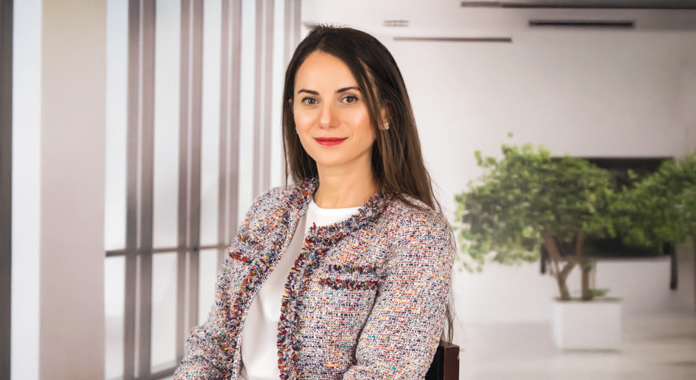
Morocco – With its focus on transforming African agriculture, OCP Africa has entrusted Hajar Alafifi with the leadership of its continental strategy. She will assume the role of CEO effective September 1. This strategic decision brings one of the most distinguished international executives back to Morocco to lead the group's ambitious continental vision.
Born and raised in Casablanca, Hajar Alafifi represents the pinnacle of Moroccan talent on the world stage. As of September 1, she officially assumes the role of CEO of OCP Africa, leading the group's continental strategy with a mission to transform African agriculture.
A graduate of ENCG Casablanca, Alafifi began her career at Unilever Morocco and, over more than two decades, has consolidated a rising international career that has led her to key positions in London, the Netherlands, South Africa, and Southeast Asia.
She has served as Regional Brand Director, Senior Global Brand Director, Brand Development Director for Europe, and CMO of global brands such as Sun, Domestos, and CIF, managing multi-million-dollar businesses across four continents.
Her career reached a peak when she was appointed President and General Manager of Unilever Sri Lanka, becoming the first Moroccan to lead a subsidiary of this magnitude in the region. Most recently, she served as General Manager of Nutrition for Southeast Asia and Indonesia, strengthening her experience in emerging markets.
Most recently, she served as Managing Director of Nutrition for Southeast Asia and Indonesia at Unilever, further expanding her experience in emerging markets.
"This appointment marks a new stage in the company's development strategy on the continent," OCP Africa stated in its announcement, highlighting the importance of bringing in such outstanding talent to lead its operations in Africa.
Leadership and Recognition Philosophy
Throughout her career, Alafifi has distinguished herself not only for her business results but also for her transformative leadership. In Sri Lanka, she implemented progressive labor policies that achieved gender parity and introduced special leave provisions, while also launching campaigns against domestic violence.
Their management approach is based on three clear principles: deep cultural understanding to ensure products meet the needs of local consumers; rapid and responsive innovation; and authentic leadership characterized by clarity and serenity, especially in difficult circumstances.
This distinctive leadership style earned him the Global Leader of the Year Award, a prestigious international recognition that recognizes the world's most inspiring executives.
True to his collaborative philosophy, upon receiving this award, he commented: "This is not my success, it's the success of an entire team."
Taking the reins of OCP Africa
The decision by Mostafa Terrab, president of the OCP Group, to bring Alafifi back to Morocco represents a strategic move that combines global experience with a deep understanding of Africa.
He replaces Mohamed Hettiti, who served on an interim basis, successfully maintaining operational continuity and driving strategic initiatives during the transition period.
With her appointment, OCP Africa gains a leader who brings an innovative perspective on emerging markets, having managed complex economic environments, diverse consumer landscapes, and significant operational challenges, while building trusted brands and resilient value chains.
Alafifi brings extensive experience gained within a Fortune 500 international group, and the Board of Directors has expressed confidence that his proven track record driving transformational projects in complex contexts, coupled with his commitment to sustainability and ESG principles, aligns perfectly with OCP Africa's evolving vision and strategic priorities.

OCP Group: A global phosphate powerhouse with African ambitions
Alafifi joins OCP Africa at a crucial moment in the development of the parent company. The OCP Group, a leading Moroccan state-owned phosphate and fertilizer company, has achieved impressive financial results while implementing ambitious sustainability initiatives.
In 2024, the Group recorded revenues of 96.990 billion Moroccan dirhams (approximately 9.760 billion US dollars) with a solid EBITDA margin of 40%, representing substantial growth compared to 2023, thanks to increased fertilizer sales and a 48% increase in Triple Super Phosphate (TSP) exports. Fertilizers now represent 69% of total revenues, demonstrating the strategic importance of this segment.
The foundation of OCP's global strength lies in its control of what is often considered 68% of the world's phosphate rock reserves, ensuring a secure, long-term supply for Africa's fertilizer needs.
This natural advantage underpins the Group's ambitious 2023-2027 "Green Investment Program," valued at approximately $12.000-13.000 billion, which seeks to expand capacity while transitioning to carbon-neutral operations by 2040.
Key milestones on this journey toward sustainability include the utilization of 63 million cubic meters of desalinated water by 2024 and the successful injection of the first green kilowatt-hour in Benguerir.
New capacity developments at Jorf Lasfar (sulfuric acid lines, DAP equivalent unit of +1 Mt) and a TSP center due to come online in 2025 position the Group to meet growing African and global demand. In 2024 alone, TSP volumes increased by 48%, with notable uptake in India and Brazil.
OCP Africa: Transforming continental agriculture
As a specialized African subsidiary of the OCP Group, OCP Africa implements a distinctive strategy focused on localization: establishing blending and production facilities close to farmers, developing country-specific product formulations, and offering services that reduce adoption risk for smallholder farmers.
The subsidiary's customization process begins with comprehensive soil mapping, followed by tailoring NPK and micronutrient balances to specific agricultural needs and, where possible, implementing local production.
This approach has generated significant investments across the continent, including the acquisition and operation of blending plants in Ethiopia and the development of blending units in Nigeria (Ogun, Kaduna and Sokoto).
A memorandum of understanding and joint venture (MoU/JV) with the Nigerian Sovereign Investment Authority aims to develop an industrial platform for ammonia and fertilizers. A state-owned complex in Akwa Ibom was also announced for $1.500 billion, along with approximately $43 million allocated for blending plants.

Similar national programs in Ghana, Ethiopia, and other countries are structured around value chain partnerships with governments, agribusinesses, and research organizations to expand the adoption of fertilizers suited to local soils.
Agricultural services constitute the second pillar of OCP Africa's strategy. Through the Agribooster program, the company offers a comprehensive package of inputs (fertilizers, seeds, crop protection), training, market access, and financing/insurance.
This initiative has reached approximately 600.000 small farmers, achieving average production increases of 33% across the corn, rice, millet, and sorghum value chains.
Complementing this is the OCP School Lab, a mobile laboratory that provides free on-site soil testing and training directly to remote villages, building farmer confidence and promoting good application practices.
The impact has been measurable: independent reports show that in Nigeria, fertilizer use tripled, with production increasing by approximately 27% since 2016, while in Ethiopia, production increased by approximately 37%, while farmers' fertilizer expenditure decreased by approximately one-fifth, demonstrating how personalized recommendations can simultaneously improve productivity and input efficiency.
Financing and strategic partnerships constitute the third component of the strategy. In 2024, OCP launched an international bond issuance round (up to $2000 billion) to finance its development plan and subsequently completed a $2000 billion Eurobond, which it later expanded by an additional $300 million. The Group also issued MAD-denominated bonds to support its capital investment program.
In the area of development finance, OCP partnered with the International Finance Corporation (IFC) to establish an agricultural finance platform that seeks to raise $800 million in combined capital by 2030 to expand the resilience of African food systems.
Energy partnerships further expand the decarbonization effort: OCP and Fortescue announced a joint venture to develop green hydrogen/ammonia and fertilizers (with an R&D center in Marrakech), while a separate agreement with Engie provides for multi-million-dollar investments in renewable energy, desalination, and green molecules for OCP's facilities in Morocco.
In West Africa, OCP Africa's joint venture with Nigeria's NSIA (as part of the Presidential Fertilizer Initiative) seeks to localize ammonia/fertilizer value chains and improve input affordability on a large scale.

A forward-looking African strategy
Looking ahead, OCP's African strategy aligns its industrial expansion directly with continental food security objectives.
The foundation of this approach is greener and more resilient infrastructure (nearly solar phases, water pipelines, and desalination to reduce dependence on hydrological conditions), while university-led soil mapping and agronomic research (conducted through UM6P) expand the database to more than ten African countries.
For OCP Africa, under Alafifi's leadership, the path forward is clear: deliver the right product to the right place, with the right support and financing, and then localize manufacturing where demand warrants it. This model has already strengthened the OCP Group's margins while generating measurable productivity gains for African farmers.
With Hajar Alafifi at the helm, OCP Africa not only has an executive with global credentials, but also a Moroccan leader who understands that performance metrics only matter when they translate into tangible social and environmental impact—a philosophy perfectly aligned with the continental ambitions of one of Africa's leading agricultural players.
ARTÍCULOS RELACIONADOS