Walter Apaza: “Varietal replacement is reshaping the blueberry business in Peru”
The Peruvian industry of blueberry It is going through a stage of expansion and technical adjustment. The growth of new production centers, the incorporation of more robust and better-tasting genetics, and the increased demands of the markets are reshaping the way producers and exporters make decisions about quality, fruit condition, and sanitary management.
In conversation with Blueberries Consulting, Walter Apaza Tapia, an agronomist, with a master's degree in Phytopathology and a professor at the National Agrarian University La Molina, analyzes how varietal change is modifying the business of blueberry in Peru. From his perspective, the country's export leadership opens up important opportunities, but also requires better organization of the harvest, post-harvest, pathogen control, and variety diversification.
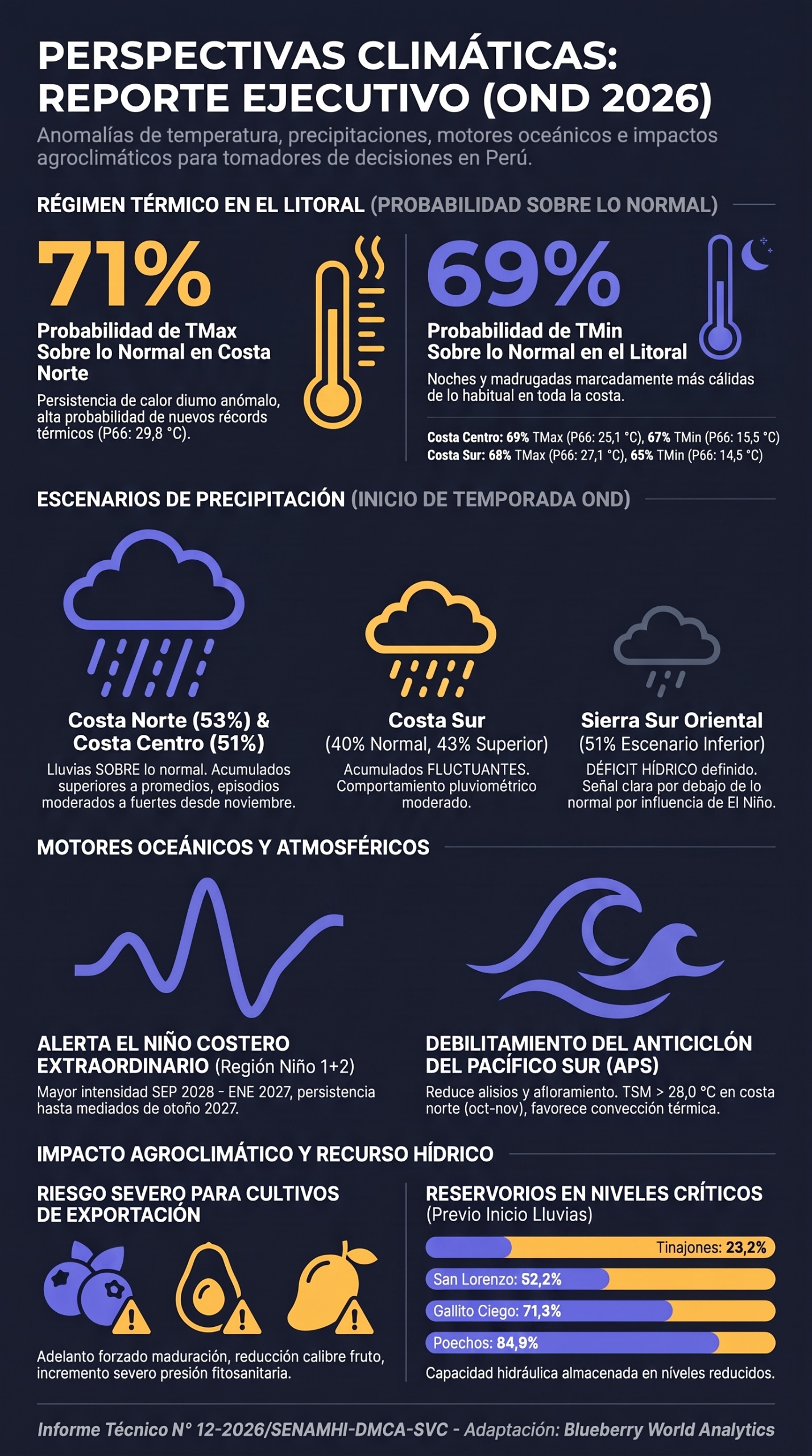
Apaza's analysis becomes relevant in light of the XLII International Blueberry Seminar Trujillo 2026where the specialist will address strategies to deal with the phenomenon of El Niño and disease control in blueberriesIn a season marked by greater climate variability, this discussion connects directly with the challenges of health, harvesting, post-harvest handling, and fruit quality raised in this interview.
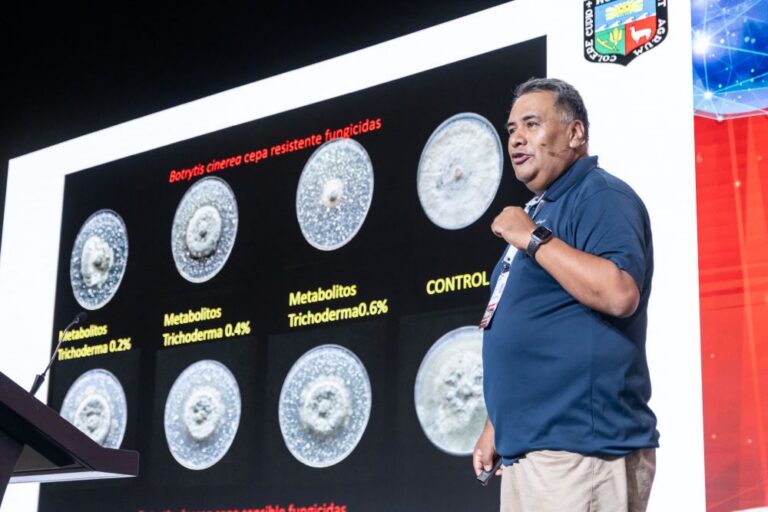
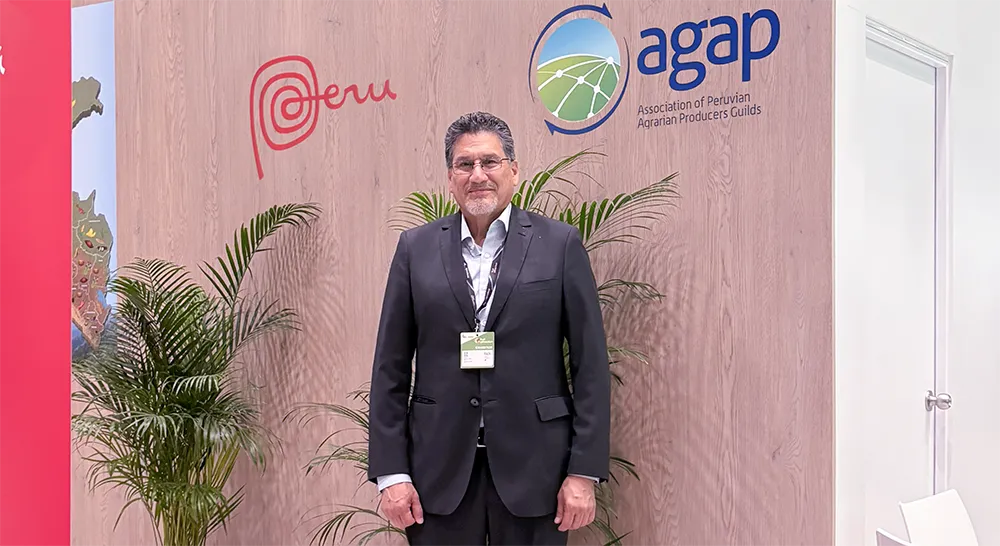
Walter Apaza at the XXXIX International Blueberries Seminar Lima 2026 © Blueberries Consulting

—How do you see the blueberry market today?
The market of blueberry It continues to grow, and Peru's supply is also increasing significantly. We are experiencing a very clear process of varietal replacement, with a shift from older varieties to newer ones. Added to this are new growth centers, such as the southern region of Ica and Pisco, which have been gaining importance within the production expansion.
All this confirms that Peru continues to consolidate its position as the world's leading exporter of blueberriesFurthermore, this growth is no longer based solely on volume, but also on new genetics, with better yields and improved quality attributes. It's a very interesting process, because it shows that the industry is taking a significant leap forward.
—What are the requirements for new varieties today in terms of quality and condition?
Quality remains a major challenge, but Peru has a significant advantage: it typically experiences no rain during the harvest. This greatly benefits the fruit's performance, and many of the new varieties also exhibit high firmness, resulting in a longer post-harvest life.
Added to this is flavor, which is increasingly important in commercial valuation. If you look at price trends, a clear differentiation in favor of premium blueberries is becoming apparent. In other words, it's not enough to simply produce more; you also have to produce fruit that meets market expectations in terms of firmness, condition, and consumer experience.
—Is post-harvest still a critical issue for Peru?
Yes, it remains a significant challenge. Post-harvest fungi can appear, especially when the fruit is not in optimal condition. One of the challenges Peru faces is precisely maintaining quality as the production area increases in regions like Chavimochic, Olmos, Pisco, and Ica.
When very large harvest peaks occur, labor availability becomes more complex. And in a crop like the blueberryIn orchards where, depending on the variety, harvesting can occur every seven to fifteen days, poor management can lead to overripe fruit. This fruit is much more susceptible to post-harvest fungal diseases, making timely harvest management crucial.
Walter Apaza at the XXXIX International Blueberries Seminar Lima 2026 © Blueberries Consulting

—In that scenario, what do you consider to be the most efficient protocol to minimize Botrytis cinerea and other pathogens?
The first step is to harvest at the optimal point of ripeness. The biggest enemy is over-ripeness, and that is controlled through management, organization, supervision, and good harvesting work in the field.
Along with that, there are preventative strategies using fungicides, and in Peru there is already considerable knowledge about which tools to use. The point is that markets are very restrictive regarding the number of active ingredients and the maximum residue limits allowed, so strategies must be designed based on those requirements. In Europe, for example, retailers are especially demanding, which requires very precise decision-making.
—Is technology also helping in that management?
Yes, very importantly. There are post-harvest technologies, such as sulfur dioxide injection for Botrytis, and also electrostatically charged fungicide applications. blueberry It is one of the crops that has incorporated the most technology both pre-harvest and post-harvest.
Today blueberry Highly technical operations are observed, even in potted systems using reverse osmosis, something uncommon in other crops. This speaks to an industry that has generated value and a great deal of technical knowledge.
—What recommendation would you give to producers today?
A key point is not to plant just one variety, no matter how good it seems in terms of yield or flavor. blueberryVarietal diversification helps to better organize the harvest and avoid problems associated with excessive concentration of fruit at certain times.
I believe producers need to move towards a more diversified strategy, because there are many varieties available today and there is still much to learn about their behavior. It's an area that requires more research, and universities can contribute significantly to answering questions that remain relevant to the industry.

Walter Apaza at the XXXIX International Blueberries Seminar Lima 2026 © Blueberries Consulting
Information about the seminar
Apaza's analysis highlights a cross-cutting concern for the industry: varietal replacement opens up opportunities, but also demands more precise management of harvesting, health and post-harvest to maintain quality at the destination.
The 42nd International Blueberries Seminar Trujillo 2026 will be held on 8 & 9 of July at the Costa del Sol Wyndham Trujillo Golf Hotel. You can get your Tickets HERE.

Check out the summary of the XXXVII International Blueberries Seminar Trujillo 2025 on our YouTube channel Blueberries TV
Read also:
- Health measures in the face of El Niño: Trujillo will address strategies to anticipate diseases and pests
- Foliar pathogens and quantification of losses: Walter Apaza Tapia established criteria to prioritize decisions in blueberries
- Genetics promises, climate validates: Trujillo will address critical decisions for Peruvian blueberries
- International Blueberry Seminars 2026: Blueberries travel through Peru, Chile, Mexico, Morocco and China
ARTÍCULOS RELACIONADOS