El Niño takes Peruvian blueberries from alert to campaign planning
With the updated ENFEN forecast, the focus of the Peruvian industry of blueberry The focus has shifted from climate alerts to concrete campaign preparations. The challenge is no longer just observing the evolution of El Niño, but anticipating its effects on the crop and adjusting decisions before the problem reaches harvest, packing, or the destination.
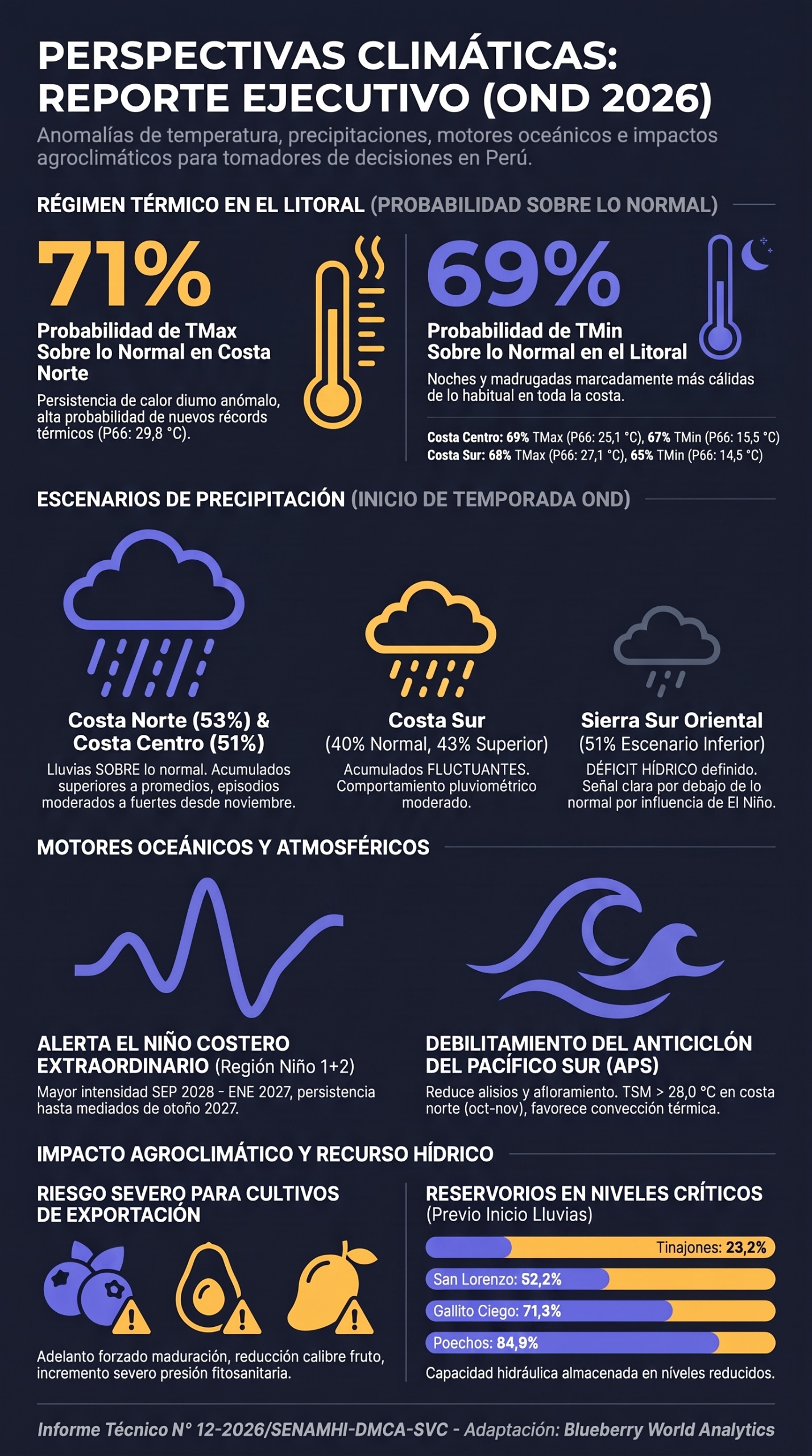
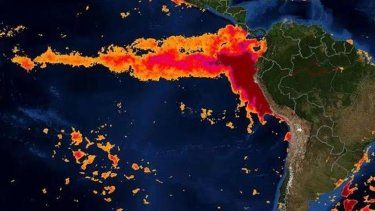
The Multisectoral Commission for the National Study of the El Niño Phenomenon (ENFEN) projects the continuation of a strong coastal El Niño until October 2026. According to the agency, air temperatures on the coast will remain above normal during the July-September quarter, while the northern coast could register rainfall between normal and above normal, in addition to localized rains.
ENFEN maintains the coastal El Niño alert status and warns that the phenomenon could extend until the summer of 2027. blueberry For Peruvians, this scenario requires more precise planning: monitoring the weather, adjusting field management, and better coordinating harvesting, packing, logistics, and destination.

Where the weather might hit
El blueberry It is sensitive to changes in temperature, humidity, and handling. Above-normal temperatures can accelerate or disrupt physiological processes, affect flowering and fruit set, influence size and firmness, and alter harvest times.
If unseasonal humidity or rain is added to the mix, the health risk increases, requiring a review of monitoring, control windows, and preventative management. Under these conditions, diseases and pests can find more favorable environments, while technical teams must respond more quickly and accurately.
Risk doesn't manifest in just one way. It can appear in the orchard, but it can also progress through harvest, packing, and post-harvest handling. In an export product, fruit with reduced firmness, a shorter shelf life, or greater disease pressure can ultimately affect its condition upon arrival, returns, and trade confidence.
The lesson of 2023
The experience of 2023 provided a clear warning for the industry: when the climate alters crop physiology, the impact doesn't end in the field. High temperatures modified plant processes, disrupted harvest schedules, and reduced exportable volumes for several months.
The reduced supply drove up international prices, but many companies were unable to capitalize on this situation due to the drop in their production. This experience reinforced an idea that is gaining traction again this season: reacting too late can cost you volume, fruit quality, and fulfilling your sales commitments.
Since then, producers and agricultural exporters have strengthened their climate monitoring tools, implemented drip irrigation, managed shade, improved drainage, and adopted agronomic strategies to reduce heat stress. The key difference will be in translating that experience into timely decisions during the growing season.

Field, packing and destination: connected decisions
In a scenario of greater variability, decisions cannot be made in isolation. Water management, drainage, nutrition, health monitoring, harvesting, cold chain, packing, and shipping scheduling are all part of the same campaign strategy.
Plant health, for example, is not limited to controlling diseases or pests in the orchard. Its impact can be reflected in firmness, post-harvest life, condition upon arrival, and the ability to meet the demands of discerning markets. The same is true for managing heat stress or harvest timing: every decision made in the field can affect the final quality of the fruit.
For producers and exporters, the challenge will be to anticipate weather forecasts, adjust management practices, and protect the fruit before problems arise in commercial operations. In a more variable season, consistency can be just as important as volume.
Trujillo, a necessary conversation before the campaign
The forecast comes just days before XLII International Blueberry Seminar Trujillo 2026The event, which will take place on July 8 and 9 at the Costa del Sol Wyndham Trujillo Golf Hotel, is particularly significant in a key region for the Peruvian agricultural industry. Topics such as climate, health, physiology, nutrition, quality, and post-harvest handling will move beyond a general technical agenda and become critical criteria for a campaign that will demand faster and better-coordinated decisions.
The seminar will provide an opportunity to exchange perspectives on El Niño, diseases, pests, physiology, nutrition, fruit quality, post-harvest handling, the market, and arrival condition. The importance of this discussion lies precisely in not separating what occurs simultaneously during the growing season: climate, management, plant health, harvesting, and destination.
For producers, exporters, consultants and companies linked to blueberryTrujillo can serve as an opportunity to clarify criteria before the campaign moves forward. The central question will be how to reduce risks without sacrificing productivity, quality, or business continuity.

Act sooner to protect the fruit
Peru has built a relevant position in the global industry of blueberry Thanks to its production capacity, technological innovation, varietal renewal, and presence in strategic market windows. In a more unstable climate scenario, maintaining that position will depend on the ability to protect the fruit from the orchard to its destination.
El Niño is once again testing that capacity. The answer will not only lie in producing under more complex conditions, but also in maintaining stability, reliability, consistency, and commercial confidence.
The difference will be in reading the weather forecast earlier, adjusting management practices, and protecting the fruit before the problem reaches harvest, packing, or destination. blueberry For Peruvians, moving from alert to planning will be key to sustaining value in international markets.
Information about the seminar
The 42nd International Blueberries Seminar Trujillo 2026 will be held on 8 & 9 of July at the Costa del Sol Wyndham Trujillo Golf Hotel.
You can get yours Tickets HEREStands:contact@blueberriesconsulting.com
WhatsApp: + 56 9 3469 3871

Review the summary of XXXVII International Seminar Blueberries Trujillo 2025 on our YouTube channel Blueberries TV.
Read also:
- El Niño 2026: the test of maturity for the Peruvian blueberry
- The Peruvian blueberry industry faces climate uncertainty as El Niño advances
- El Niño could affect the upcoming Chilean cherry and blueberry season
- El Niño creates uncertainty in the global blueberry market
- The potential development of El Niño in 2026 is once again putting pressure on the blueberry industry in South America.
- The 2026 Coastal El Niño: a test of maturity for the Peruvian blueberry
ARTÍCULOS RELACIONADOS