Chile renews 1.000 hectares of blueberries per year to regain export competitiveness
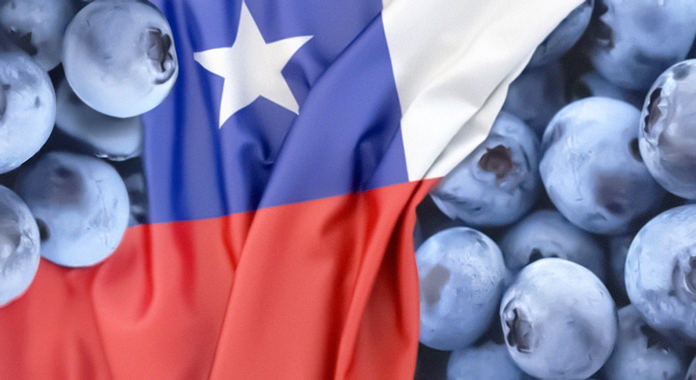
Chile is renewing approximately 1.000 hectares of varieties of blueberries Each year, a productive transformation is undertaken to improve fruit quality and strengthen its competitiveness in international markets. This strategy is especially important for the 2026/27 season, for which Chilean exports of fresh blueberries Production is projected at 94.071 tons, according to a revised industry estimate. The process aims to overcome the limitations of traditional varieties and meet the commercial demands of buyers who prioritize firmness, shelf life, and good arrival condition.
Varietal replacement represents a strategic decision for Chilean producers, as it involves replacing existing plants with genetic material possessing characteristics better suited for export. It's not just about increasing harvest volumes, but about obtaining fruit capable of maintaining its attributes during storage, transport, and commercial distribution. In an industry where destination markets can be thousands of kilometers away, the quality of the fruit upon arrival directly influences the acceptance of shipments and the economic results of operations.
Ruy Barbosa, president of Blueberry Committee The Chilean Fruit Growers Association explained that the sector maintains a renewal rate of approximately 1.000 hectares per year. However, the productive benefits of these investments are not immediate. The new plantations need to go through various stages of development before reaching their yield potential, so the impact on exportable supply will be gradual. The transformation currently underway in the fields will begin to be more pronounced when the new varieties represent a larger proportion of national production.

New varieties to improve quality and reduce commercial losses
One of the main objectives of the process is to improve the firmness of the blueberriesThis is a key characteristic for its marketing as fresh fruit. Fruits that are more resistant to handling and have better storage conditions are more likely to complete logistical journeys without significant deterioration. For this reason, post-harvest shelf life and condition upon arrival are among the central criteria for Chilean varietal renewal, along with productivity and plant performance in the fields.
The renewal also responds to an economic need for fruit farms. Higher-yielding varieties allow cultivation costs to be spread across a larger volume of marketable fruit, improving the efficiency of each hectare. This is particularly relevant for producers who must cover expenses related to agronomic management, harvesting, and processing. However, final profitability depends not only on producing more fruit, but also on the proportion that meets the requirements of international buyers.
Varietal change requires medium- and long-term planning. Replacing a plantation involves modifying the productive structure of an area already under cultivation, with results that depend on the establishment and development of the new varieties. During this period, the available supply may evolve differently than in the renovated area, because young plants have not yet reached their full productive capacity. This difference explains why the annual rate of replacement does not automatically translate into equivalent increases in exports.
For the export industry, the goal is to build a more consistent supply in terms of quality. The ability to maintain uniform commercial characteristics throughout shipments is important for both producers and companies that market the fruit. Better arrival condition can strengthen the position of the Chilean blueberries before international buyers, especially when there are quality differences between suppliers competing during the same marketing weeks.

Peru can open up opportunities, but Chile needs competitive fruit
The situation in Peru also appears among the factors that could influence Chilean trade prospects. A potential reduction in the availability of Peruvian blueberries During certain periods, it could create opportunities for other exporting countries. Chile would have the potential to place larger volumes during some trade windows, although taking advantage of these opportunities will depend on the quality of the fruit and the condition in which it arrives at its destination.
The relationship between the two countries is relevant because their exports contribute to the international supply of fresh blueberriesVariations in the availability of one supplier can affect the business opportunities of another, but they don't automatically guarantee increased sales. Buyers also consider product condition, consistent shipments, and the ability to meet agreed-upon specifications. For this reason, the Chilean strategy focuses on strengthening attributes that allow it to compete despite supply fluctuations from other sources.
The projection of 94.071 tons of fresh fruit exports for the 2026/27 season provides a reference point for the volume the sector expects to market during the season. This figure represents a revision of initial estimates and should be interpreted as a forecast, not a final result. Its evolution will depend on orchard performance and the supply chain's ability to maintain the fruit's market conditions. New varieties will gradually contribute to this supply as renewed orchards reach greater productive maturity.
Another element highlighted by the Blueberry Committee It is the coordination among the various participants in the export chain. The quality obtained in the field must be preserved during harvesting, conditioning, storage, and transport—stages that directly impact the commercial outcome. Genetic improvement is part of the strategy, but its effectiveness also depends on post-harvest handling and the logistical conditions accompanying shipments to international markets.
The annual renewal of varieties is gradually changing the composition of Chilean fields. Although it will still take several seasons for the new plantings to fully express their potential, the sector is already focusing its production decisions on specific commercial characteristics: greater firmness, better shelf life, and higher yields. For exporters, this transformation will be especially relevant when the renewed varieties begin to represent a more significant share of the 94.071 tons projected for the 2026/27 season.
Read also:
- Ruy Barbosa: the varietal change is progressing, but its effects will still take time
- North Bay Produce: Genetics, productivity, and condition raise the bar in the blueberry business
- Long-distance blueberries: quality doesn't end at harvest
- Market, genetics and global competition: the signs for the Chilean blueberry business
- Chilean blueberries: volume would grow 2%, but replacement varieties would increase 39%.
- Fruit Attraction 2026: Chilean blueberries redefine their competitiveness through genetics, condition, and new markets
- Pilar Bañados: the transformation of the Chilean blueberry requires more than just new varieties
Previous article
Blueberries in the United States: Imports fall 16,4% and Peru accounts for 95% of the volumenext article
ARTÍCULOS RELACIONADOS