Ruy Barbosa: the varietal change is progressing, but its effects will still take time
By: Martin Carrillo

Varietal replacement is progressing in the Chilean industry of blueberryBut its effects will still take time. Ruy Barbosa, president of the Committee of Blueberries The Chilean Fruit Association places this process, along with quality and sectoral coordination, among the main challenges to sustain competitiveness.
"In the blueberries“In Chile, we are very united and very aligned in what we have to do to move forward, to stand out within this increasingly competitive industry at a global level,” says Barbosa.

A more coordinated industry
For Barbosa, the ability of the various actors in the sector to move forward in a coordinated manner is one of the relevant elements to face current production and commercial demands.
The 2026/27 season is projected at 94.071 tons of fresh blueberries, after an adjustment to the initial estimate.
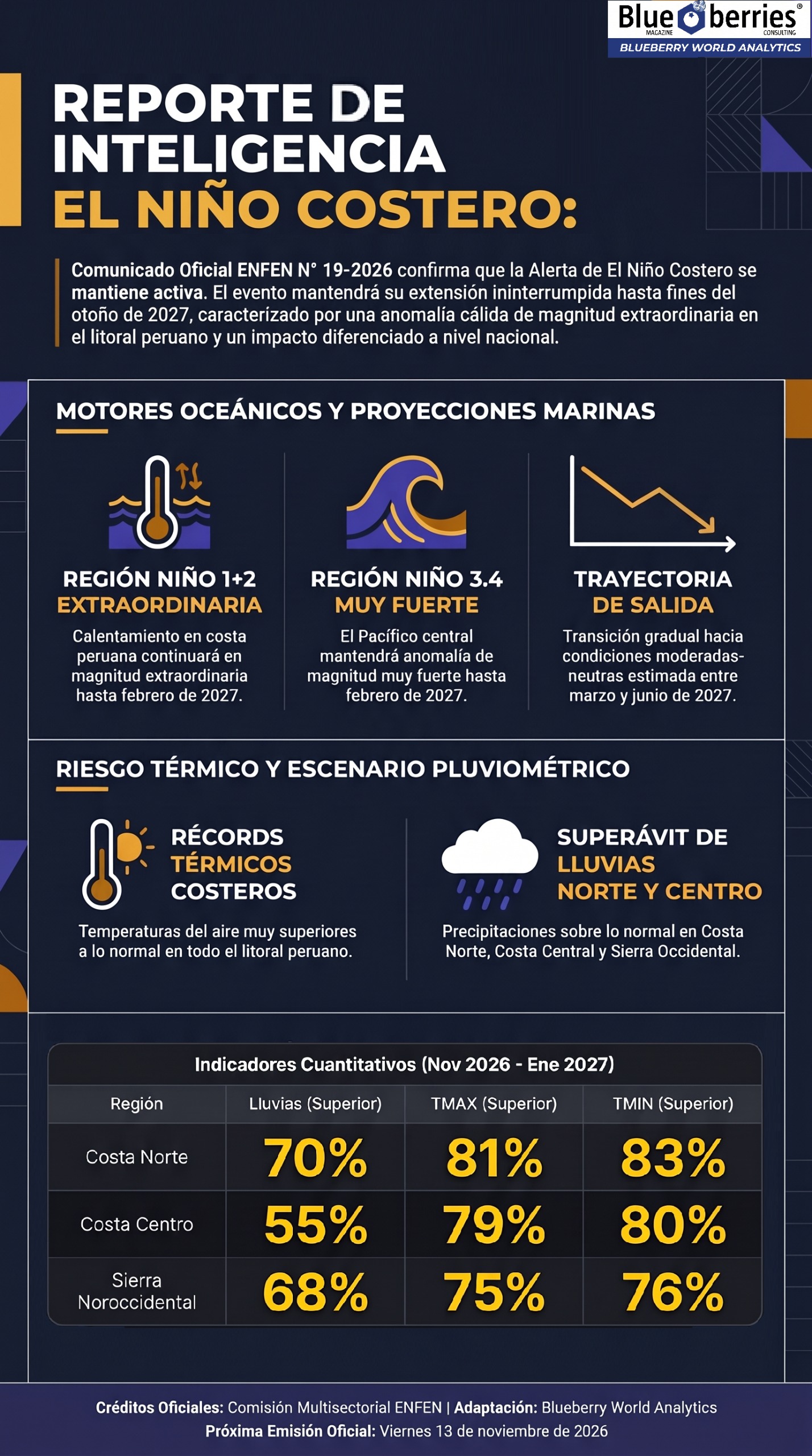
A lower Peruvian availability could create commercial opportunities in certain windows, although Barbosa has insisted that these opportunities depend on the quality and condition of the Chilean fruit.

Varietal replacement with medium-term effects
According to Barbosa, Chile is progressing at a rate of close to 1.000 hectares per year of varietal replacement, a process whose results are not immediate.
The impact should become more visible as the renewed fields reach greater productive development and the new materials increase their share of the commercial supply.
The replacement aims to incorporate varieties with better firmness, arrival condition, post-harvest life and productivity, attributes that are increasingly relevant for an industry that supplies distant markets and faces a broader international supply.
Productivity is also key from an economic point of view, because it allows for diluting costs per kilo and sustaining the profitability of the fields.
Quality before commercial opportunity
Barbosa has insisted that any commercial opportunity loses value if the fruit does not meet the quality and condition standards demanded by the market.
In that sense, quality not only determines the acceptance of each shipment, but also affects the commercial image of the Chilean blueberry facing buyers and consumers who have an increasingly diversified offer.
The leader also maintains a positive outlook on demand, supported by improved consumer experiences and a greater presence of the category in various commercial channels.
For Barbosa, the fundamental challenge lies in sustaining varietal replacement, raising quality, and keeping the industry aligned with an increasingly demanding market.
Read also:
- North Bay Produce: Genetics, productivity, and condition raise the bar in the blueberry business
- Long-distance blueberries: quality doesn't end at harvest
- Market, genetics and global competition: the signs for the Chilean blueberry business
- Chilean blueberries: volume would grow 2%, but replacement varieties would increase 39%.
- Fruit Attraction 2026: Chilean blueberries redefine their competitiveness through genetics, condition, and new markets
- Pilar Bañados: the transformation of the Chilean blueberry requires more than just new varieties
next article
ARTÍCULOS RELACIONADOS