Global Blueberry Market Summary

Peru's products and exports, as well as importers and buyers in many markets around the world, are holding their breath. This is to see if the weather will improve and signal a return to normal Peruvian blueberry production, after a significant drop in production last season. Some producers say it's too early to tell, while others say there are some early signs of better weather. In North America there is a wide offer. Florida and Georgia have overlapped with solid crops this season. Mexico also has supply, along with Peru, but despite this good supply, demand remains strong. In southern Africa, supply from Zimbabwe started early, while South Africa will begin harvesting in the coming weeks. China is experiencing very few imports, while Yunnan's supply is ample. Premium blueberries are increasingly scarce. Supply in China has increased driven by the expansion of local production. At the same time, prices are lower due to greater local production. Market prices are high for the limited imported blueberries.
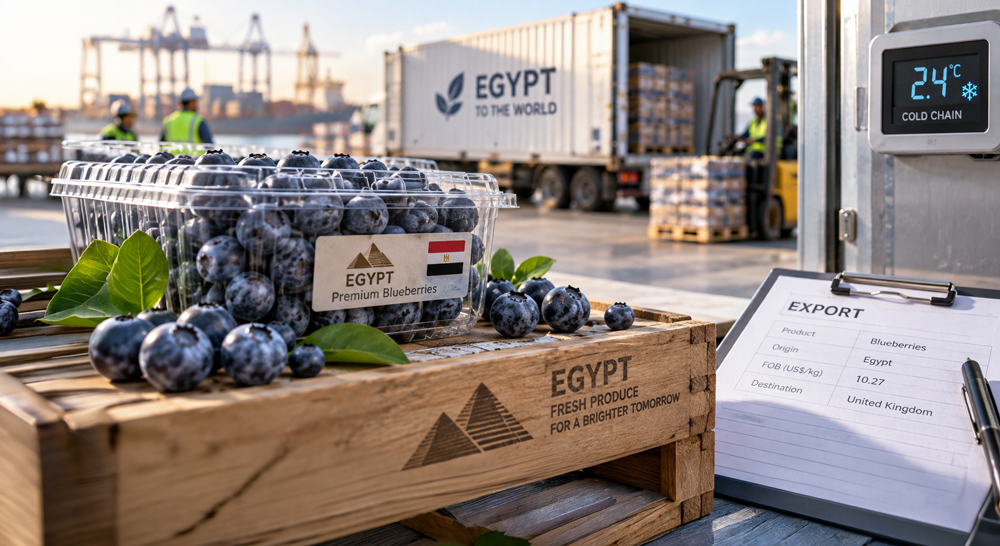
Reports of frost damage to blueberry crops have been received across Europe. Damage has been reported in Serbia, central Poland, as well as northern and southern Germany. However, damage in the Netherlands has been very limited. In Germany, an early start to the harvest is expected due to warmer spring weather. Spanish blueberries are gradually reaching the German market. Portugal, Romania and the Netherlands will follow shortly after. Italy's blueberry campaign began a few weeks earlier in the south. Favorable weather conditions led to good quality and initial volumes. Market demand was good and prices were high. In the Netherlands, there are large volumes of Moroccan and Spanish berries on the market with prices under pressure. While Morocco ends the season with strong volumes, Spain has yet to reach the peak of its blueberry campaign, which is expected at the end of May. Türkiye is experiencing strong demand from the markets. The very mild weather favored the early harvest of blueberries. The period in which the harvest will be most intense is between May and June. Morocco had a successful but difficult season. Their season ends in 2-3 weeks. In Egypt's blueberry season, prices fell by half. Their season will come to an end in a couple of weeks. Cold snaps and 40+ degree heat waves contributed to inconsistent harvest and fruit cycles.
Peru: Wait to see if the weather improves
After a disappointing 2023 season due to weather challenges that led to lower production and exports, Peru's blueberry industry is cautiously watching the weather for the upcoming season. Industry body ProArandanos is busy taking its time to conduct an industry-wide survey that will inform its estimate for the new crop.
A large producer and exporter in Peru said it is still too early to say whether the weather will be more favorable to return to normal harvest levels. «We are preparing the fields, but it is too early. So far, as many producers have harvested until the end of the season and extended it by a few extra weeks, this may have an impact on production for the next harvest, but it will not. as dramatic as it was last season.
The latest statistics available for ProBlueberries Until week 13 of the 2023-24 campaign, 223 thousand tons of fresh blueberries have been exported, with a drop of 22% compared to last season. Of that total, 56% have been destined for the United States, followed by Europe with 22% (not including the United Kingdom), China with 12% and other destinations with 4%.
«The transport routes remain the same in participation. However, we have a growth of 143% in air shipments compared to the 2023-24 campaign. In addition, the tons harvested in each production area in Peru show a drop of 23% in La Libertad, 40% in Lambayeque, Ica was the only region that increased with 9%, Ancash fell by 10% and Lima by 6%. . A new estimate is expected soon.
North America: The ample supply of blueberries puts pressure on prices.
The supply of North American blueberries is abundant. Florida and Georgia have overlapped and both regions have an incredibly strong crop this year. Organic production in California is also underway with good volumes.
As for imports, Mexico is producing right now, but most of its fruit stays in the southern states and the west coast. Peru is also currently exporting to the US and collectively, the two countries are contributing to a surge in supply in North America.
That said, demand remains strong. Good quality from Florida and Georgia is helping move fruit quickly and keeping consumers eager to buy blueberries. However, that is the biggest challenge; keeping inventories fresh and fruit moving.
As for prices, they have dropped across the board due to that strong supply. The market has fallen faster than seen in the past, when Georgia burst onto the scene with a record harvest. This was not the case last year, as the domestic season began with many weather problems and lower availability.

Southern Africa: Zimbabwe season started, South Africa to start in coming weeks
The blueberry season in Zimbabwe has begun and the first harvest of blueberries from Limpopo and Mpumalanga is expected in the coming weeks. Some blueberry growers report earlier flowering and bud break. The 2024/2025 export season will gain momentum from July/August to January.
During the previous export season, South Africa's blueberry exports fell by 3.022 tonnes to 21.212 tonnes for the 2023-2024 season, but it is still considered a successful previous season due to the high demand and high price scenario that developed.
«There is more dynamism in the market, since Peruvian supply will probably be low again this year due to high temperatures, although not as low as last year. “This will hopefully have a positive impact on berry prices this season,” says a source. "The other impact is that because Peru delayed its season so much to recover some of the volumes, as late as possible, we could find that our early season price increase, which normally decreases with the entry of Peru, continues a little more".
The Western Cape would benefit from a longer window without Peru. A blueberry exporter: «The Western Cape is too late: when their blueberries enter the market, they compete head-on with Peru and then there is an incredible amount of fruit on the market. "Blueberry growers in the Western Cape will not get the same prices as the leading growers in the north."
When the blueberry industry started, all the fruit went flying, but that ratio has changed. Last season, 56% of South African blueberries were shipped by sea, exposing them to the risk of delays not only at South African ports, but also around the world. «Towards the end of the previous season we had a container of blueberries that took eight weeks to reach the market. After some delays at the port of departure, it was one of the first ships attacked by a drone in the Red Sea. «Adds the exporter.
Europe remains the largest recipient of South African blueberries, despite a drop in exports during the 2023/2024 season, while there was a slight increase in blueberry trade with the United Kingdom (second largest recipient), which is still very ahead of the volumes that the Middle East has. They take the East and the Far East.
China: Few imports, local supply from Yunnan in the markets
Yunnan blueberries are currently in their final season and premium products are becoming increasingly scarce. There has recently been a notable influx of Yunnan blueberries to the fruit market, attracting buyers from all over China. Consequently, the volume of the blueberry market is constantly increasing. Earlier this year, both Yunnan and Sichuan witnessed a surplus of high-quality domestic blueberries, causing prices to skyrocket due to excess demand, especially for larger blueberries. However, with the increase in arrivals, prices have recently started to drop.
April marks the peak supply period for Yunnan blueberries, characterized by abundant production and stable quality. Consequently, fruit market prices have been falling steadily in recent days. As the Yunnan blueberry season gradually approaches its end, a small amount of Shandong blueberries have begun to appear on the market. Given their lower cost, Shandong blueberries are likely to dominate the market towards the end of April. Forecasts suggest that after May Day, blueberries from Anhui, Sichuan, Liaoning and other regions will successively enter the market. As temperatures rise further, blueberry production will decline, which could cause wholesale prices to drop to around 10 yen per box for larger fruits.
Currently, the market is mainly made up of the latest batch of Yunnan blueberries, with fluctuating quality. Premium products with pure and sweet taste are scarce, creating an oversupply situation when they reach the market. Consequently, prices for medium-quality blueberries remain stagnant. The prevailing average prices for blueberries at the Jiaxing fruit market today are 12+ (¥75-85/box), 15+ (¥90-95/box), 18+ (¥105-115/box), and 22 + (¥130-140/box).
Compared to last year, blueberry prices this year are lower due to the expansion of cultivation in China, and the number of blueberry-producing provinces will increase from 10 to 27 by 2023. This expansion has led to a significant increase in blueberry production, which has resulted in a surplus compared to the previous year. High initial production levels, coupled with supply exceeding demand, have contributed to the decline in prices.
Regarding imported blueberries, this year the Chinese blueberry market is witnessing a notable decrease in imported blueberries, keeping prices relatively high. This change is mainly due to the superior quality of domestic blueberries compared to imported ones. Imported blueberries typically take 20 to 30 days to transport, which negatively affects their freshness and flavor. In contrast, domestic blueberries are fresh fruits that reach the market within three days of harvest, resulting in a better flavor and presenting new opportunities for the domestic blueberry market.

Germany: Early start to harvest expected
The omens for German blueberries are currently good: Due to the very warm weeks at the beginning of spring, an early start to the harvest can be expected. However, it is still too early to give a more precise view of the expected quantities and qualities.
Starting in mid-March, the annual change of season from the southern hemisphere to the northern hemisphere occurs. Importers can look back on a very strong season for organic blueberries in Peru in terms of quality, while the Chilean product was somewhat weaker. Meanwhile, the Spanish harvest is gradually reaching the market and prices are slightly above the previous year's level. From week 18 onwards, Portuguese blueberries also enter the market. The first quantities are expected from Romania from week 22, followed by the Netherlands, probably from the end of week 23. Two or three weeks later, the Polish and German harvest is about to begin.
Italy: The campaign started early in the south
The blueberry campaign began a few weeks earlier in southern Italy. From a commercial point of view, the season started well, with good market demand and high prices.
Two weeks earlier than last year, on April 15, the marketing campaign for Italian blueberries by a large cooperative in northern Italy began in the main fruit and vegetable markets, with surfaces extending from the south to the north of the country. Excellent production, both in quality and quantity, favored by the climatic trend of the first months of the year. Even in Campania, this year's blueberry campaign started early due to favorable weather conditions and high temperatures compared to the average for the period. «This year we believe that it is not a year of great production; Although we lose in quantity, the quality of the product is good," says a businessman from Campania. Regarding production, the blueberry campaign in Sicily is still underway, while the harvest in northern Italy will have to wait until June. In Piedmont, the blueberry harvest is expected to begin at the beginning of June, taking into account weather conditions, until the end of May. Estimates of the total amount are similar to previous years, perhaps even a little higher. In addition to Germany, the United Kingdom and Switzerland, attempts are being made to export Italian product by air to foreign markets, but everything is still underway.
In wholesale markets, Peruvian blueberries are registered at current prices between 16 and 19 euros. The product of Italian origin - if present - is registered at a current price of between 15,50 and 16 euros. In markets where Italian and Peruvian blueberries are present at the same time, the predominant price of the Peruvian product decreased from the end of week 17 to the beginning of week 18.
Regarding blueberry consumption in Italy, the positive trend continues. In the twelve months to February 2024, more than 25% of Italian households bought blueberries, mainly in pre-packaged packages for an average purchase of 250 grams, about 6 times a year (data from GfK Consumer Panel Services).
Netherlands: Large volumes of Moroccan and Spanish berries, prices under pressure
Currently, the Moroccan berry season is coming to an end with large volumes, while the Spanish berry season is in full swing. “We are seeing substantial volumes arriving and prices are under some pressure. Due to the price drop, there are quite a few promotions planned in recent weeks, which helps move the volume. For example, there are many promotions with 500 gram containers. packaged, which undoubtedly increases sales," says a Dutch berry packer.
Reports of frost damage to blueberry crops have been received across Europe. Damage has been reported in Serbia, central Poland, as well as northern and southern Germany. However, damage in the Netherlands has been very limited. 'Most producers in the Netherlands have irrigation systems or other frost protection measures. Overall, the harvest looks promising and we will also start two weeks earlier than usual.”
Belgium: Differences in quality put pressure on prices
Currently, there is a lot of additional volume coming into the blueberry market. “As a result of the additional supply on the market and the wide variety of product qualities, we see that prices have currently dropped,” said a Belgian trader. «In fact, the market is experiencing an increase in volume coming from Morocco due to peak harvest weeks. Meanwhile, Spanish growers are also harvesting their mid-season varieties and hope to work towards a flatter peak in weeks 20 and 21 compared to previous years. "Portugal has been harvesting in the south for some time, but soon the north will also add more volume to the market, so little by little there will be more supply, which, in addition to the different qualities, is driving down the price."

Spain: The peak of the blueberry campaign has not yet been reached
As for blueberries, a part of Onubafruit's youngest plantations have allowed us to produce 2.000 more tons at the beginning of the campaign compared to last year.
«The peak of the campaign has not yet been reached. “That should happen from the end of this month,” says a Spanish operator. "The supply from the southern hemisphere has been lower than usual, so we have started the campaign with less overlap and less competition, maintaining good commercial momentum."
«It is true that production is increasing worldwide and there is supply throughout the year, but it should be noted that consumption also continues to increase and stabilize. Blueberries are still relatively new, but their quality has improved a lot and their price is more competitive, so the product is very suitable for promotions, and this has a very positive influence on consumption, says the Spanish operator.
This year, Onubafruit plans to produce and market around 24.000 tons of strawberries, about 20.000 tons of blueberries and approximately 8.500 tons of raspberries. These will be distributed mainly in European markets.
France: Demand is not strong
Currently, the blueberries available on the market are of Moroccan, Spanish and some Portuguese origin. Demand is not very strong yet due to the weather. Average prices for blueberries range between 7 and 10 euros per small box of 125 grams, depending on the origin, and up to 14 euros for organic blueberries.
Türkiye: Strong market demand
The weather is very mild in Türkiye, which favored the early harvest of blueberries in Türkiye. The period in which the harvest will be most intense is between May and June. The comments that exporters are now receiving show that the demand for blueberries will be very intense. The evolution of blueberries in Türkiye is attracting a lot of attention and the market seems to be growing gradually.
For now, there appears to be strong demand from Dubai, Russia, Europe and the United Kingdom, as well as Turkish retailers. The weather has been quite favorable, so there were no challenges in that regard. Prices have cooled down a bit since the start of the Turkish season. The blueberry season began in January and the price stood at 15 euros per kilo, for packaged products of 125 grams. A few weeks ago it was still at 9 euros per kilogram.
Morocco: Successful but difficult season in Morocco
The Moroccan blueberry season comes to an end in 2-3 weeks. In general, the season has been positive, but it was marked by several difficulties. Volumes have increased considerably compared to the previous season. A producer representative says: “Pending the centralization of data at the end of the campaign, I can safely report a double-digit increase in exports. However, last season's volumes were exceptionally low, and this season only represents a return to normality. The increase is due to a larger cultivated area. Volumes are only limited by adverse weather conditions. Several weather accidents have caused fruit losses.
Two other major factors disrupted the season. The Spanish alert in March regarding the detection of hepatitis A in a Moroccan shipment of strawberries had repercussions on the blueberry campaign. The producers' representative says: “This incident did not influence our customers, who continued to maintain solid demand. However, it did affect the Moroccan food safety authorities, who imposed severe export procedures on red fruits, including blueberries.
The second factor was labor shortages, as the peak of the April harvest coincided with the Ramadan and Eid celebrations, as well as the harvesting of other crops, resulting not only in higher labor costs. work but also in a loss of freshness of the fruit. Harvest delays meant that large volumes no longer met the criteria of the fresh segment and had to be redirected to the much cheaper frozen sector.
Prices were lower than last season, which was to be expected given last year's exceptionally low volumes. The season started at 80 MAD per kilo and then went down. The average for the season was 50 MAD, with higher prices for sizes 18+ destined for Russia. The United Kingdom remains the main market for Moroccan blueberries, followed by Europe. Canada shows demand at the end of the season, Singapore and Hong Kong at the beginning. Producers are eagerly awaiting the opening of the Chinese market and a response from the Chinese government to the ongoing negotiations.
Egypt: Blueberry prices halve
The Egyptian blueberry season is coming to an end, in a couple of weeks. It has been marked by a drop in prices, but yields and sizes are improving towards the end of the season. The weather was to blame for the season. One grower says: “We had some cold waves and some intense heat waves of over 40 degrees, which occurred during harvest, which led to inconsistent fruit and harvest cycles.”
The prices of Egyptian blueberries are lower than last season, explains the producer: «This year, export prices are on average 40-50% lower than last year, but we believe that this year's prices They are a true reflection of the market. The prices are solely due to the difficult weather conditions in Morocco.
In terms of the market, the Asian and Middle Eastern markets are the main destination for Egyptian blueberries, due to the possibility of moving smaller volumes by air a few times a week. This is not possible in Europe. Egyptian exporters only send small volumes by air twice a week, which makes their price not competitive with the large supply from Spain.
Previous article
Successful but difficult blueberry season in MoroccoARTÍCULOS RELACIONADOS