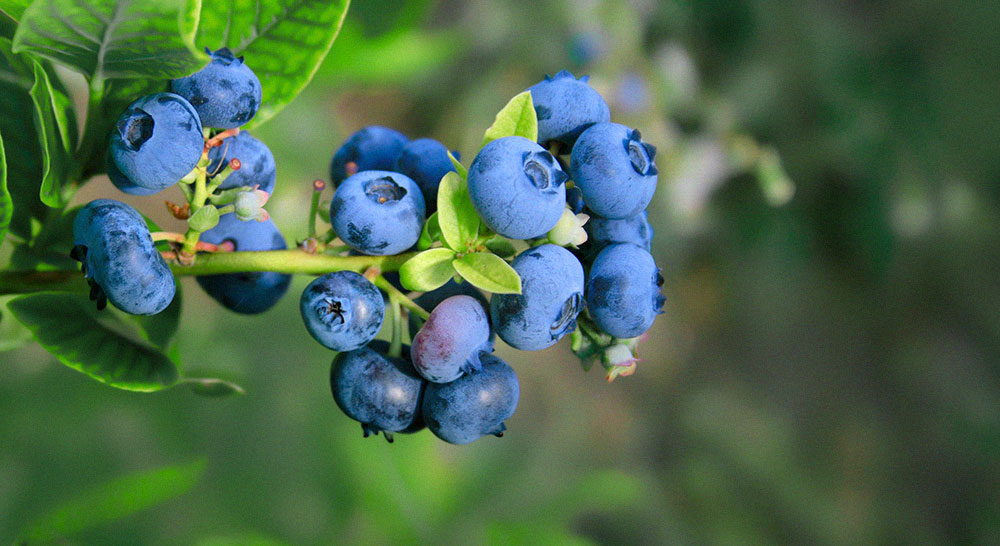
Successful but difficult blueberry season in Morocco

The Moroccan blueberry season is coming to an end, in two or three weeks. A few producers with a steady flow continue to export. Amine bennani, president of the Moroccan Association of Red Fruit Producers, makes a positive assessment, but not without difficulties and oddities.
Higher volumes than last season
Bennani says: “Volumes have increased considerably compared to last season. Pending centralization of data at the end of the campaign, I can safely report a double-digit increase in exports. However, last season's volumes were exceptionally low. «And this season just represents a return to normality. "This increase is essentially due to the expansion of the area and the high yields of the older varieties, since we have not yet reached our production potential due to the adverse weather."

Harmful weather
“The season was marked by several weather accidents that caused large losses,” explains Bennani. «We had two episodes of strong winds in the Larache/Moulay Bousselhem region. In the Agadir region, the chergui (dry and warm wind) caused losses in August. Above all, the weather caused an accumulation of volumes and less regularity during the season. , so in April we saw large clusters in the north of the country, which marked the peak of the harvest.
The Spanish alert
In March, just before the peak of the harvest, a Spanish notification through the RASSF system warned of the detection of hepatitis A in a shipment of Moroccan strawberries. The accusation was immediately denied by the Moroccan Association of Red Fruit Producers. This incident disrupted the Moroccan blueberry campaign, says Bennani. «This incident was widely amplified by the Spanish media. It did not influence our customers, who continued to maintain solid demand. However, it affected the Moroccan food safety authorities, who imposed severe export procedures on red fruits, including blueberries. Producers with a constant flow of production and several shipments per week did better with the new procedures and were in business until the end of the campaign.

odd prices
The increase in volumes naturally translated into lower prices than the previous season, but the price fluctuations were strange, explains Bennani: “There was no consistency. We started the season in January with good prices, around 80 MAD per kilo, due to the El Niño climate phenomenon affected competition in Latin America. In March, prices returned to normal levels. The particularity of this season was the very good prices for large sizes, especially 18+, which had never been seen before. For the season, the weighted average price is around 40 MAD.”
Labor shortage
Bennani: «The peak of the April harvest in the Larache/Moulay Bousselhem axis, a stronghold of blueberries in Morocco, coincided with the month of Ramadan and the Eid celebrations, as well as with the harvesting of other crops in the region. There was a serious shortage of labor. This caused not only higher labor costs, but also delays and loss of fruit freshness. The large volumes no longer met the criteria for the fresh segment and had to be redirected to the frozen segment, which was sold at a much lower price of Dh10 per kilo. «.
Markets
According to Bennani, the main destination for Moroccan blueberries this season was, as usual, the United Kingdom, followed by Europe. Russia was a premium market, where buyers were willing to pay more for sizes 18+, a novelty of the season. The producers' representative adds: «We continue to develop the Middle East market. “Demand from Canada increases with the end of the season and this is another market we are developing.”
As for Asia, “Singapore and Hong Kong showed good demand at the beginning of the season. Negotiations are still ongoing with China. We made a visit there this year and are waiting to hear from the Chinese government, which we hope to see next year. season. «
next article
Global Blueberry Market SummaryARTÍCULOS RELACIONADOS